If you rely on Medicaid for your prescriptions, you've probably noticed that getting a medication in one state can feel completely different than in another. While the federal government sets the broad rules, the actual experience of filling a prescription-whether you get a generic, how much you pay, and whether your doctor needs to jump through hoops-depends heavily on where you live. Navigating Medicaid generic coverage isn't just about whether a drug is "covered," but about understanding the specific rules your state uses to decide which version of a drug you get and at what cost.
Key Takeaways
- All 50 states and DC provide outpatient prescription drug coverage, but the specific drug lists (formularies) vary by state.
- At least 41 states mandate automatic generic substitution if a therapeutically equivalent version exists.
- Copayments for non-preferred generics can reach up to $8 for most beneficiaries.
- Prior authorization and step therapy are common hurdles used by states to manage costs.
- The Medicaid Drug Rebate Program ensures states get discounts, which helps keep generic costs low.
How Medicaid Handles Generic Substitutions
Most people assume that if a generic version of a drug exists, Medicaid will simply pay for it. In reality, the process is more structured. Generic Substitution is the practice of a pharmacist filling a prescription with a generic drug that is therapeutically equivalent to the brand-name version.
Currently, at least 41 states require this automatically. For example, in Colorado, state law (C.R.S. 25.5-5-501) mandates that pharmacists use the generic version unless the brand name is actually cheaper or the patient has a documented medical need to stay on the brand version to remain stable. This means if your doctor writes "Dispense as Written" (DAW), the pharmacy might not be able to bill Medicaid unless there's a valid medical reason.
Some states go a step further with "therapeutic interchange." This is when a pharmacist can swap a drug for a different one in the same class that isn't necessarily a generic clone but works the same way. About 17 states have these policies in place, sometimes allowing the switch if the cost difference exceeds $10, though this varies wildly by provider network.
Decoding the State Pharmacy Formularies
A Drug Formulary is a list of prescription drugs covered by a health insurance plan, organized into tiers to determine cost-sharing. Medicaid formularies are often managed by third-party Pharmacy Benefit Managers (or PBMs), such as CVS Caremark, Express Scripts, or OptumRx. These companies handle the logistics for 37 states, which creates some consistency but also a lot of corporate control over what you can access.
Most states use a tiered system to categorize medications:
| Tier | Drug Type | Coverage Level | Typical Cost |
|---|---|---|---|
| Tier 1 | Preferred Generics | Highest coverage; lowest hurdles | Lowest Copay |
| Tier 2 | Brand Name / Non-Preferred | Requires justification or step therapy | Higher Copay |
| Tier 3 | Specialty/High-Cost | Strict prior authorization | Highest Copay |
If a drug is "Preferred," you can usually get it without a fuss. If it's "Non-Preferred," you're entering the world of utilization management, where the state tries to steer you toward a cheaper generic alternative first.
The Hurdle Course: Prior Authorization and Step Therapy
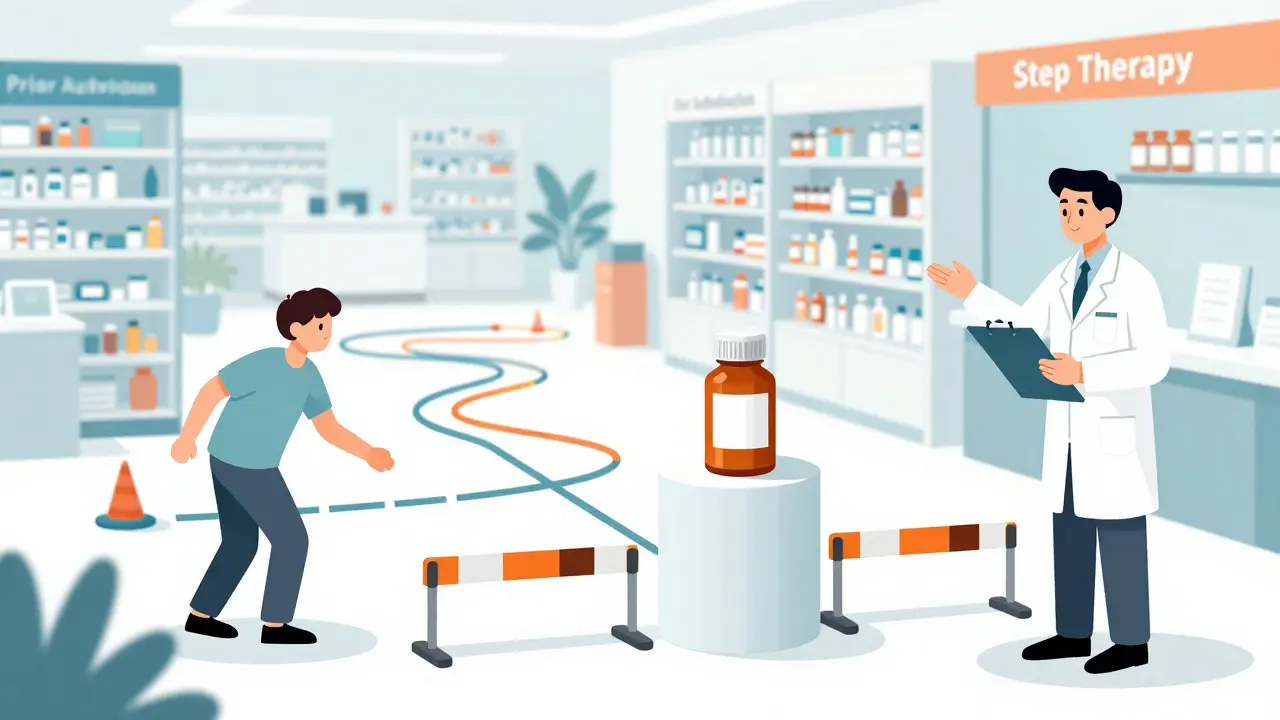
You might find that your doctor's first choice of generic isn't covered immediately. This is where Prior Authorization (PA) comes in. A PA is essentially a requirement that your doctor proves to the state that a specific drug is medically necessary before they will pay for it. In some states, like Colorado, decisions on these requests are made within 24 hours; in others, you might be waiting up to 72 hours, leaving you without medication in the interim.
Then there is Step Therapy, often called "fail-first" protocols. This is a requirement that you try a more affordable generic drug before the state will cover a more expensive one. At least 32 states use this. For instance, if you need a specific gastrointestinal medication, some states require you to try and fail with three different preferred proton pump inhibitors and several NSAIDs before they'll approve the brand-name or non-preferred generic alternative.
These rules aren't just paperwork-they have real-world impacts. Research from the University of Pennsylvania showed that medication switches caused by PA denials led to a 12.7% increase in hospital admissions among some Medicaid beneficiaries. It highlights the tension between saving money and maintaining patient stability.
Financial Mechanics: Rebates and Copays
How does Medicaid keep generic costs so low? The secret is the Medicaid Drug Rebate Program (MDRP). This program requires drug manufacturers to give Medicaid the lowest price they offer to almost any other provider. Because of this, generic drugs are incredibly efficient; they represent about 84.7% of all Medicaid claims but only account for about 28.3% of the total spending.
For the patient, the cost is usually a small copay. While many generics are nearly free, states can charge up to $8 for non-preferred generics for people whose income is at or below 150% of the federal poverty level. If you're using a drug that isn't on the preferred list, that $8 difference can add up quickly over a month.
Real-World Examples of State Variation
To see how these rules play out, look at the contrast between California and other states. California's Medi-Cal program generally employs a more streamlined approach with fewer prior authorization requirements for generics compared to more restrictive states. This means a patient in California might get their generic prescription filled faster than a patient in a state with a more complex "fail-first" requirement.
Meanwhile, states like Massachusetts often score higher in provider satisfaction for how clear their formularies are, whereas states like Mississippi have historically struggled with clarity, leaving doctors to spend more time on the phone with insurance reps rather than with patients. On average, primary care physicians spend over 15 minutes per patient just navigating these generic medication requirements-a massive administrative burden that can slow down your care.
What's Changing in 2026?
The landscape is shifting. There is a push to cover anti-obesity medications, which could expand mandatory coverage to nearly 4.7 million people. However, new legislation is being debated that could exclude many generic drugs from certain inflationary rebates. If this happens, states could lose roughly $1.2 billion in annual revenue, which might force them to tighten their formularies or increase copays to make up the gap.
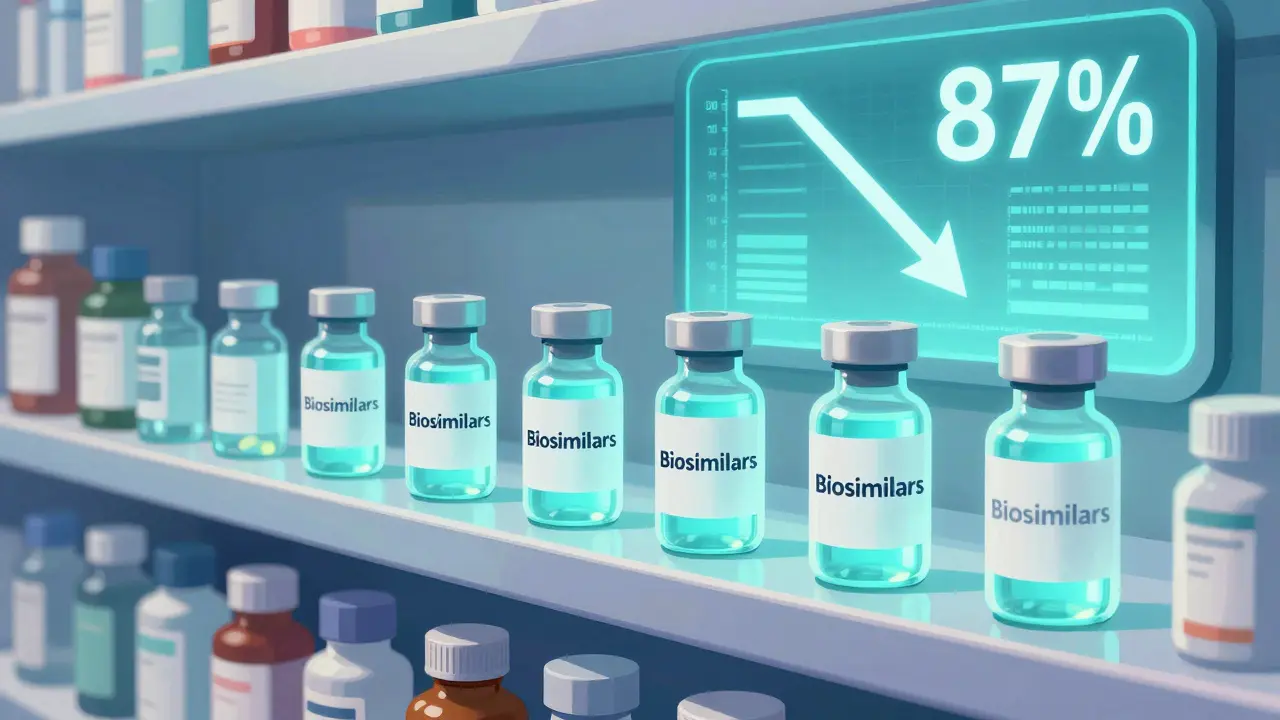
We're also seeing the rise of biosimilars-which are essentially the "generics" of complex biological drugs. As these become more common, Medicaid's generic utilization is expected to climb to over 87% of all claims by 2027. This should technically lower costs, but supply chain issues remain a headache; the FDA has frequently listed critical Medicaid-reimbursed generics on their shortage list, meaning even if a drug is covered, it might not be on the shelf.
What happens if my doctor prescribes a brand-name drug but Medicaid only covers the generic?
In most states, the pharmacist will automatically substitute the generic version. If your doctor specifically wrote "Dispense as Written," the pharmacy may need to obtain a prior authorization from the state to get the brand-name version covered. Otherwise, you may have to pay the full retail price out of pocket.
How do I find out if my generic drug is "preferred" in my state?
The best way is to check your state's Preferred Drug List (PDL). You can usually find this on your state's Medicaid website or by asking your pharmacist to check the formulary. If the drug is in the "Preferred" column, it typically doesn't require prior authorization.
Is there a limit on how many generics I can get?
There is no overall limit on the number of generic drugs, but there are limits on quantities for specific types of meds. For example, opioids often have strict limits, such as a 7-day supply for initial prescriptions or a maximum number of dosage forms per day.
Why does my state make me try other drugs first (Step Therapy)?
Step therapy is a cost-containment strategy. States want to ensure that the most cost-effective, clinically proven generic is tried before moving to a more expensive alternative. It's meant to reduce spending while still providing effective treatment.
Can I change my drug coverage if I also have Medicare?
Yes. As of 2025, individuals with Medicaid who also qualify for Medicare Extra Help can change their drug coverage once per month. This allows for better coordination between Medicaid and Medicare Part D plans to find the most affordable generic options.
Next Steps and Troubleshooting
If you're hitting a wall with your medication, here is how to handle different scenarios:
- If your drug is denied: Ask your doctor to file a "Medical Necessity" appeal. Provide specific data on why the preferred generic didn't work for you (e.g., allergic reactions or lack of efficacy).
- If the pharmacy is out of stock: This is common with critical generics. Ask your pharmacist if there is a "therapeutic equivalent" that the state allows without a new prescription.
- If the copay is too high: Check if you qualify for additional state-specific assistance programs or if there is a lower-tier generic alternative your doctor can switch you to.
- If you're moving states: Be aware that your current medication may not be on the "Preferred" list in your new state. Start the transition process with your new provider at least 30 days before moving to avoid a gap in treatment.