
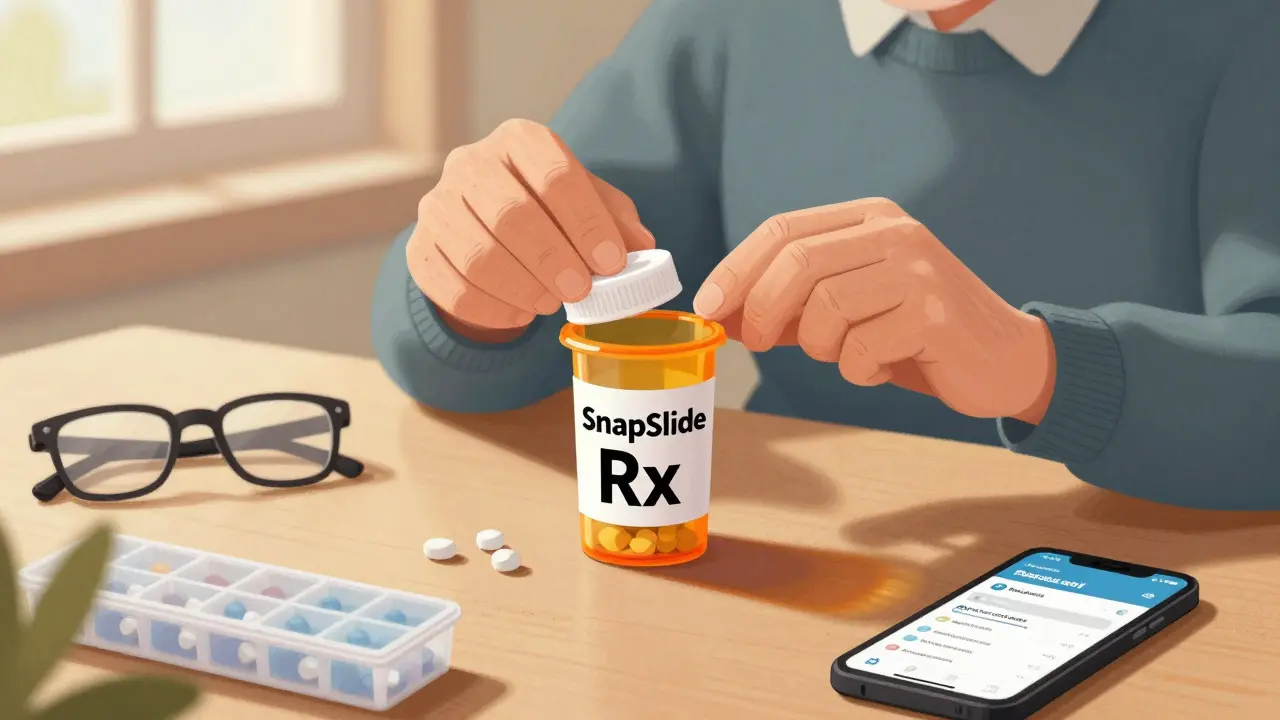
Getting your prescription meds shouldn’t feel like a puzzle. If you or someone you care about has arthritis, weak grip, or trouble seeing small print, standard pill bottles can be more than annoying-they can be dangerous. Missing doses because you can’t open the cap or read the label increases the risk of hospital visits, bad reactions, and even death. The good news? You have rights. And pharmacies are required by law to give you easy-open caps and accessible labels when you ask. This isn’t a special favor. It’s a rule.
Why Standard Caps Don’t Work for Everyone
Most prescription bottles use a child-resistant cap-the kind you have to push down and twist at the same time. It’s designed to stop kids from opening them. But for many adults, especially those over 65, it’s nearly impossible. A 2022 FDA report found that nearly half of seniors struggle to open these caps. That’s not because they’re weak. It’s because the design demands 4.5 to 8.5 pounds of downward pressure while turning. For someone with stiff fingers, that’s like trying to open a jar of pickles with a broken wrist.
And it’s not just the cap. The label? Often printed in tiny 10-point font. If you’re reading it with glasses on, and the lighting is low, you’re guessing. Missed doses. Wrong doses. Confusion between meds. That’s how medication errors happen. The American Foundation for the Blind found that 68% of visually impaired users made at least one mistake because they couldn’t read their label. That’s unacceptable.
What You Can Ask For
You don’t need to guess what’s available. There are three proven alternatives:
- Easy-open caps like SnapSlide Rx. These slide open with one hand, require less than 2.5 pounds of force, and still block kids. Independent tests show 87% of seniors with arthritis can open them in under 30 seconds.
- Large-print labels with 16-point font or bigger. No more squinting. The text should be bold, high-contrast (black on white), and include the drug name, dose, and instructions clearly.
- Braille or audio labels. Braille must follow Grade 2 standards with 0.5mm dot height. Audio labels play the full label info in under 90 seconds when you press a button-no phone app needed.
Some pharmacies offer flip caps with big ridges for grip. These aren’t always child-resistant, so they’re not ideal for homes with kids. But if you live alone, they’re a solid option. The key is to ask for what works for you.
How to Actually Get It
Don’t wait until you’re at the pickup window. Start at the prescription stage.
- Call or visit your pharmacy before the prescription is filled. Tell them you need accessible packaging. Say: “I need easy-open caps and large-print labels for this prescription.” Don’t apologize. Don’t ask nicely. State it like a fact.
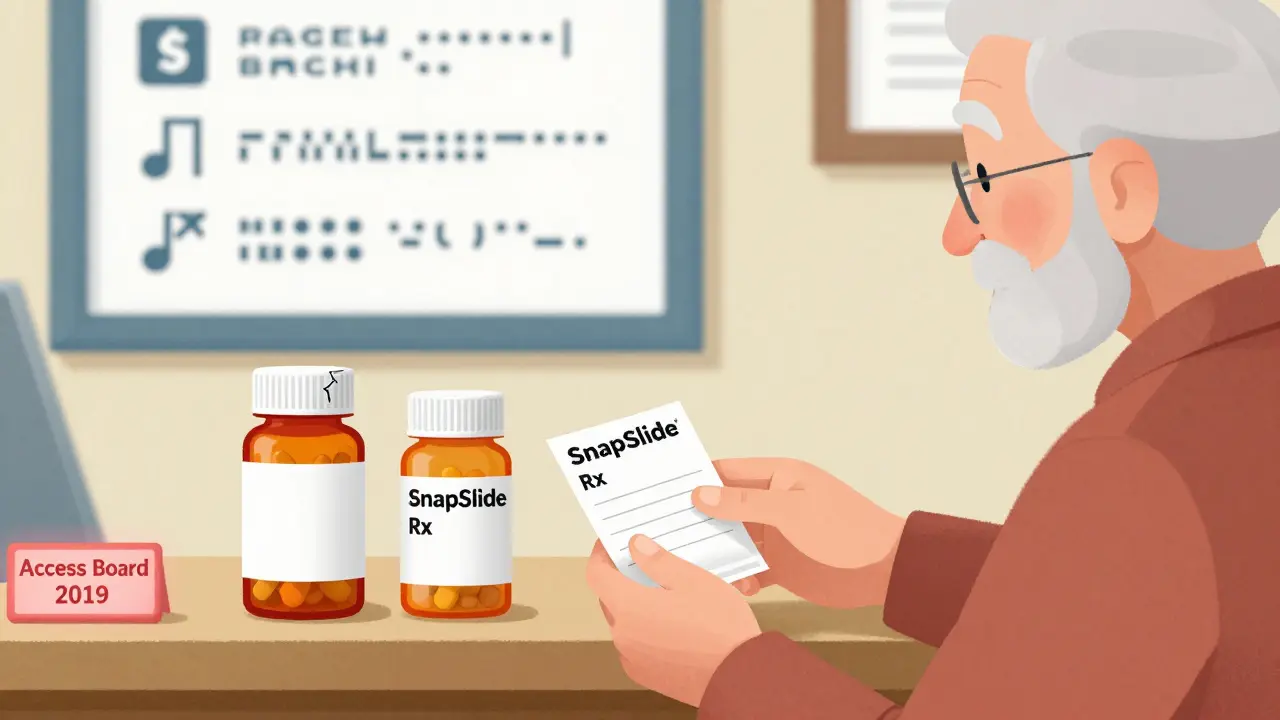
- Bring a doctor’s note if you have one. It helps, but it’s not required. Under federal guidelines from the Access Board (2019), pharmacies must provide these options upon request-no proof needed. If they say you need documentation, they’re wrong.
- Ask for a specific brand. SnapSlide Rx, EZ-Open, and cold-seal wallet packs are widely recognized. Name them. For example: “Can you use SnapSlide caps for my blood pressure med?” That cuts through confusion.
- Expect a delay. Most pharmacies need 24 to 72 hours to switch packaging. Plan ahead. Don’t wait until you’re out of pills.
If they say, “We don’t have those in stock,” ask: “Can you order them?” If they say no, ask for the pharmacy manager. If they still refuse, cite the Access Board’s 2019 guidelines. You’re not being difficult-you’re exercising your right to safe, accessible medication.
What Works Best (And What Doesn’t)
Not all “senior-friendly” packaging is equal. Here’s what the data shows:
| Package Type | Child Resistance | Senior-Friendliness | Cost Increase | Availability |
|---|---|---|---|---|
| Standard Push-Turn Cap | 98% | 51% struggle to open | 0% | Universal |
| SnapSlide Rx (Sliding Cap) | 94% | 87% open easily | 18% | CVS, Walgreens, major chains |
| Large-Print Label | N/A | 95% improvement in accuracy | 5% | Most pharmacies |
| Braille Label | N/A | 83% adherence increase | 12% | Requires request |
| EZ-Open (Grip Cap) | None | High | 15% | Low |
Notice this: SnapSlide Rx doesn’t sacrifice safety for ease. It keeps 94% of child resistance while making life easier for seniors. That’s the gold standard. EZ-Open caps are easier to open but offer no child protection. Use them only if there are no kids around.
Where to Find Help
You’re not alone. These resources can help you get what you need:
- National Council on Aging Medication Access Hotline: 1-800-555-0123. They’ve helped over 12,500 people in early 2024 alone, with a 94% success rate.
- American Foundation for the Blind: Their online tool finds pharmacies within 10 miles that offer braille, audio, or large-print labels.
- Medicare Part D: As of 2024, it covers the extra cost of accessible packaging if you have documented vision or dexterity issues. Ask your pharmacist to file the claim.
Also, check with your local Area Agency on Aging. Many run medication safety programs and can even deliver accessible packaging to your door.
What’s Changing in 2025 and Beyond
The rules are getting stricter-and faster. The FDA’s 2024 draft guidance says all new prescription drugs must be tested for senior accessibility before approval. The EU’s new MDR rule, effective January 2025, will require dual testing for kids and seniors. By 2027, over two-thirds of all prescriptions are expected to come with accessible packaging built in.
CVS already rolled it out to all 10,000+ of its U.S. pharmacies. Walgreens and Rite Aid are catching up. But independent pharmacies? Only 37% offer it regularly. That’s why you have to ask. Don’t assume. Don’t wait.
Real Stories
One user on Reddit, ArthritisWarrior82, said after switching to SnapSlide caps: “My adherence jumped from 65% to 95%. I haven’t missed a dose in 11 months.”
Another woman in Phoenix called Walgreens three times asking for large-print labels for her mother’s heart medication. Each time, they said “no inventory.” She finally got them after citing HIPAA-because under federal law, pharmacies can’t deny accessible labels based on stock.
These aren’t outliers. They’re the norm. And you can change it too.
What to Do If You’re Refused
If a pharmacy refuses:
- Ask for the manager.
- Ask to speak to the pharmacy’s compliance officer.
- Call the National Council on Aging hotline-they’ll draft a letter for you to send.
- File a complaint with the U.S. Access Board or your state’s pharmacy board. You can find links at access-board.gov.
Remember: You’re not asking for luxury. You’re asking for safety. And under federal law, that’s non-negotiable.
Do I need a doctor’s note to get easy-open caps or large-print labels?
No. Federal guidelines from the Access Board (2019) say pharmacies must provide accessible packaging upon request-no documentation needed. A doctor’s note can help speed things up, but it’s not required. If a pharmacist says otherwise, they’re misinformed.
Are easy-open caps safe for kids?
Yes. The best senior-friendly caps, like SnapSlide Rx, still meet child-resistant standards. They’re tested to ensure that 90% or more of children under five cannot open them within 10 minutes. The goal isn’t to remove child safety-it’s to add senior access without taking it away.
How long does it take to get accessible packaging?
Most pharmacies need 24 to 72 hours to switch the packaging. That’s because they don’t keep these bottles on the shelf. They order them from suppliers. Plan ahead. Request it when your doctor writes the script, not when you pick it up.
Can I get both large-print labels and easy-open caps together?
Absolutely. Many people need both. The cap and the label are separate features. You can request them together. Pharmacies are required to accommodate multiple accessibility needs on the same prescription.
Why don’t all pharmacies offer this?
Cost and logistics. Accessible packaging costs 15-20% more to produce. Independent pharmacies often can’t afford to stock it. But major chains like CVS now offer it system-wide. And since Medicare Part D now covers the cost for eligible patients, more pharmacies are starting to provide it. You just have to ask.
Is this available in Australia?
Yes. While the rules above are based on U.S. regulations, Australia’s Therapeutic Goods Administration (TGA) also requires accessible labeling for prescription medications. Pharmacies here must provide large-print, braille, or audio options upon request. The same steps apply: ask early, be specific, and don’t take no for an answer.
Medication safety isn’t a luxury. It’s a basic right. And if you can’t open your pill bottle or read your label, you’re not failing-you’re being failed by a system that hasn’t caught up. But you have the power to change that. Ask. Persist. Demand. Your health depends on it.

February 4, 2026 AT 12:38 PM
This is the kind of post that makes me feel hopeful. I’ve seen my grandma struggle with her meds for years-she’d just leave pills in the bottle because she couldn’t open them. I had no idea she had a RIGHT to ask for easier caps. I’m printing this out and taking it to her pharmacy tomorrow. 😊
February 5, 2026 AT 00:19 AM
It’s not just about accessibility-it’s about dignity. Pharmacies treating seniors like burdens instead of customers with rights is a moral failure. And yet, most people just accept it. Shameful.
February 6, 2026 AT 17:48 PM
Let’s be real-this whole ‘easy-open cap’ movement is just another corporate buzzword wrapped in virtue signaling. The real issue? Overprescribing. Why are seniors on 12 meds anyway? Fix the root cause, not the packaging. 🤷♂️
February 7, 2026 AT 11:07 AM
I find it deeply concerning that people are being encouraged to demand accommodations as if they are entitlements rather than privileges. The pharmaceutical industry operates under strict regulatory frameworks-this is not a matter of personal preference but of systemic compliance. One cannot simply ‘ask’ and expect universal change without legislative backing.
February 8, 2026 AT 09:05 AM
There’s a quiet revolution happening here-not in the laws, but in the way we see aging. We’ve spent decades designing for the young, the able, the fast. Now we’re finally realizing: safety isn’t about convenience. It’s about belonging. If a pill bottle can’t be opened by someone who’s lived 70 years, then the system has failed them-not the other way around.
February 10, 2026 AT 08:13 AM
i didn't know you could ask for braille labels... my mom's been using the same bottle for 3 years and she's been guessing the names. i'm calling her pharmacy right now. thank you for this.
February 10, 2026 AT 19:32 PM
This is beautiful. I’m from a small town where the pharmacist knows everyone’s name. I’m gonna walk in tomorrow and say, ‘Hey, I need SnapSlide caps for my dad’s blood pressure med.’ No apology. No hesitation. Just facts. We’ve got this.
February 12, 2026 AT 01:29 AM
As someone from the UK, I’m glad to see this is being discussed. The NHS here has been rolling out similar options quietly for years. It’s not flashy, but it’s life-changing. A little empathy goes further than any law. 🙌
February 12, 2026 AT 22:18 PM
Oh great, now we’re making pill bottles for old people? What’s next? Special spoons for people who can’t hold a fork? This country is turning into a daycare. If you can’t open a bottle, maybe you shouldn’t be managing your own meds.
February 13, 2026 AT 05:48 AM
Ask early. Simple.
February 13, 2026 AT 11:16 AM
Let me get this straight-you want pharmacies to carry *special* bottles because some people are too weak to twist? And now you want audio labels? Next thing you know, we’ll be requiring pharmacies to have sign language interpreters on standby. This is the slippery slope of coddling. And don’t even get me started on Medicare paying for it. 💸
February 15, 2026 AT 02:32 AM
Okay, I’ve been waiting for someone to write this. My aunt had a stroke last year and now her hands shake like a leaf. She was on three meds and missed doses for six months because she couldn’t read the labels or open the caps. One day she just cried and said, ‘I don’t want to die because I can’t read my own medicine.’ We called Walgreens, named SnapSlide, and they shipped it in two days. Now she takes everything on time. No drama. No guilt. Just a simple change that saved her life. I’m telling everyone I know. This isn’t special treatment. It’s basic human respect.
February 16, 2026 AT 20:06 PM
THIS. THIS IS THE POST WE NEED. I work in a pharmacy and I’ve seen people cry because they couldn’t open their insulin bottle. We don’t always have SnapSlide caps on hand, but we *can* order them-and we will if you ask. Don’t be shy. Say ‘I need easy-open caps and large-print labels’ like you mean it. We’re here to help. 💪❤️
February 18, 2026 AT 12:49 PM
My dad’s got Parkinson’s. We switched to EZ-Open caps last year. He can finally open his meds alone. No more asking me to do it. That’s not convenience-that’s independence. Thank you for saying this out loud.
February 19, 2026 AT 21:55 PM
From a clinical pharmacy standpoint, the adherence metrics cited (87% for SnapSlide, 95% for large-print) align with WHO’s 2023 Global Medication Adherence Report. The cost-benefit analysis is unequivocal: every $1 invested in accessible packaging reduces hospitalization costs by $4.70. This is not a social service-it’s a cost-effective clinical intervention. Pharmacies that resist are operating in a pre-evidence-based paradigm.