
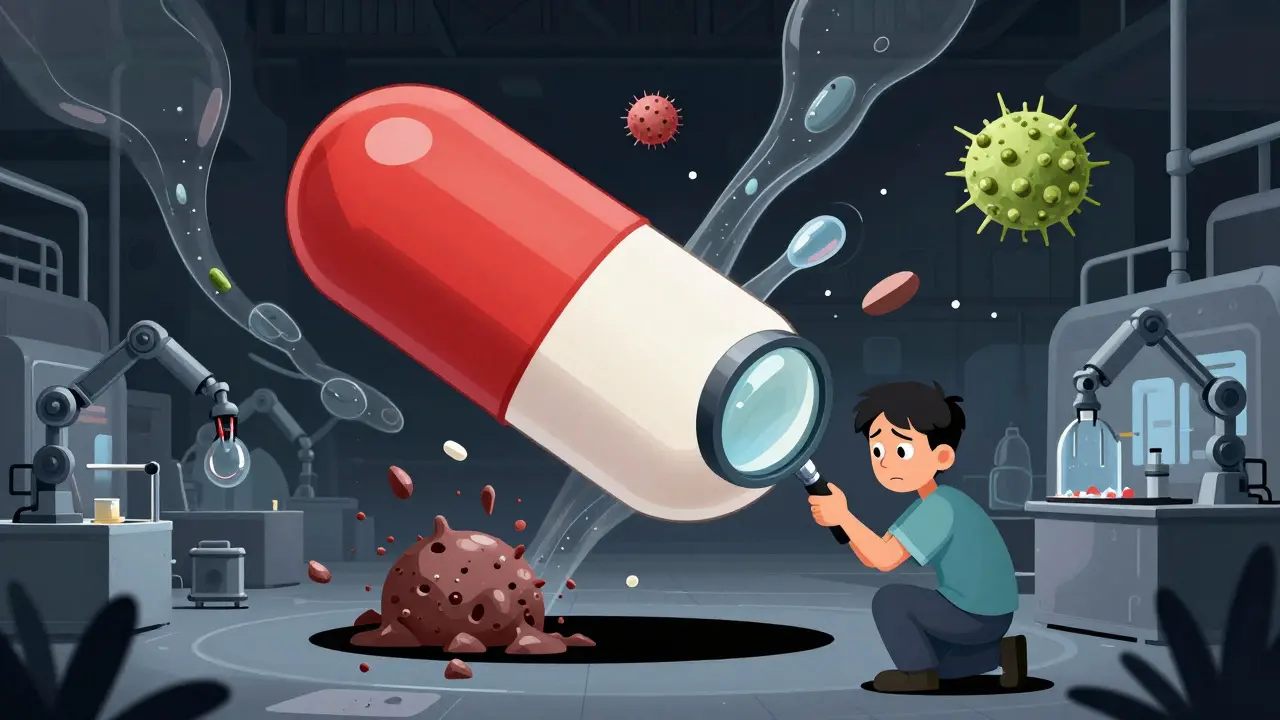
Every day, millions of people take generic drugs because they’re affordable, effective, and widely available. But behind that simplicity lies a hidden risk: contamination. In 2022, generic drug contamination was behind nearly 4 out of every 10 drug recalls in the U.S., according to FDA data. These aren’t rare outliers. They’re systemic failures tied to global supply chains, aging facilities, and cost-cutting pressures that compromise safety. You might not know it, but the pill you swallow could carry traces of another drug, harmful microbes, or even metal particles. This isn’t science fiction. It’s happening right now-and here’s how to understand, prevent, and respond to it.
What Exactly Is Generic Drug Contamination?
Contamination means unwanted substances get into a drug during manufacturing, packaging, or handling. These can be chemical, microbial, or physical. A chemical contaminant might be leftover active ingredient from a previous batch-say, blood pressure medicine mixing into an antibiotic. Microbial contamination could be mold or bacteria growing in a vial. Physical contamination? Think tiny metal shards from worn machinery or blue specks of copper in metronidazole tablets, as one pharmacist reported on Reddit in early 2022. The FDA defines this as the "undesired introduction of impurities" from the environment, other products, or even the process itself. And it’s not just about dirt. Even tiny amounts of certain chemicals can be dangerous. For example, nitrosamines-carcinogenic impurities found in some blood pressure meds-were traced back to faulty chemical reactions during production. Over 2,300 recalls followed in 2018-2019, affecting dozens of manufacturers across eight countries.Why Are Generic Drugs More at Risk?
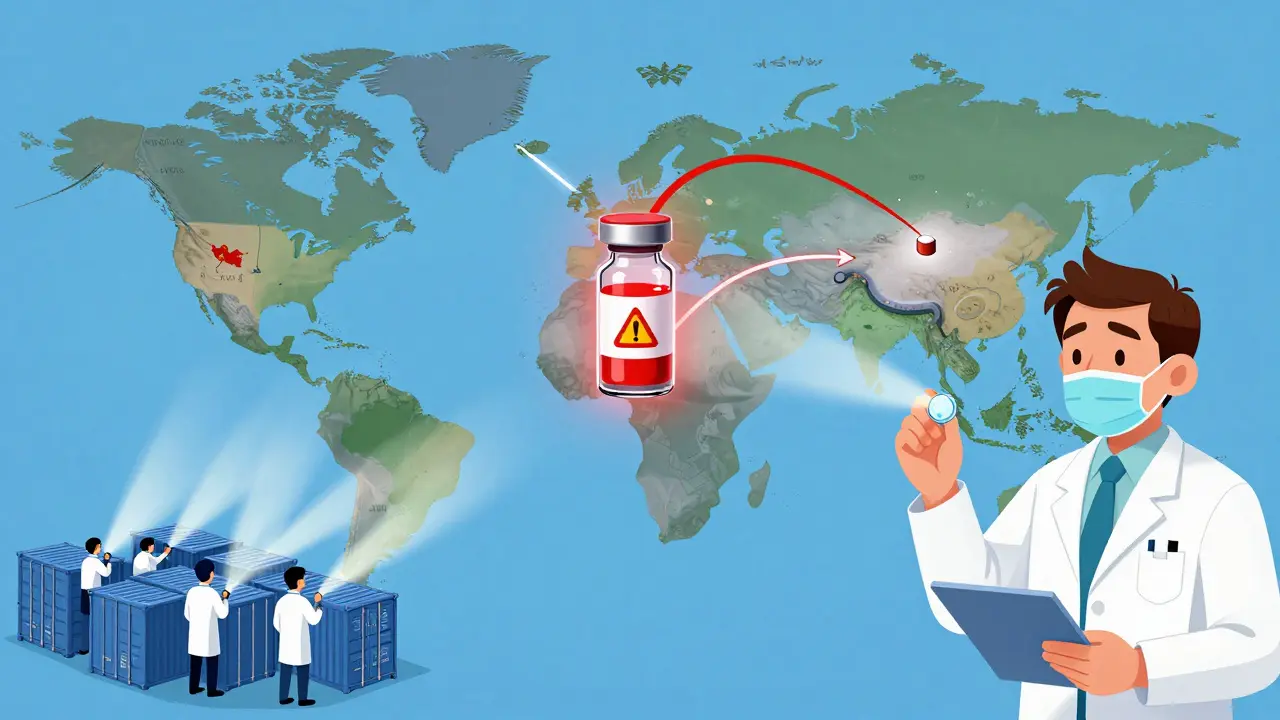
Generic drugs must meet the same standards as brand-name drugs. Legally, they’re required to be identical in strength, dosage, and effectiveness. But here’s the catch: they’re made under tighter financial constraints. While brand-name companies often have profit margins of 60-70%, generic manufacturers average just 20-25%. That difference shapes everything. Many generic drug makers operate in older facilities built before 2000. These buildings weren’t designed for today’s contamination controls. They have shared ventilation systems, outdated cleaning protocols, and staff who may not get enough training. In 2022, FDA inspections found 8.3% of generic manufacturing sites had contamination-related violations-nearly double the rate of innovator facilities. The supply chain makes it worse. About 80% of the active ingredients in U.S. drugs come from just two countries: India and China. The FDA inspects only about 1% of imported drug shipments each year. That means most contamination goes undetected until someone gets sick-or a batch fails testing.How Contamination Happens: The Real-World Pathways
Contamination doesn’t happen by accident. It follows predictable paths:- Cross-contamination: When one drug residue transfers to another during production. This is especially risky for highly potent drugs like cancer treatments. Even 10 parts per million (ppm) of residue can be dangerous if the drug is toxic at low doses.
- Personnel contamination: People are the biggest source of particles in cleanrooms. A single person sheds about 40,000 skin cells per minute and releases over 100,000 particles larger than 0.3 microns just by standing still. If gowning procedures aren’t strict, those particles get into pills or injections.
- Equipment and cleaning failures: If cleaning validation isn’t done right, residues remain. The FDA requires manufacturers to prove they remove 10 ppm of previous product residue-but that limit isn’t always scientifically justified. For some drugs, even 1 ppm is too much.
- Compounding errors: In pharmacies, handling hazardous drugs like chemotherapy agents leads to surface contamination. OSHA found copper and cyclophosphamide on 85% of pharmacists’ work surfaces despite existing guidelines.
What’s Being Done to Prevent It?
Prevention starts with Good Manufacturing Practices (GMP)-but compliance isn’t enough. The most effective companies go further:- Closed manufacturing systems: Teva’s facility in Bologna, Italy, cut cross-contamination by 78% between 2018 and 2022 by sealing production lines. No air exchange. No human contact. Just robots handling everything.
- Real-time monitoring: Mylan’s Morgantown plant installed sensors that track particles and humidity 24/7. They reduced contamination incidents by 82% in three years.
- Rapid microbiological testing: Instead of waiting 7 days for lab results, top manufacturers now use technologies that detect microbes in 4 hours. By 2022, 63% of leading generic makers had adopted these tools.
- Vertical integration: Companies that make their own active ingredients (APIs) see 22% fewer contamination issues. Controlling the source reduces supply chain risks.
How to Spot and Report Contamination
You won’t always know if a drug is contaminated. But there are red flags:- Unusual color, odor, or texture in pills or creams
- Unexpected side effects-not listed on the label
- Medication that seems weaker or stronger than usual
- Pills from a new manufacturer you’ve never used before
What Happens After a Recall?
When contamination is confirmed, the FDA initiates a recall. There are three classes:- Class I: Highest risk. Could cause serious injury or death. (e.g., contaminated insulin or chemotherapy)
- Class II: May cause temporary or reversible health problems.
- Class III: Unlikely to cause harm, but violates labeling or manufacturing rules.
What You Can Do to Protect Yourself
You can’t control the factory. But you can control what you do with your medication:- Check the manufacturer. Not all generics are equal. Look up the company. Some have better track records than others.
- Don’t switch brands randomly. If your generic works fine, don’t change it unless your doctor advises it. Different manufacturers use different fillers and processes.
- Store meds properly. Heat, moisture, and light can degrade drugs and make contamination worse. Keep them in a cool, dry place.
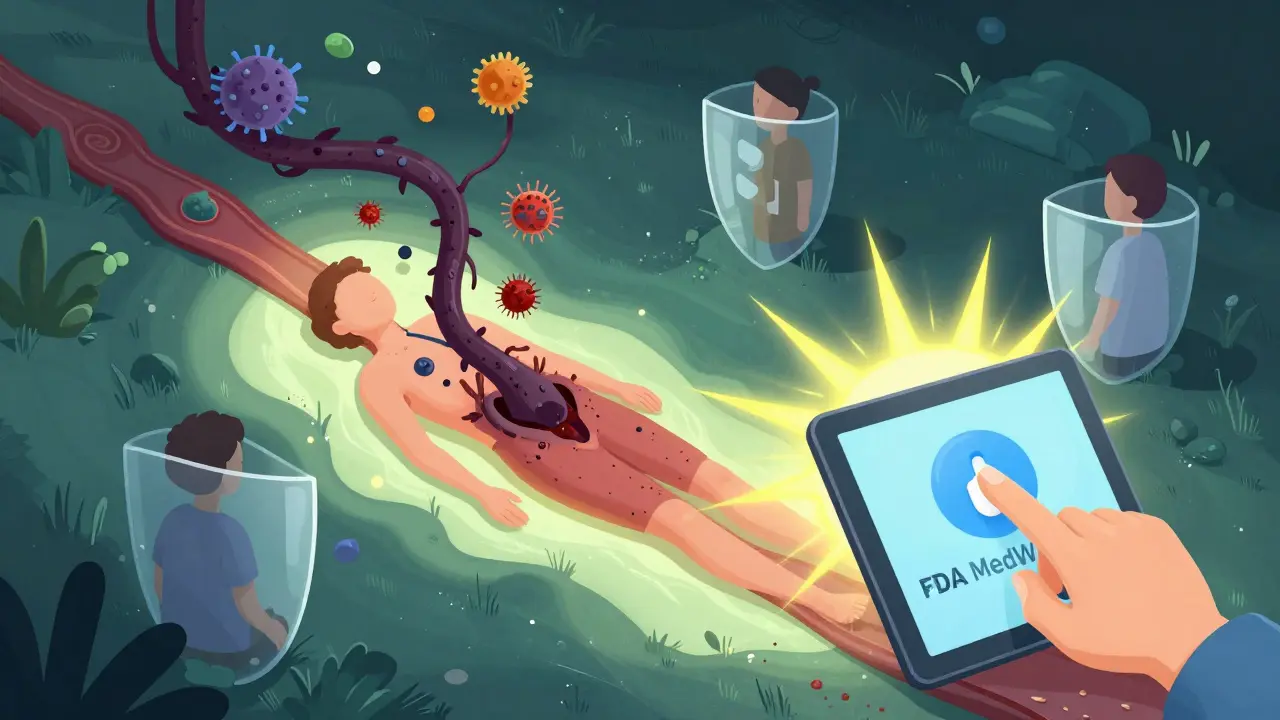
- Report anything suspicious. Use MedWatch. Talk to your pharmacist. Your report could save someone’s life.
Is It Still Safe to Take Generic Drugs?
Yes. The vast majority of generic drugs are safe and effective. They’ve helped millions save money without sacrificing health. But safety isn’t guaranteed-it’s earned through vigilance, regulation, and investment. The system is improving. Faster testing. Better monitoring. Stronger rules. But until every facility is held to the same standard, and every shipment is inspected, risk remains. The goal isn’t perfection. It’s awareness. You deserve to know what’s in your medicine. And you have the right to demand better.How common is contamination in generic drugs?
Contamination-related issues caused 22% of all drug recalls in 2022, with 37% of those specifically affecting generic drugs. While most generics are safe, the risk is higher than with brand-name drugs due to cost pressures, older facilities, and less frequent inspections.
Can I tell if my generic drug is contaminated?
Sometimes. Look for changes in color, texture, smell, or unexpected side effects. Blue specks in pills, oily residue on creams, or a metallic taste can be warning signs. But many contaminants-like chemical residues or low-level microbes-are invisible. If you suspect contamination, stop taking the drug and contact your pharmacist or doctor.
Are all generic drugs made overseas?
No, but 80% of the active ingredients in U.S. generic drugs come from overseas, mostly India and China. Final packaging may happen in the U.S., but the core chemical component often travels halfway around the world before reaching you. This increases the chance of contamination during transport or handling.
What should I do if I think my medication is contaminated?
Stop taking it immediately. Keep the packaging and any remaining pills. Contact your pharmacist or doctor for advice. Then report it to the FDA’s MedWatch system at fda.gov/medwatch. Your report helps track patterns and can lead to recalls that protect others.
Why don’t pharmacies test drugs for contamination?
Most pharmacies lack the equipment and funding to test for chemical or microbial contamination. Testing requires lab-grade tools, trained personnel, and time-all expensive. Pharmacists rely on manufacturers and regulators to ensure safety. That’s why reporting suspicious products is so important.
Is the FDA doing enough to prevent contamination?
The FDA has improved with new tools like PREDICT, AI monitoring, and faster testing methods. But it inspects only about 1% of imported drug shipments. With over 1,000 foreign manufacturing sites supplying the U.S., that’s not enough. Experts agree: current oversight doesn’t match the scale of the risk.

January 8, 2026 AT 01:57 AM
Just saw a patient develop a rash from a generic hydrocortisone cream last week. Turned out to be trace betamethasone. No one caught it until the patient came back. This isn’t rare. It’s systemic. We need better traceability-now.
And yes, I know the FDA’s new AI tools are promising, but they’re not scanning every batch. We’re gambling with people’s lives.
Report everything. Even if it seems small.
January 9, 2026 AT 07:30 AM
India and China make 80% of our meds? That’s national security failure. We used to make pills here. Now we’re trusting factories with no OSHA oversight. Wake up, America.
Stop buying foreign generics. Pay the extra $2. Or die quietly.
January 10, 2026 AT 19:16 PM
Think about it-what is a drug, really? Is it just a molecule? Or is it the entire chain of human labor, greed, oversight, and desperation that brought it to your hand? The contamination isn’t just chemical-it’s moral. We outsourced not just production, but responsibility. We bought cheap pills and sold our conscience for a discount.
And now we’re surprised when the pills poison us? No, we didn’t get unlucky. We chose this. We normalized the invisible cost. The metal shavings? They’re the physical manifestation of our collective apathy.
Every time you say ‘it’s just a generic,’ you’re signing a silent contract with entropy.
Maybe we need to stop asking how to prevent contamination-and start asking how we stopped caring.
And yes, I know this sounds like a TED Talk from a guy who meditates with his pills. But truth doesn’t care if it’s uncomfortable.
January 11, 2026 AT 05:13 AM
Ken, your rant is toxic. Not everyone can afford brand names. Blaming India and China ignores the fact that U.S. corporations pushed manufacturing overseas to maximize profit.
And Joanna? Thank you. You’re right-report everything. I’ve seen pharmacists get yelled at for questioning a batch. That needs to stop.
We need whistleblower protections for pharmacy techs. We need mandatory third-party audits. We need to stop treating patients like afterthoughts.
This isn’t about nationalism. It’s about dignity.
January 11, 2026 AT 11:57 AM
Blue specks in metronidazole… copper dust in pills… it’s like someone dropped a rainbow into a chemistry lab and forgot to clean it up.
And we swallow it? With a glass of water? Like it’s just… normal?
My grandma used to say, ‘If it looks weird, don’t chew it.’ She didn’t know about nitrosamines, but she knew instinctively: trust your gut.
Now we have AI predicting contamination at 89% accuracy… but we still don’t inspect 99% of shipments.
It’s not a system failure. It’s a soul failure.
And the worst part? We’re all complicit. We click ‘buy now’ without reading the fine print.
Maybe we’re not just patients.
Maybe we’re the product.
January 13, 2026 AT 09:04 AM
STOP. Just stop. If you’re taking a generic, check the manufacturer. Look up their FDA inspection history. It’s on the website. Five minutes. That’s all it takes.
I’m not saying don’t use generics. I’m saying be smart. Don’t be passive. You’re not helpless.
And if you see something weird? Report it. Even if you think no one cares. Someone does. I’ve been there. I’ve held a pill that looked off. I called the pharmacist. We stopped a batch. Saved two people.
You have power. Use it.
January 14, 2026 AT 06:52 AM
As a pharmacist with 18 years in community care, I’ve seen it all. Contaminated antibiotics. Pills with metallic glitter. Creams that smell like burnt plastic.
We don’t test them. We can’t. But we do keep records. And we do report. Quietly. Because the system doesn’t reward vigilance-it punishes it.
If you’re worried about your meds, ask your pharmacist for the manufacturer’s lot number. Then go to fda.gov/medwatch. It’s not glamorous. But it’s how change starts.
You’re not alone. We’re all in this together.
January 15, 2026 AT 08:26 AM
Wait-you’re telling me the FDA uses AI to predict contamination… but doesn’t inspect shipments? That’s not innovation. That’s theater.
What if the AI is trained on data from the same factories that are cheating? Then it’s just a lie with a algorithm.
And who’s funding this AI? Big Pharma? The same companies that lobby to keep inspections minimal?
It’s not contamination we’re facing.
It’s a performance.
And we’re all in the audience.
Watching.
Waiting.
Swallowing.