
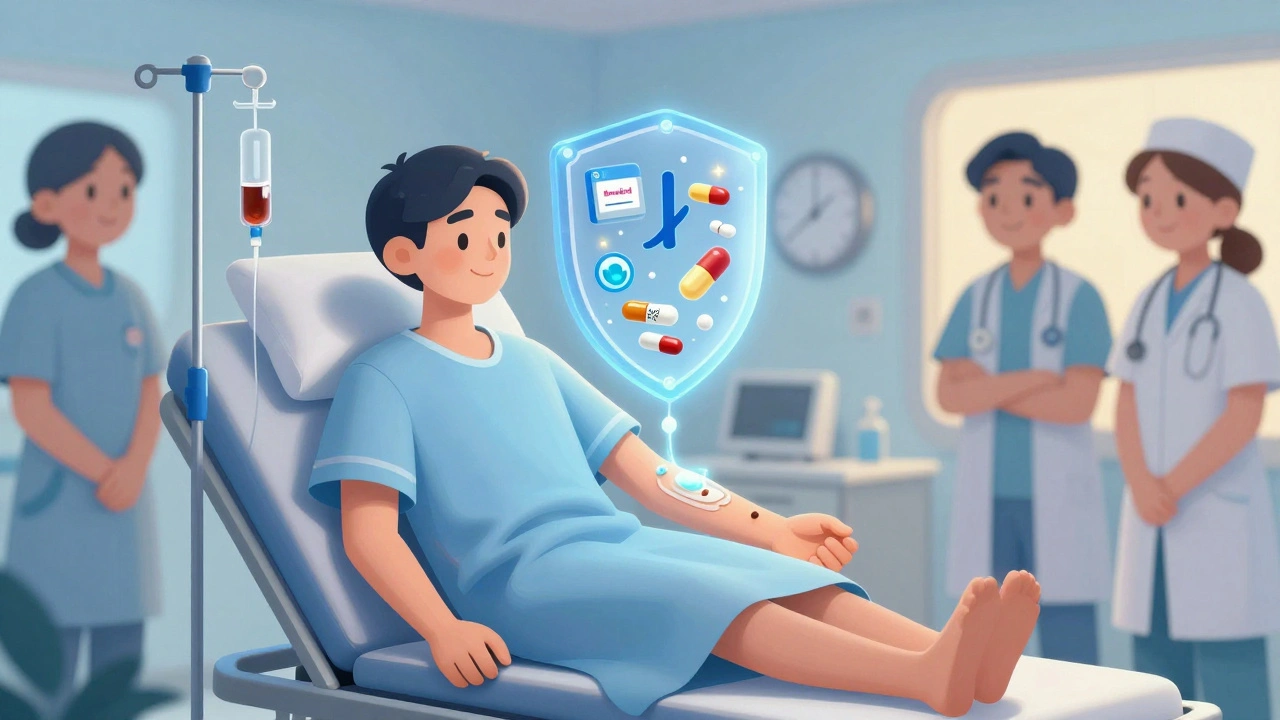
When you’re scheduled for a CT scan or X-ray with contrast dye, most people don’t think about the risks. But if you’ve had a reaction before-or even just heard someone talk about it-you might be nervous. The good news? You don’t have to avoid the scan. With the right pre-medication and safety plan, your risk drops dramatically. This isn’t guesswork. It’s based on decades of research and used every day in hospitals from Sydney to New York.
What Exactly Is a Contrast Dye Reaction?
Contrast dye, usually iodine-based, helps doctors see blood vessels, organs, and tumors clearly on scans. It’s not a drug you take for pain or infection-it’s a tool. But your body doesn’t always see it that way. About 0.04% to 0.22% of people have some kind of reaction. Most are mild: itching, nausea, a warm flush. But in 1 out of every 2,500 cases, the reaction can be severe-low blood pressure, trouble breathing, even cardiac arrest. The scary part? If you’ve had a reaction before, your chance of having another one jumps to 35%. That’s not a small risk. But here’s the key: pre-medication can slash that risk down to about 2%.Who Needs Pre-Medication?
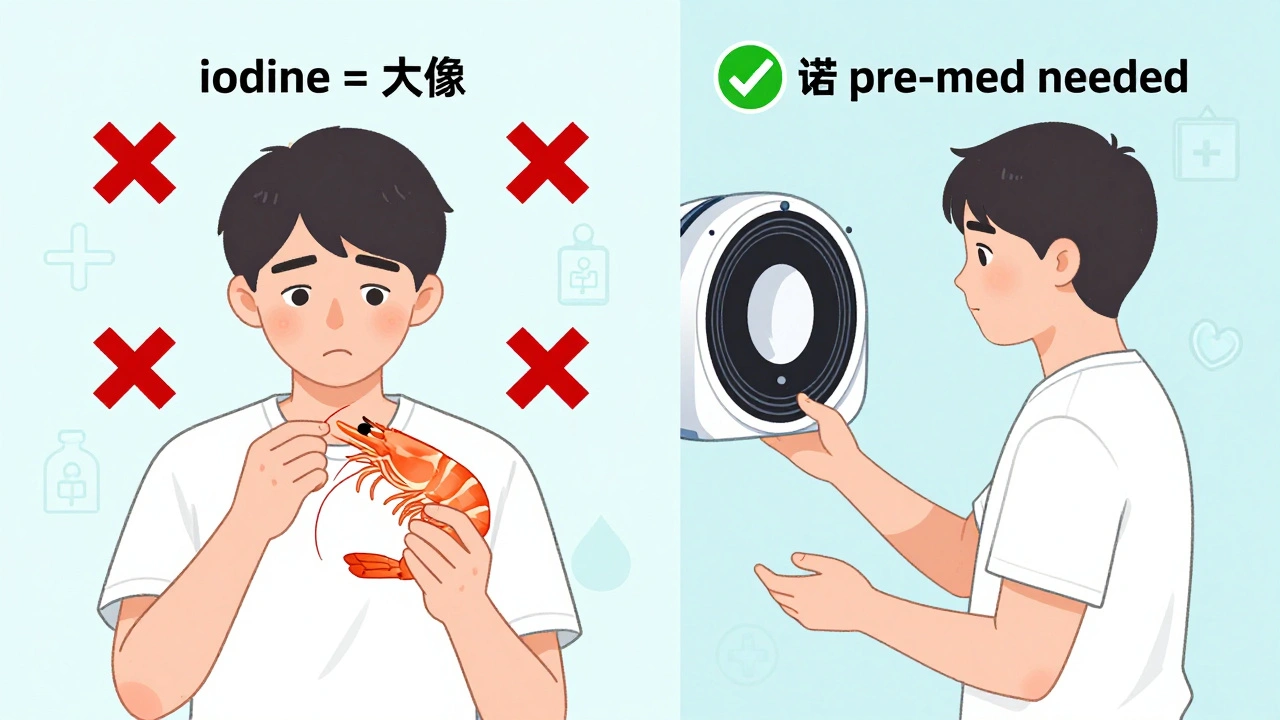
Not everyone does. You only need it if you’ve had a prior allergic-type reaction to iodinated contrast dye. That means symptoms like hives, swelling, wheezing, or vomiting during or right after a previous scan. A lot of people think allergies to shellfish, iodine, or Betadine mean they’re at higher risk. They’re not. Studies show those allergies don’t increase your chance of a contrast reaction by much-maybe 2 to 3 times higher than the general population. That’s not enough to justify pre-medication. If you’ve never reacted to contrast dye before, even with a shellfish allergy, you’re likely fine without any meds. Mild reactions in the past-like a little itching or nausea-usually don’t require pre-medication anymore. New data shows the chance of a repeat mild reaction is very low. But if you’ve had a moderate reaction (like swelling or breathing trouble), or a severe one (like low blood pressure or collapse), you almost always need pre-medication-unless it’s an emergency.The Standard Pre-Medication Protocols
There are two main ways to give pre-medication: oral (by mouth) and intravenous (IV). Which one you get depends on how much time you have. Oral Protocol (for planned scans) If you have at least 13 hours before your scan, this is the most common route:- Prednisone 50 mg by mouth at 13 hours before the scan
- Prednisone 50 mg again at 7 hours before
- Prednisone 50 mg one more time at 1 hour before
- Diphenhydramine (Benadryl) 50 mg by mouth, 1 hour before
- Methylprednisolone (Solu-Medrol) 40 mg IV, given immediately
- Followed by another 40 mg IV every 4 hours until just before the scan
- Diphenhydramine 50 mg IV, given 1 hour before the contrast
- Hydrocortisone (Solu-Cortef) 200 mg IV, given immediately
- Followed by another 200 mg IV every 4 hours until before the scan
- Diphenhydramine 50 mg IV, 1 hour before
What If You Don’t Have 13 Hours?
You’re not out of options. A 2017 study showed a 5-hour accelerated protocol works just as well:- Methylprednisolone 32 mg by mouth at 5 hours before
- Methylprednisolone 32 mg by mouth at 1 hour before
- Diphenhydramine 50 mg by mouth or IV at 1 hour before
Pediatric Guidelines
Kids don’t get the same doses as adults. For children 6 years and older who need antihistamine-only pre-medication (no steroids):- Cetirizine 10 mg by mouth, 1 hour before the scan
What About Switching Contrast Dyes?
Here’s something many people don’t know: sometimes, the best protection isn’t medication-it’s changing the dye. If you had a reaction to one brand or type of iodinated contrast, switching to a different one-even within the same class-can cut your risk just as much as pre-medication. For example, if you reacted to iohexol, they might use ioversol instead. Many top hospitals now recommend this as the first step, especially if the inciting agent is known. It’s cheaper, has fewer side effects, and avoids steroid exposure. It’s not always possible, but it’s worth asking.Safety Planning: It’s Not Just About the Pills
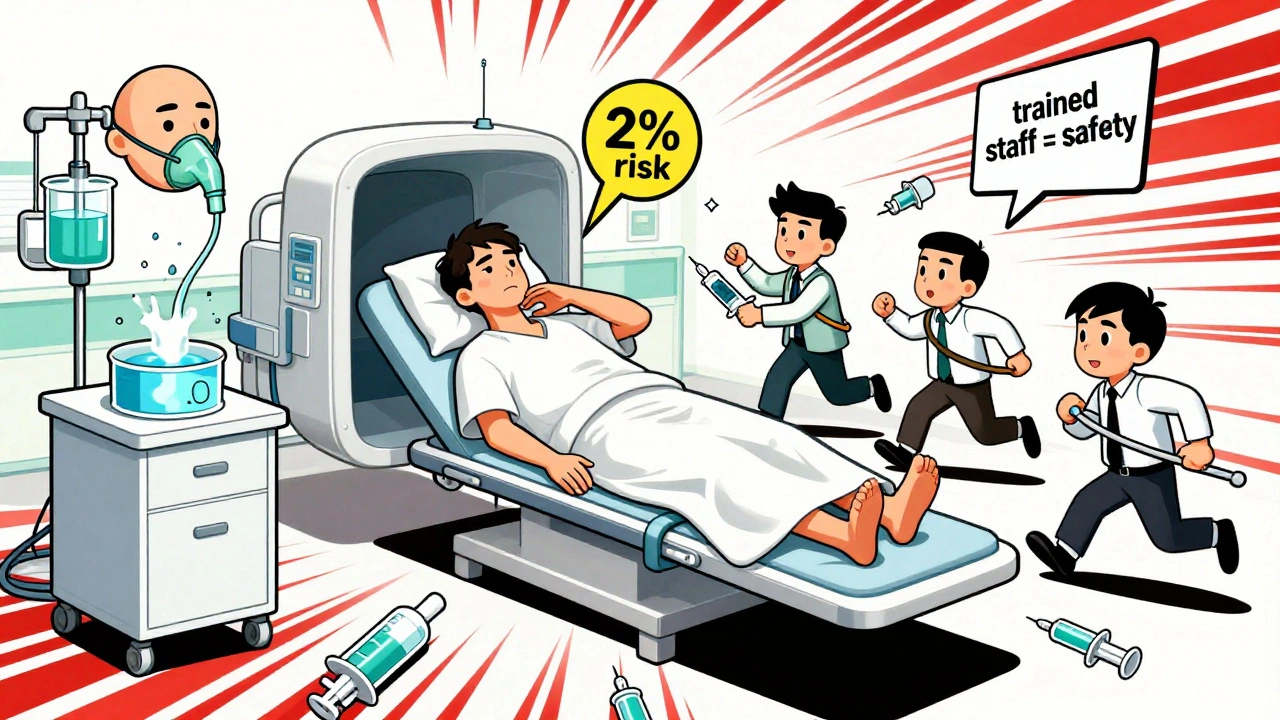
Pre-medication doesn’t mean you’re safe. It reduces risk-not eliminates it. That’s why safety planning is just as important.- You must be scanned at a facility with trained staff and emergency equipment nearby. No outpatient clinics without crash carts.
- If you’ve had a severe reaction before, your scan should be done in a hospital setting-like a radiology department attached to an ER or ICU.
- Your doctor must consult with a radiologist before scheduling. This isn’t bureaucracy-it’s a safety check.
- Always tell the tech you’ve had a reaction and that you’re on pre-medication. Even if they have your chart, say it out loud.
What Happens If You Still React?
Even with all the right meds, about 2% of people still have a reaction. That’s why hospitals are required to have emergency protocols ready. If you start feeling dizzy, itchy, or short of breath during the scan, tell the tech immediately. They’ll stop the injection. Then they’ll act fast: oxygen, IV fluids, epinephrine if needed. Most reactions are caught early and handled without long-term harm. But here’s the hard truth: pre-medication doesn’t guarantee safety. It just makes things much safer. That’s why you still need trained staff on standby.Cost and Accessibility
The cost of pre-medication is tiny. Prednisone 50 mg pills cost about 25 cents each. Benadryl is 15 cents a dose. Together, it’s less than a dollar. Compared to a $1,000 CT scan, it’s negligible. Most academic hospitals follow these protocols exactly. But in smaller clinics or rural areas, adherence drops to around 78%. If you’re getting scanned outside a major center, ask: “Do you follow the ACR guidelines for contrast pre-medication?” If they don’t know what you’re talking about, push for a referral to a facility that does.The Future: Is Pre-Medication Still Necessary?
Modern contrast dyes are much safer than the old ones. Back in the 1980s, reaction rates were 10 times higher. Today’s low-osmolar agents are gentler on the body. Some experts now believe we overuse pre-medication. The upcoming ACR Manual (Version 11, expected late 2024) is expected to shift focus from routine steroid use to contrast agent switching and better patient screening. But for now? If you’ve had a reaction before, pre-medication still saves lives. It’s not perfect. But it’s the best tool we have.Do I need pre-medication if I’m allergic to shellfish?
No. Shellfish allergies are not linked to contrast dye reactions. The myth comes from both containing iodine, but iodine isn’t the trigger. Your risk is only slightly higher than the general population-far below the threshold for pre-medication. Only if you’ve had a prior reaction to contrast dye itself should you consider pre-medication.
Can I take Benadryl the night before instead of the morning of?
No. Benadryl’s protective effect lasts only a few hours. Taking it the night before won’t help. The timing matters: it must be given within one hour of the scan to be effective. Same with steroids-they need to be given at 13, 7, and 1 hour before to build up the right level in your system.
Is it safe to get contrast dye if I have kidney problems?
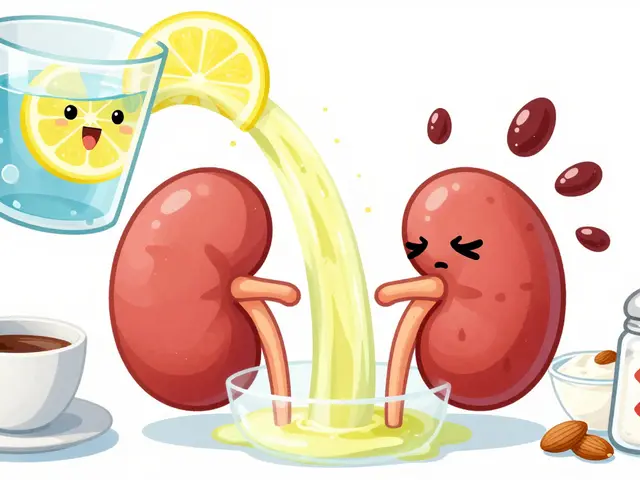
Contrast dye can stress the kidneys, especially in people with existing kidney disease. But this is a different issue from allergic reactions. Your doctor will check your kidney function with a blood test (eGFR) before the scan. If your kidneys are weak, they may delay the scan, give you extra fluids, or use a different type of contrast. Pre-medication doesn’t protect your kidneys-it only helps with allergic reactions.
What if I forget to take my prednisone before the scan?
If you missed your prednisone doses, tell the radiology team immediately. If you’re less than 4 hours from your scan, the pre-medication won’t work. They may delay the scan to give you IV steroids, or they might skip it and switch to a different contrast agent. Never show up and assume they’ll just give you the meds on the spot-timing is critical.
Can I use an EpiPen if I react during the scan?
Don’t try to use your own EpiPen. If you react, the radiology team will give you epinephrine through an IV, with the correct dose and monitoring. Self-administering can be dangerous-your dose might be wrong, or you might not know how to use it properly under stress. Let the professionals handle it.
Are there alternatives to iodinated contrast dye?
Yes, but they’re limited. Gadolinium-based contrast is used for MRI scans, not CT. For CT, there’s no widely accepted alternative. Some research is looking at carbon dioxide or ultrasound contrast, but they’re not replacements for iodinated dye in most cases. If you’re allergic and can’t use contrast, your doctor may rely on non-contrast scans, but the images won’t be as clear.
How long do the side effects of pre-medication last?
Prednisone can cause mild side effects like increased appetite, trouble sleeping, or a slight rise in blood sugar-usually gone in a day or two. Benadryl causes drowsiness, which can last 4 to 6 hours. Don’t drive or operate machinery until you’re fully alert. Most people feel normal by the next day.
Do I need pre-medication for every scan, or just the first time?
If you’ve had a prior allergic-type reaction, you need pre-medication for every future scan that uses iodinated contrast-no exceptions. Even if it’s been 10 years, your immune system remembers. Skipping pre-medication puts you at 35% risk again. Always inform the team, even if you think you’re fine.
What to Do Next
If you’re scheduled for a scan and have a history of contrast reaction:- Call your referring doctor and ask them to consult with a radiologist.
- Confirm whether you qualify for pre-medication based on your reaction history.
- Ask if switching contrast agents is an option.
- Get the exact timing and dosing instructions in writing.
- Arrange a ride home-you’ll need one.
- On the day of the scan, bring a list of your medications and your reaction history.


December 11, 2025 AT 20:41 PM
Just had my third contrast scan last month with the 5-hour prep protocol - no issues. Seriously, if you’ve had a reaction before, don’t panic. Just make sure the hospital knows your history and follows the ACR guidelines. It’s not rocket science, but it does require a little prep. I printed out the dosing schedule and handed it to the tech. They were impressed. 🙌
December 12, 2025 AT 01:49 AM
It’s wild how much fear surrounds this stuff when the data’s so clear. People panic about shellfish allergies like it’s a death sentence, but the science says otherwise. We’re talking about a 0.04% chance of a serious reaction - less than being struck by lightning. Pre-medication isn’t magic, it’s medicine. And medicine is about reducing risk, not eliminating fear.
December 13, 2025 AT 06:44 AM
Wait… so you’re telling me the government isn’t secretly using contrast dye to track people?? 🤔 I read on a forum that the iodine binds to your DNA and makes you glow under UV light. My cousin’s neighbor’s dog got a CT and now it barks in Morse code. 😬 I’m not saying it’s true… but WHY do they always make you wait 30 minutes after??
December 14, 2025 AT 09:38 AM
It is imperative to underscore the clinical significance of adhering to established radiological safety protocols. The empirical evidence supporting pre-medication regimens, particularly the steroid-antihistamine combination, is robust and corroborated by multi-center studies spanning three decades. Failure to implement these protocols constitutes a deviation from the standard of care and may expose patients to avoidable morbidity. Furthermore, the assertion that shellfish allergy confers significant risk is a persistent medical myth that requires systematic correction in public health messaging.
December 14, 2025 AT 19:42 PM
Man, I used to be terrified of contrast scans - had a bad reaction back in 2018, felt like my throat was closing up. But after I started doing the full 13-hour prednisone + Benadryl thing? Zero issues. I even told my tech I was coming in for my ‘dye day’ and she laughed. Now I’m the guy who reminds everyone else in the waiting room to bring a driver. Don’t be that person who shows up alone and then passes out in the parking lot. I’ve seen it. It’s messy. Also, the pills taste like chalk, but it’s worth it. You got this.
December 15, 2025 AT 07:40 AM
Let’s be real - this whole pre-medication thing is just Big Pharma’s way of selling more steroids. You think they really care about your safety? No. They care about liability. If you react and they didn’t give you Benadryl, they get sued. So they over-medicate everyone. Meanwhile, the real solution is better contrast agents - but those cost more. So we’re stuck with 1980s protocols because it’s cheaper to pump you full of prednisone than to invest in R&D. Wake up.
December 15, 2025 AT 09:04 AM
I just want to say how much I appreciate this post. I’ve been so scared to get scans since my last reaction… but reading this made me feel like maybe I can actually do this without losing my mind. I’m scheduling mine next week and I’m going to bring my list and my ride. Thank you for making it feel human. 💙
December 16, 2025 AT 12:14 PM
You people are so naive. You think pre-medication is the solution? It’s a band-aid. The real problem is that hospitals treat contrast reactions like a checklist item, not a medical emergency. They’ll give you the meds, then hand you a pamphlet and send you into a room with a tech who’s never seen a real anaphylaxis. I’ve been in the ER when someone went into cardiac arrest from contrast - and the crash cart was expired. This isn’t safety. It’s Russian roulette with a CT machine.
December 17, 2025 AT 09:08 AM
Okay, so imagine your immune system is a bouncer at a club. Contrast dye walks in wearing a hoodie - looks sketchy. Your body’s like, ‘Nah, we don’t let weird iodine bros in.’ But if you pre-medicate? You send in a whole squad of steroid bouncers and antihistamine bodyguards to chill the vibe. Now the dye walks in like it owns the place. And if you switch the dye? It’s like swapping the hoodie for a tuxedo - suddenly it’s VIP. That’s the whole game. 🎩✨
December 18, 2025 AT 21:06 PM
benadryl before = good. benadryl last night = useless. my aunt did that. woke up buzzed, missed her scan. they had to reschedule. don’t be her. also, shellfish? nope. just say no to myths.
December 20, 2025 AT 18:05 PM
I don’t care what the guidelines say - if you’ve had a reaction, you deserve to be treated like someone who’s been through trauma. Not just a case number. I had a severe reaction and now I get panic attacks every time I see a hospital. The meds help my body - but the fact that someone actually listened to me, wrote down my history, and called me back to confirm? That’s what saved me. Pre-medication is clinical. Compassion is human. We need both.
December 22, 2025 AT 13:24 PM
lol why are we all overthinking this. just take the benadryl. if you react, they’ll fix it. if you don’t take it and react, you’re dumb. done. also i got a ct last week and the tech said ‘you look nervous’ and i said ‘yeah i’m scared of dye’ and she said ‘me too, i’m allergic to water’ 😂
December 23, 2025 AT 00:12 AM
One of the most comprehensive and well-referenced summaries I’ve encountered on this topic. The distinction between allergic-type reactions and renal risk is particularly crucial. It’s also refreshing to see the emphasis on contrast agent selection as a primary strategy rather than an afterthought. The cost-effectiveness analysis is a welcome addition - it underscores that patient safety need not be financially burdensome. This should be mandatory reading for all radiology departments.
December 23, 2025 AT 20:09 PM
Everyone’s acting like pre-medication is the holy grail. But what if the real problem is that we’re overusing contrast in the first place? How many of these scans are truly necessary? I’ve had three in two years for ‘follow-ups’ that didn’t change a single treatment decision. We’re scanning people like they’re haunted. Maybe we should stop injecting dye and start asking better questions.
December 25, 2025 AT 11:16 AM
My mom had a reaction in 2012 and they told her she could never have another scan. She’s 78 now and just had a CT last month with the 5-hour prep - no problem. She cried afterward because she thought she’d never get to see her grandkids’ college graduation without being stuck in pain. This info saved her life. Thank you for writing this. ❤️