

More than three in four women will get a yeast infection at least once in their life. If you’ve ever dealt with that relentless itching, burning, and thick white discharge, you know how disruptive it can be. It’s not just uncomfortable-it can make you feel embarrassed, anxious, or even unsure if you’re doing something wrong. The truth? You’re not. Candida vaginitis, commonly called a vaginal yeast infection, is one of the most common gynecological issues out there. And while it’s not an STI, it’s often mistaken for one-or for bacterial vaginosis. The good news? For most women, it’s easy to treat with over-the-counter options… if you know what you’re dealing with.
What Does a Yeast Infection Actually Feel Like?
- Intense itching in and around the vagina
- Redness, swelling, or soreness of the vulva
- Pain during sex
- Burning when you pee
- Thick, white discharge that looks like cottage cheese
Why Do Yeast Infections Happen?
Your vagina isn’t supposed to be sterile. It’s home to good bacteria-mostly Lactobacillus-that keep yeast like Candida albicans in check. When that balance gets thrown off, yeast overgrows. Common triggers include:- Antibiotics (30-50% of cases)-they kill off the good bacteria, letting yeast take over
- Pregnancy-hormone changes create a yeast-friendly environment
- Uncontrolled diabetes-high blood sugar feeds yeast growth
- Wearing damp clothes-swimsuits, sweaty gym gear, or tight underwear trap moisture
- Hormone therapy or birth control pills-higher estrogen levels can trigger outbreaks
What OTC Treatments Are Available?
If your symptoms match the classic yeast infection profile, you have three main OTC options-all antifungal creams, suppositories, or tablets. They’re all effective for Candida albicans, which causes 80-90% of cases.Clotrimazole
Available as a 1% cream (apply twice daily for 7-14 days), a 2% cream (once daily for 3 days), or vaginal tablets (100mg or 200mg, once daily for 3-7 days). The 3-day 2% cream is popular because it’s quick. But if symptoms are bad, the 7-14 day course gives you a better shot at full clearance.Miconazole
Usually sold as a 2% cream (apply once daily for 7 days) or vaginal suppositories (100mg, once daily for 7 days). It’s slightly more affordable than clotrimazole in many stores. The suppositories are less messy than creams, but some women find them harder to insert correctly.Tioconazole
A single-dose 6.5% ointment. You apply it once, right before bed. No refills. No repeat doses. It’s convenient, but studies show it’s slightly less effective than the 7-day regimens-around 75-80% cure rate versus 85% for longer courses. All three work about the same if used properly. Clinical trials show 80-90% success for uncomplicated cases. But here’s what no one tells you: timing matters. Women who start treatment within 24 hours of symptoms start feeling better faster. Those who wait 48 hours or more have a 42% lower chance of full recovery.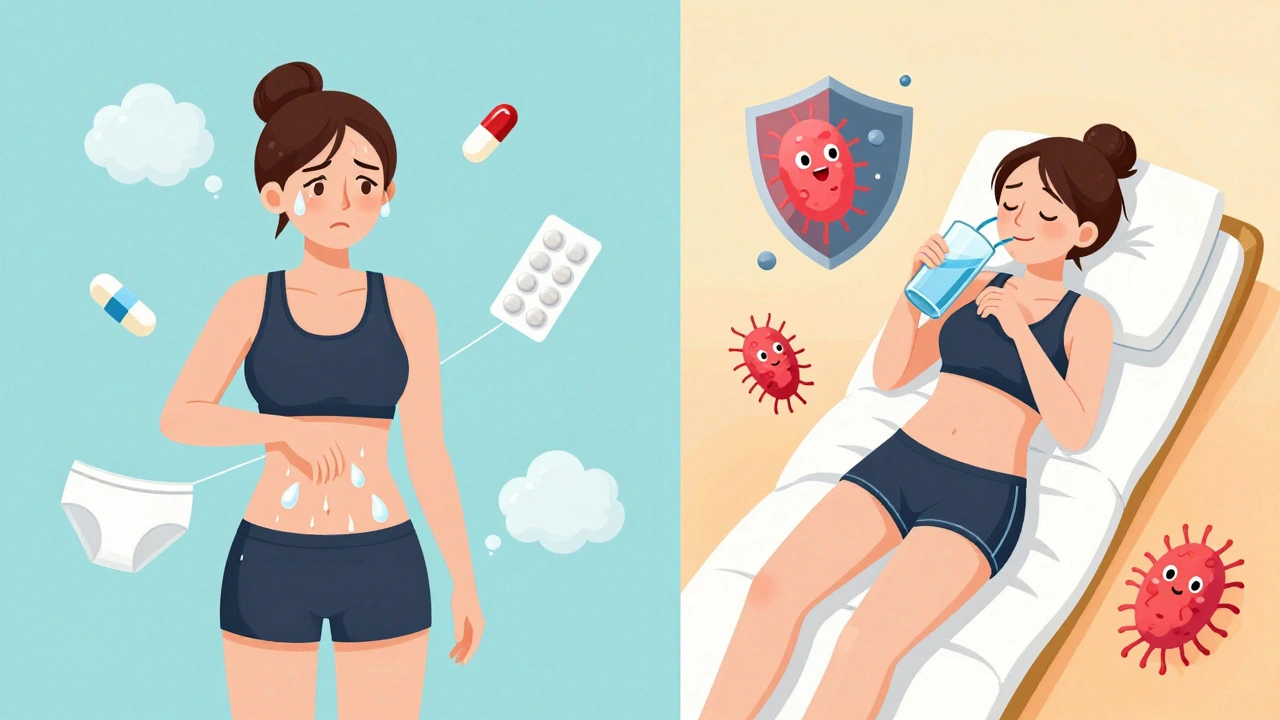
How to Use OTC Treatments Right
Using the product isn’t enough. How you use it makes all the difference.- Apply at bedtime. Lying down helps the medicine stay in place instead of leaking out.
- Finish the full course-even if itching stops after day two. Stopping early is why 35% of treatments fail.
- Avoid sex during treatment. It pushes the medicine out and can irritate the area further.
- Don’t use tampons. They absorb the medication. Use pads instead.
- Wash your hands before and after application. Contamination can make things worse.
When to Skip OTC and See a Doctor
OTC treatments are great-for the right case. But they’re not a cure-all. You should see a doctor if:- This is your first time-don’t guess. Misdiagnosis is common.
- You’re pregnant-only topical treatments are safe. Oral fluconazole can harm the baby.
- Symptoms get worse after 72 hours-this could mean resistance or a different infection.
- You’ve had four or more infections in a year-this is recurrent candidiasis and needs prescription treatment.
- You have a fever, pelvic pain, or foul-smelling discharge-these could signal pelvic inflammatory disease.
What’s Changing in Yeast Infection Treatment?
Antifungal resistance is rising. In 2018, only 3% of Candida albicans strains were resistant to clotrimazole. Now, it’s 8%. For Candida glabrata, resistance to azoles is hitting 7-10%. That means more women are getting infections that don’t respond to OTC meds. New treatments are on the way. In June 2023, the FDA approved a new clotrimazole tablet designed to stick to the vaginal wall for 24 hours. Early trials showed a 92% cure rate-better than older versions. But it’s still prescription-only for now. Telehealth platforms are also helping. Apps that walk you through CDC-approved symptom checkers have cut misdiagnosis rates from 50% down to 28%. If you’re unsure, try one before buying anything.
Real Stories, Real Results
On Reddit, women share their experiences daily. One user wrote: “Used Monistat 7 cream. Itching was unbearable on day one. By day three, it was 80% better. Finished the full week. No return.” That’s the norm for correctly diagnosed cases. Another said: “I thought it was yeast. Bought the 1-day pill. Nothing changed. Went to the doctor. Had bacterial vaginosis. Took antibiotics. Fixed in 3 days.” That’s the risk of guessing. Amazon reviews for Monistat 7 show a 4.2/5 average from over 8,700 reviews. The most common praise? “Worked where others failed.” The most common complaint? “Messy.” Many women now prefer suppositories over creams-even though creams have slightly higher cure rates-because they’re cleaner and easier to use.What Not to Do
- Don’t douche. It wipes out good bacteria and makes yeast worse. - Don’t use garlic, yogurt, or tea tree oil “remedies.” No good evidence they work, and some can irritate sensitive tissue. - Don’t share medication. What works for your friend might not work for you. - Don’t buy OTC meds just because you “feel like it.” Only use them when symptoms match.Final Thoughts
Yeast infections are common, treatable, and rarely serious. But they’re also easy to misdiagnose. If you’re sure it’s yeast-classic symptoms, no fever, not pregnant, no history of recurrence-then OTC treatments are safe and effective. Use them correctly. Finish the full course. Give it time. If anything feels off, or if it doesn’t get better in a few days, don’t keep guessing. See a doctor. A simple swab test can save you days of discomfort-and prevent complications down the road.Your body knows what it’s doing. Sometimes, it just needs a little help getting back on track.
Can I treat a yeast infection while pregnant?
Yes-but only with topical antifungal creams or suppositories like clotrimazole or miconazole. Oral medications like fluconazole are not safe during pregnancy and can increase the risk of birth defects. Always check with your doctor before using any product, even if it’s labeled OTC.
How long does it take for OTC yeast infection treatment to work?
Most women start feeling relief within 24 to 72 hours. Itching and burning usually improve first. Full symptom resolution typically takes 3 to 7 days, depending on the product. Don’t stop treatment just because you feel better-finish the full course to prevent recurrence.
Are suppositories better than creams for yeast infections?
Both work equally well when used correctly. Creams have a slightly higher cure rate (85-90%) compared to suppositories (80-85%), but suppositories are less messy and easier to use for many women. If you’re concerned about leakage or staining underwear, suppositories may be preferable. The key is proper insertion and completing the full course.
Can men get yeast infections from their partners?
Yes, though it’s less common. Men can develop balanitis-a red, itchy rash on the penis-after unprotected sex with a partner who has a yeast infection. It’s not an STI, but it can be uncomfortable. Treatment is similar: topical antifungal creams applied for 7 days. If symptoms persist, see a doctor.
Why do I keep getting yeast infections?
Recurrent yeast infections (four or more per year) often signal an underlying issue. Common causes include uncontrolled diabetes, frequent antibiotic use, hormonal birth control, or a weakened immune system. Non-albicans Candida strains may also be responsible. If you’re having frequent infections, see a doctor. You may need a longer course of treatment, maintenance therapy, or testing for other conditions.

December 6, 2025 AT 17:28 PM
Yeast infections aren't even that common if you stop using scented tampons and wear cotton underwear. Everyone acts like it's a plague, but it's just your body telling you to stop being lazy with hygiene.
December 8, 2025 AT 00:30 AM
frfr why are women always running to the drugstore like it's a 911 call? i had a yeast infection once and just drank cranberry juice and it went away. no pills needed. america made you weak.
December 8, 2025 AT 15:52 PM
antibiotics cause 50% of cases. stop taking them unless absolutely necessary. also stop wearing leggings. that's it. problem solved.
December 8, 2025 AT 16:49 PM
It is deeply concerning that society has normalized the self-diagnosis of intimate health conditions through over-the-counter pharmaceuticals. This reflects a broader cultural decline in medical literacy and professional accountability.
December 9, 2025 AT 05:55 AM
we're all just trying to survive our own biology honestly. sometimes your body just throws a tantrum and you gotta give it the damn cream and go to bed. no judgment. we've all been there.
December 10, 2025 AT 05:53 AM
OMG I used Monistat and it leaked ALL OVER my white couch 😭 I cried for 2 hours. Then I found out I had BV. I feel so betrayed by my body and Target. 🥲
December 11, 2025 AT 01:31 AM
you people need to stop letting big pharma tell you what to do. this whole yeast infection thing is a scam. it's just your body detoxing from processed sugar. eat kale and stop buying pills.
December 11, 2025 AT 10:30 AM
you're not alone. i've had 5 in a year and i thought i was broken. then i started sleeping naked and drinking apple cider vinegar. now i'm yeast-free and feel like a goddess 🌸
December 11, 2025 AT 16:59 PM
it's important to note that the efficacy of topical antifungals is highly dependent on proper vaginal pH balance, which can be influenced by dietary intake of probiotics, hydration levels, and even the microbial composition of your personal environment, including bedding and laundry detergents. many women don't realize that their detergent residue can be a silent trigger, and switching to fragrance-free, hypoallergenic options has been shown in multiple longitudinal studies to reduce recurrence rates by up to 38% over a 12-month period. also, consider that the timing of application relative to your menstrual cycle matters-some research suggests estrogen fluctuations during the luteal phase may reduce drug absorption, so if you're recurrently failing treatment, track your cycle alongside symptom onset.
December 13, 2025 AT 08:38 AM
did you know the FDA approves these drugs based on data from 1990s clinical trials? the real cure is being buried. they don't want you to know that yeast infections are caused by 5G towers and fluoridated water. i've had 12 in 2 years and i'm 32. it's not me. it's the system.
December 15, 2025 AT 02:09 AM
in Nigeria we just use neem leaves boiled in water. wash twice daily. no pharmacy needed. why are you buying pills when nature gave you a cure?
December 16, 2025 AT 09:00 AM
i want to say this gently but firmly: if you're reading this and you're scared or ashamed, you're not broken. you're not dirty. you're not failing. your body is just trying to rebalance. the fact that you're looking for answers means you're already doing better than most. take a breath. use the cream. rest. and if it doesn't get better, go see someone who knows what they're doing. you deserve care, not judgment. i believe in you.
December 16, 2025 AT 12:21 PM
monistat dont work because its made in usa. use indian ayurvedic oil. its 100% natural and works in 1 day. why do you trust foreign pharma?