
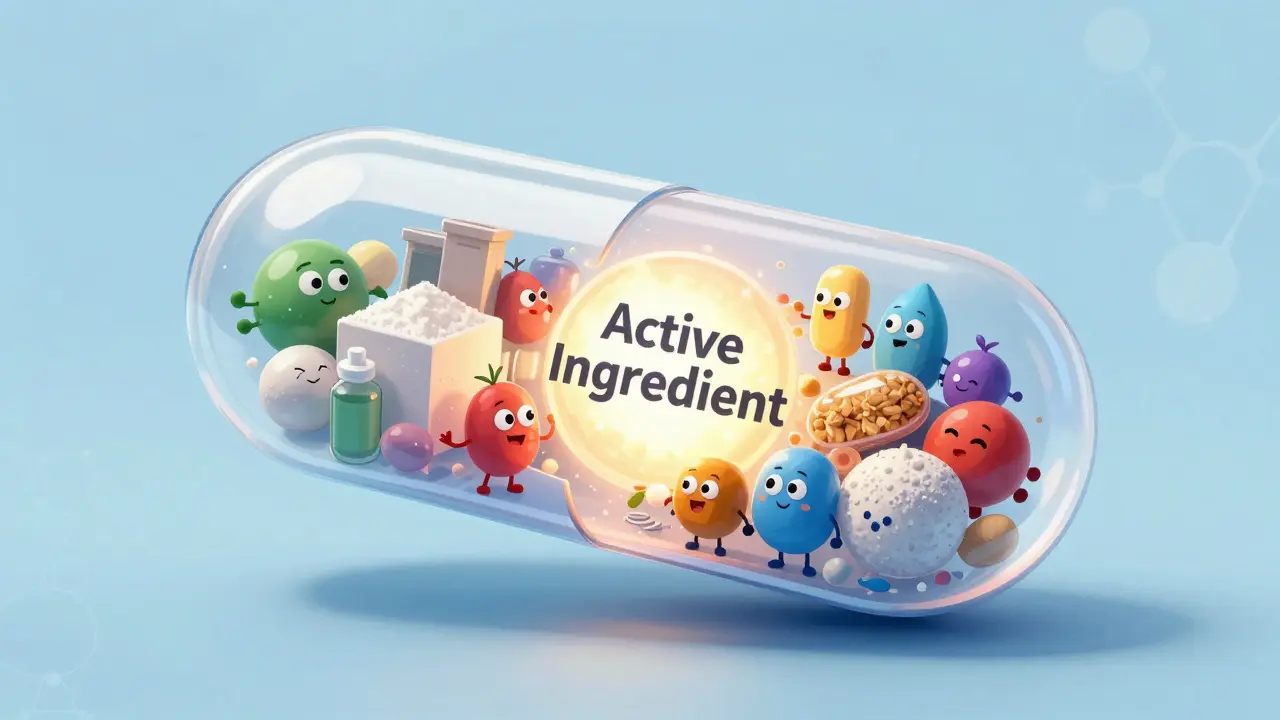
When you pick up a pill, you’re not just taking one thing. You’re swallowing a mix of ingredients - some that make the medicine work, and others that don’t. But here’s the catch: the ones that don’t seem to do anything might still be affecting you. That’s why understanding the difference between active and inactive drug ingredients isn’t just for pharmacists. It matters for your body, your safety, and your health outcomes.
What exactly is an active ingredient?
The active ingredient is the part of the medicine that actually does the job. It’s the reason you took the pill in the first place. In Tylenol, that’s acetaminophen. In Advil, it’s ibuprofen. In Lipitor, it’s atorvastatin. These chemicals are designed to interact with your body’s systems - blocking pain signals, lowering cholesterol, fighting infection. They’re the engines of the drug.The FDA requires every active ingredient to go through years of testing before it can be sold. Companies must prove it’s safe and that it actually works. That means clinical trials, lab studies, and mountains of data. Over 90% of new active ingredients fail to make it through this process. Only the ones that clear every hurdle get approved.
And it’s not just about strength. The dose matters too. A single Tylenol tablet might have 325 mg of acetaminophen. A prescription version could have 1000 mg. Too little, and it won’t help. Too much, and it can damage your liver. The active ingredient has to be just right.
What are inactive ingredients - and why are they even in there?
Inactive ingredients, also called excipients, are everything else in the pill. They don’t treat your condition. But they’re not optional. Without them, most medicines wouldn’t work at all.Think of them as the support crew. Lactose or microcrystalline cellulose? They give the pill bulk. If the active ingredient is only 5 mg, you need something to fill out the tablet so it’s easy to swallow and handle. Gelatin or starch? They hold the tablet together. Magnesium stearate? It keeps the machine from sticking during manufacturing. Shellac or hydroxypropyl methylcellulose? They coat the pill so it doesn’t break apart in your mouth or stomach too early.
Then there are the extras: flavors to make children’s medicine taste better, colors to help you tell pills apart, preservatives to stop mold from growing. The FDA keeps a public database of over 1,000 inactive ingredients used in approved drugs. These are listed in the package insert for prescriptions and on the back of OTC boxes.
Here’s the thing: these ingredients aren’t random. They’re chosen carefully. But they’re not held to the same standard as active ingredients. The FDA doesn’t require them to prove they treat disease. Instead, they’re generally recognized as safe - or GRAS - based on long-term use.
But are they really ‘inactive’?
The word ‘inactive’ is misleading. A 2021 study from the NIH, led by researchers at UCSF and Novartis, tested 639 common excipients against over 3,000 human proteins. The results? About 14% of them - ingredients labeled as ‘inactive’ - showed biological activity. That means they weren’t just sitting there. They were binding to proteins in your body that control inflammation, metabolism, and even brain function.One color additive, D&C Red 7 calcium lake, stuck to a protein linked to immune response. Another preservative, propyl gallate, interacted with enzymes involved in hormone regulation. These weren’t side effects. These were direct interactions. And they happened at doses you’d actually get from a pill.
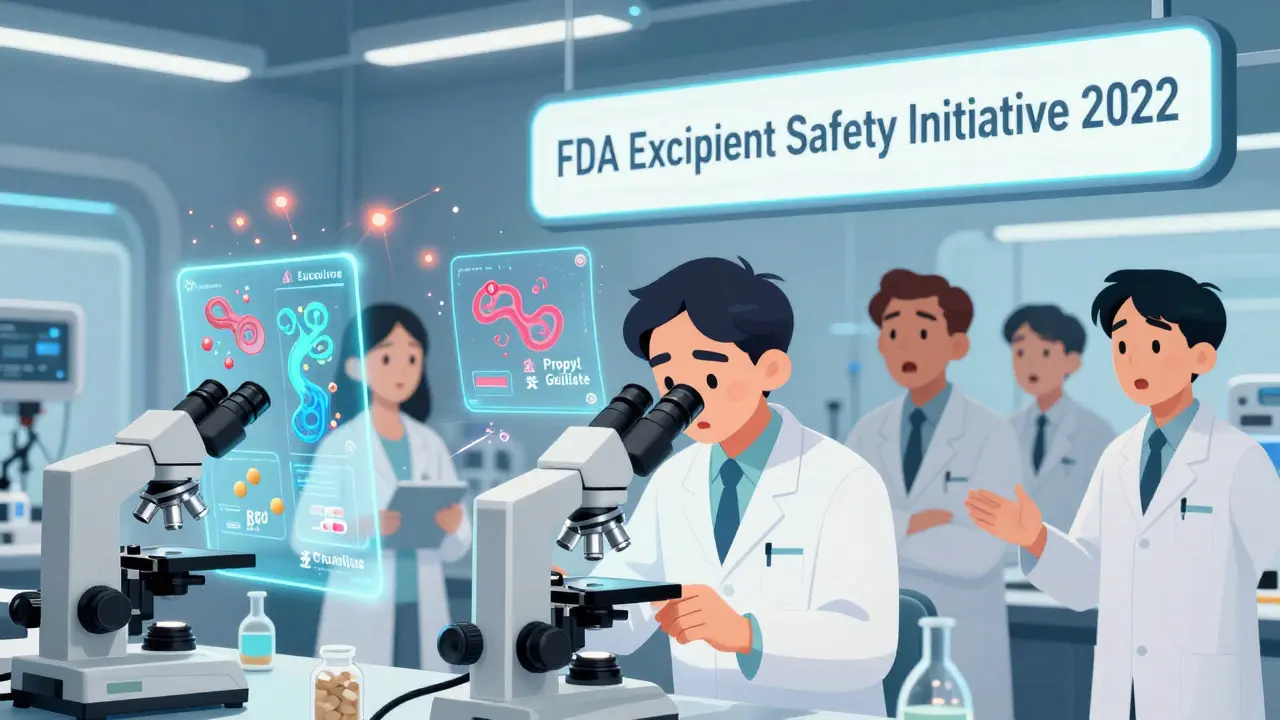
This isn’t theory. It’s real. And it’s changing how drug makers think. The FDA launched the Excipient Safety Initiative in 2022, investing $4.2 million to study these hidden effects. Sixty-eight of the top 100 pharmaceutical companies now use computer screening tools to check excipients for biological activity before they even start manufacturing.
So now we know: some ‘inactive’ ingredients aren’t inert. They might not cure your headache, but they could still be doing something - good, bad, or neutral - inside your body.
How inactive ingredients can hurt you
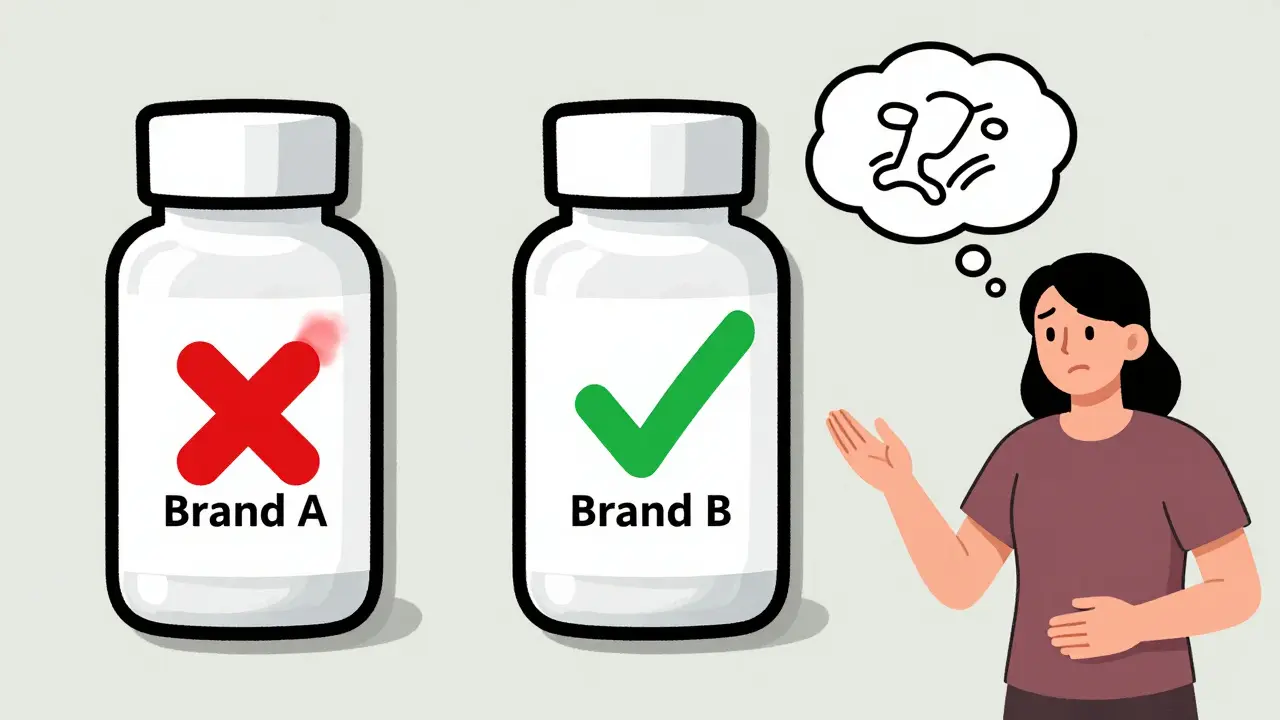
Most people won’t have a problem. But for some, the wrong excipient can cause real issues.Lactose is in nearly half of all oral pills. If you’re lactose intolerant - and about 65% of the global population is - you might get bloating, gas, or diarrhea from a daily medication. That’s not the drug failing. That’s the filler causing trouble.
Gluten is another hidden risk. Some pills use wheat starch as a binder. For someone with celiac disease, even a tiny amount can trigger an immune reaction. About 15% of Americans have gluten sensitivity, and many don’t realize their meds could be the trigger.
Sulfites are used in injectable drugs to prevent spoilage. They can cause breathing problems in people with asthma. Benzyl alcohol, found in some IV solutions, can be dangerous for newborns. The FDA sets strict limits: no more than 1 mg per dose for infants, but up to 50 mg for adults. That’s why doctors check your age and condition before prescribing.
According to FDA data from 2020-2022, about 0.5% of all reported adverse drug reactions were caused by inactive ingredients. That might sound small. But with billions of pills taken every year, that’s tens of thousands of people experiencing avoidable side effects.
Why your pharmacist should care
Pharmacists aren’t just dispensers. They’re the last line of defense. When you get a new prescription, they’re supposed to check for interactions - not just between drugs, but between your body and the filler.Between 2017 and 2022, 22% of medication switches in U.S. pharmacies were due to excipient concerns, not the active ingredient. Someone switched from one brand of metformin to another because the first one had gluten. A patient with a nickel allergy changed from a capsule to a liquid because the capsule shell contained nickel traces.
That’s why pharmacists now use the FDA’s Inactive Ingredient Database to compare formulations. They can find alternatives with different fillers - even if the active ingredient is the same. And they’re trained to ask: “Do you have any allergies? Any food intolerances? Ever had a reaction to a pill?”
These questions aren’t just polite. They’re life-saving.
What you can do
You don’t need to be a scientist to protect yourself. Here’s how to take control:- Always read the label. OTC meds list inactive ingredients on the back. Prescription inserts include them too.
- If you’re allergic to dairy, gluten, or sulfites, ask your pharmacist: “Does this contain lactose, wheat, or sulfites?”
- Don’t assume generics are identical. Two versions of the same drug can have different fillers. One might have gluten; the other might not.
- Use the FDA’s Inactive Ingredient Database to look up ingredients by name. It’s free, public, and updated quarterly.
- If you’ve had an unexplained reaction to a medication - rash, stomach upset, breathing trouble - tell your doctor. It might not be the active ingredient.
There’s also a growing trend toward “active ingredient prescribing.” Australia started requiring it in 2020. In the U.S., prescriptions now often list the active ingredient first - not the brand name. That makes it easier to find a generic version with a safer filler.
The future of drug ingredients
Science is moving past the old binary: active = good, inactive = harmless. We’re starting to see a spectrum. Some excipients are truly inert. Others? They’re quietly influencing your biology.Next-generation drugs may come with labels like “low-interaction excipients” or “bio-inert formulation.” AI tools are being trained to predict which fillers might cause problems based on your genetics, diet, or existing conditions.
And the FDA? They’re updating their rules. For chronic-use medications - things you take every day for years - they now require extra testing of excipients. That’s a big shift. It means the next time you refill your blood pressure pill, the filler might have been screened for immune effects, liver stress, or neurological interactions.
This isn’t science fiction. It’s happening now. And it’s making medicines safer - not just because of the active ingredient, but because we’re finally paying attention to everything else in the pill.
Bottom line
The active ingredient gets all the attention. But the inactive ones? They’re the unsung heroes - or sometimes, the silent saboteurs. They help the medicine work. They make it taste better. They keep it stable. But they can also cause reactions, especially if you have sensitivities.Don’t ignore the fine print. Your health depends on more than just the name on the bottle. It depends on every single ingredient inside it.


January 20, 2026 AT 19:50 PM
So let me get this straight - we’ve been swallowing mystery goo for decades and the FDA just now went, 'huh, maybe we should check if this glitter in my pill is also giving me anxiety'? 🤦♀️ I’m not mad, just disappointed. My ibuprofen has more secrets than my ex’s phone.
January 20, 2026 AT 22:22 PM
This is HUGE. Seriously. I had unexplained stomach issues for years-turned out my generic metformin had lactose. Switched to a gluten-free, lactose-free version, and boom-no more bloating. Pharmacists are your real MVPs. Always ask for the ingredient list. Don’t assume ‘same drug = same filler’. Your body will thank you. 💪💊
January 22, 2026 AT 19:00 PM
Inactive ingredients are just corporate filler. The system is rigged. They don’t care if you get bloated. They care about profit margins. You think they test for your personal sensitivities? LOL. The FDA is a puppet. Wake up.
January 24, 2026 AT 04:40 AM
Big shoutout to pharmacists! 🙌 I used to just grab whatever was cheapest until I found out my thyroid med had red dye #40 that made my skin itch. Now I always ask for the ‘clean’ version. And yes, generics can be totally different inside! 🌱💊 #KnowYourFillers
January 24, 2026 AT 20:22 PM
So now they’re telling us the ‘inactive’ stuff is active? Sounds like a cover-up. What if all these ‘safe’ fillers are part of a mass mind-control program? I’ve been feeling weird since I started taking my blood pressure med. Coincidence? I think not.
January 25, 2026 AT 11:42 AM
The notion that excipients are ‘generally recognized as safe’ is a dangerous oversimplification. The FDA’s GRAS designation lacks rigorous, longitudinal, double-blind clinical validation. The 2021 UCSF study, while preliminary, demonstrates a statistically significant protein-binding profile among excipients at therapeutic concentrations. This is not anecdotal. It is pharmacokinetic reality.
January 26, 2026 AT 11:52 AM
I take one pill every day. Now I find out it has sugar? And gluten? And who knows what else? My stomach is crying. My mom said to stop taking it. But I need it. What do I do?
January 26, 2026 AT 23:41 PM
Active = magic. Inactive = lie. We are all lab rats. The system is broken. Why do you think you feel weird after pills? They don't care. They just want you to keep buying.
January 28, 2026 AT 14:00 PM
You people are so naive. Of course the fillers matter. You think Big Pharma doesn’t know? They’ve known for decades. They just don’t tell you because you’re too dumb to read the label. And now you’re surprised? Pathetic.
January 29, 2026 AT 13:49 PM
This is why America leads the world in medical innovation. We test everything. We regulate everything. And now we’re finally fixing the gaps. Other countries? They’re still using chalk and wishful thinking. Thank God for FDA rigor.