
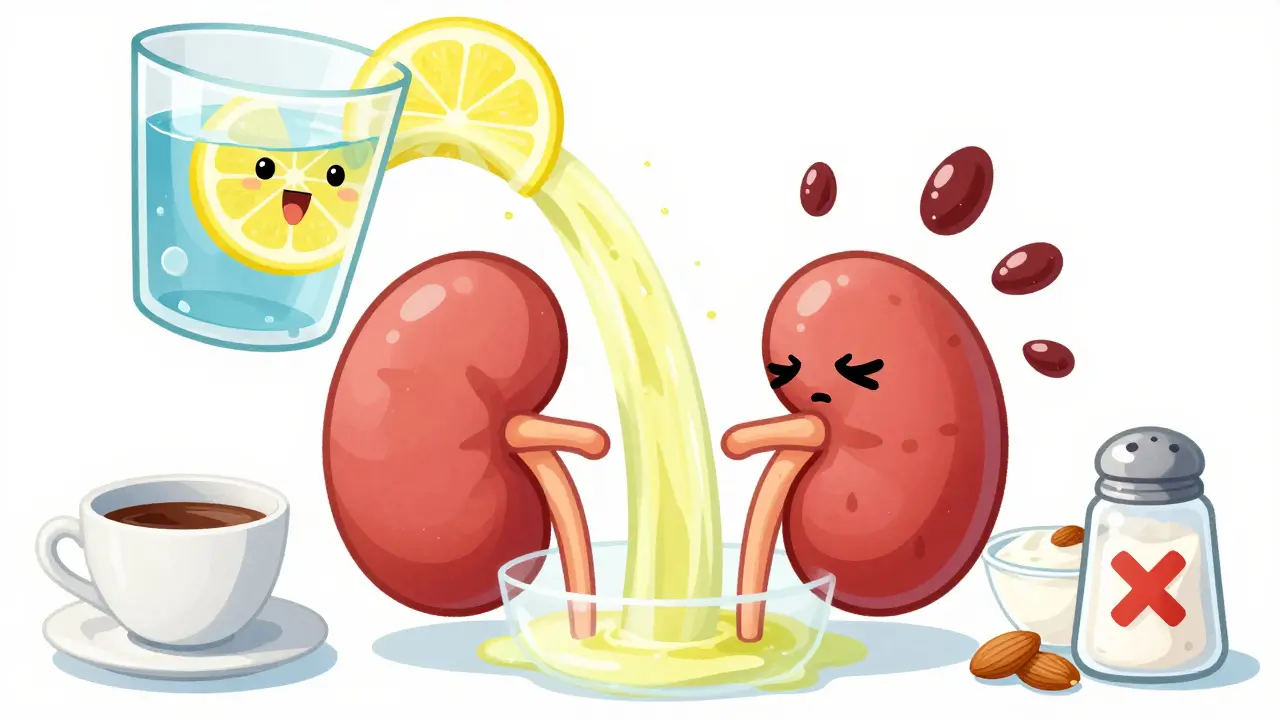
More than 1 in 10 Americans will get a kidney stone in their lifetime. If you’ve had one before, your chances of getting another are nearly 50% within five years. The most common type? Calcium oxalate stones. These form when calcium and oxalate - two substances naturally found in your body - stick together in your urine and harden into crystals. The good news? You can dramatically lower your risk with simple, science-backed changes to what you drink and eat.
Drink Enough Water - But Not Just Any Water
Your urine needs to be light yellow, almost clear. If it’s dark like apple juice, you’re not drinking enough. The goal isn’t just to drink water - it’s to produce at least 2.5 liters of urine every day. That means consuming about 3 liters of fluid total. Most people think they’re drinking enough, but studies show only 35% of stone patients hit this target after a year.
Water is your best friend. But coffee and beer? They count too. Research from Harvard shows people who drink a cup of coffee daily have a lower stone risk than those who avoid it. Beer, in moderation, has a similar effect. Why? Because they increase urine volume. Grapefruit juice, on the other hand, is a no-go. It spikes oxalate levels in urine and raises your risk by up to 40%.
Here’s a simple trick: squeeze half a lemon into a glass of water every morning. Lemon juice is packed with citrate, a natural stone blocker. A 2017 study found that this one habit increased urine citrate by 120 mg per day - enough to cut stone formation in half. Don’t buy bottled lemon juice. Use fresh. The preservatives and sugars in store-bought versions won’t help.
Don’t Cut Out Calcium - Eat More of It
You’ve probably heard to avoid calcium if you have kidney stones. That’s wrong. In fact, not getting enough calcium makes stones more likely. Here’s why: when calcium is low in your gut, oxalate from food gets absorbed into your bloodstream and ends up in your urine - where it teams up with leftover calcium to form stones.
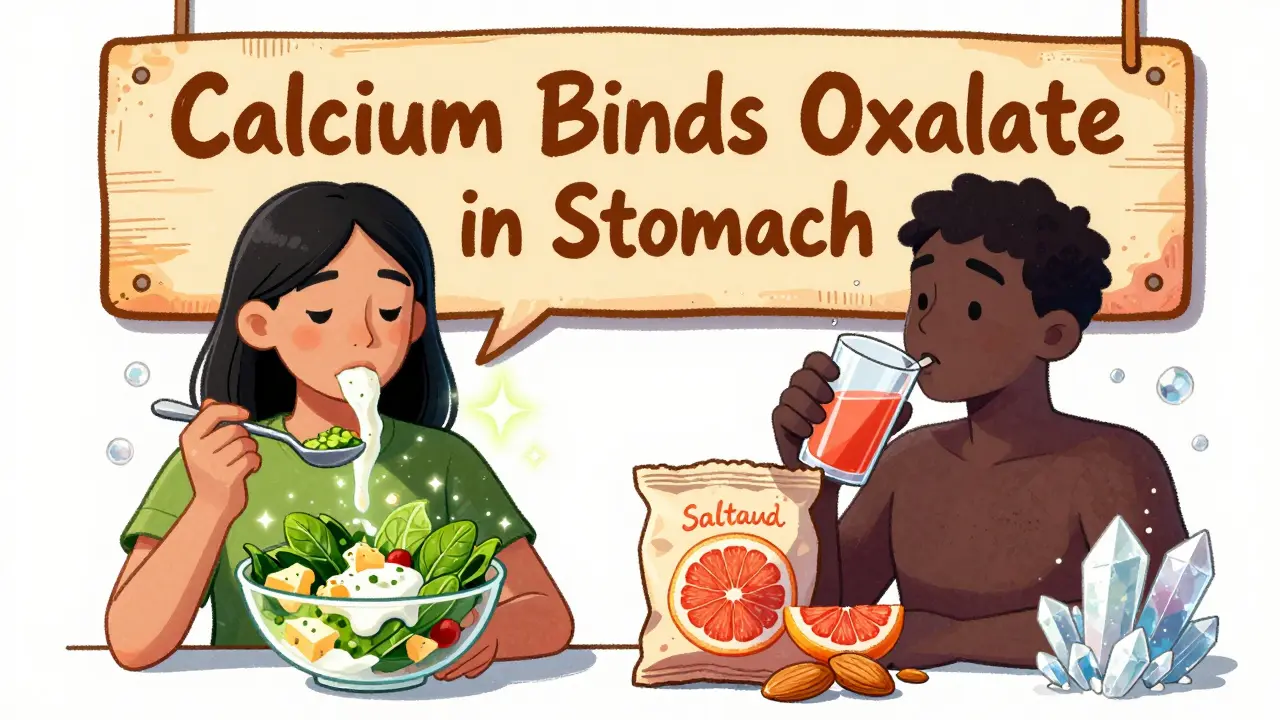
The sweet spot? 1,000 to 1,200 mg of calcium daily from food, not supplements. That’s about 2-3 servings of dairy: one cup of milk, one ounce of cheese, or three-quarters of a cup of yogurt. If you’re lactose intolerant, try kefir or fortified plant milks with added calcium. The key is timing: eat calcium-rich foods at the same time as high-oxalate foods. Have spinach with your scrambled eggs. Eat almonds with your yogurt. That way, calcium and oxalate bind in your stomach and leave your body together - instead of one going to your kidneys.
And here’s the catch: calcium supplements can backfire. A 2012 study of over 100,000 women found that those who took calcium pills had a 20% higher risk of stones. If you must take a supplement, choose calcium citrate - not calcium carbonate. Citrate helps block stones, and it’s better absorbed. Take it with meals, not on an empty stomach.
Watch Your Salt - It’s Sneakier Than You Think
Salt doesn’t just raise your blood pressure. It also makes your kidneys dump more calcium into your urine. Every extra 1,000 mg of sodium you eat adds 25-30 mg of calcium to your urine. That’s enough to tip the balance toward stone formation.
The goal? Less than 2,300 mg of sodium per day. That’s about one teaspoon. But most people eat 3,400 mg or more. Processed foods are the main culprits: canned soups, frozen meals, deli meats, bread, and even breakfast cereals. Read labels. Choose low-sodium versions. Cook at home more often. Skip the salt shaker. Use herbs, garlic, or lemon instead.
If you’re on a low-sodium diet, you’ll also help your citrate levels stay high. Low sodium = more citrate in urine = fewer stones. It’s one change that hits multiple targets at once.
Limit High-Oxalate Foods - But Don’t Eliminate Them
Oxalate is everywhere: spinach, rhubarb, almonds, beets, sweet potatoes, soy products, and even chocolate. Spinach alone has 755 mg of oxalate per half-cup cooked. That’s more than double the daily limit for stone formers.
But here’s the twist: cutting out all oxalate-rich foods won’t stop stones for most people. The National Institute of Diabetes and Digestive and Kidney Diseases says strict low-oxalate diets only help if you have a rare genetic disorder. For everyone else, balance matters more than elimination.
Instead of avoiding spinach completely, eat it with calcium. Have a small serving of cooked spinach with a glass of milk or a slice of cheese. Pair almonds with yogurt. Don’t snack on a whole bag of almonds - have one ounce (about 23 nuts) with a meal. Eat five or more servings of fruits and vegetables daily. The fiber and potassium in these foods help reduce stone risk.
What About Protein, Vitamin C, and Soda?
Animal protein - meat, poultry, fish - increases uric acid and lowers citrate. Too much can lead to stones. Aim for no more than 75 grams per day. That’s about the size of two decks of cards. You don’t need to go vegetarian, but swap out one meat meal a week for beans or tofu.
Vitamin C supplements over 1,000 mg a day can turn into oxalate in your body. If you take a daily multivitamin, make sure it’s under 500 mg. Getting vitamin C from oranges, strawberries, or bell peppers? No problem. Your body handles it fine.
Soda is tricky. Cola drinks contain phosphoric acid, which lowers citrate and increases stone risk. The NHS in the UK says avoid them. The Mayo Clinic says one or two a week is fine for most people. If you’re prone to stones, skip them. Choose sparkling water with lemon instead. It’s fizzy, refreshing, and helps your kidneys.
When Diet Isn’t Enough - Medications Can Help
If you’ve tried everything and still get stones, your doctor might recommend medication. But only after a 24-hour urine test. This test tells you exactly what’s in your urine: too much calcium? Too little citrate? Too much oxalate?
Here’s what works:
- Thiazide diuretics (like hydrochlorothiazide) reduce calcium in urine. They cut recurrence by 30-50% - but only if you also cut salt.
- Potassium citrate boosts citrate levels. If your urine citrate is below 320 mg/day, this is your best bet. It’s more effective than sodium citrate because it doesn’t raise calcium.
- Allopurinol helps if you have high uric acid in your urine. It’s not for everyone - only if your uric acid is over 550 mg/day and calcium is normal.
These aren’t magic pills. They work best with diet and hydration. And they need monitoring. Thiazides can lower potassium. Citrate can cause stomach upset. Always follow up with your doctor.
Track Your Progress - and Stay Consistent
Most people give up on prevention within six months. But studies show that those who stick with it cut their stone risk by 70%. Use a hydration app. Set daily water goals. Log your meals. Take photos of your urine color. You’ll see patterns.
One man in Sydney, 52, had three stones in two years. He started drinking 3 liters of water daily, added lemon juice, swapped his morning cereal for yogurt with almonds, and stopped eating salted nuts. After 18 months, he hadn’t had another stone. His 24-hour urine test showed citrate up 150%, calcium down 40%, and sodium down 35%.
It’s not about perfection. It’s about consistency. One bad day won’t ruin you. But skipping water for a week? That’s when stones come back.
What’s Next for Kidney Stone Prevention?
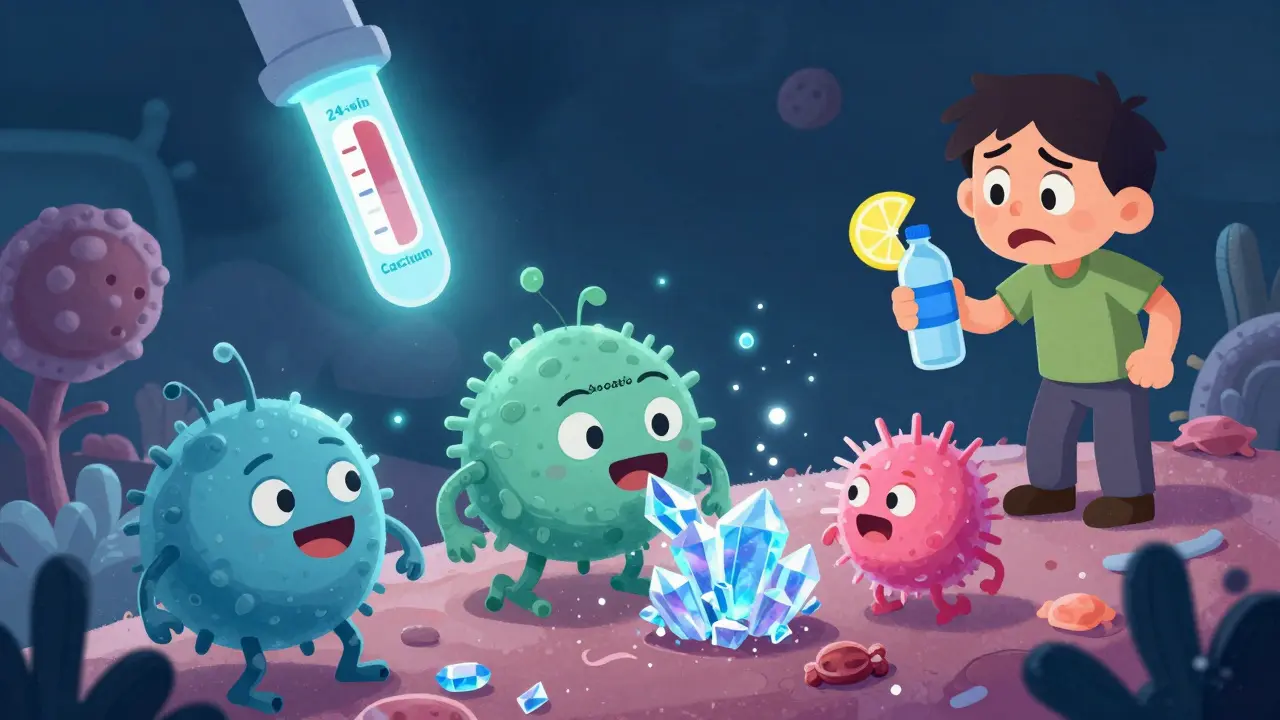
Researchers are now looking at your gut bacteria. A microbe called Oxalobacter formigenes eats oxalate in your intestines - before it ever reaches your kidneys. People with this bacteria have significantly lower oxalate in their urine. Early trials show probiotics with this strain can reduce oxalate by 30%. It’s not available yet, but it’s coming.
Soon, your prevention plan might be based on your microbiome, not just your diet. For now, stick with what works: water, calcium with meals, less salt, and lemon juice. It’s simple. It’s proven. And it works better than any pill alone.



December 29, 2025 AT 05:54 AM
I drank 3 liters of water for a week and my pee looked like tap water. I felt like a human fountain. Also, lemon juice in the morning? Yes. I’m basically a citrus-powered stone-slayer now. 🍋💪
December 29, 2025 AT 07:10 AM
You people are so naive. Water? Lemon? Are you serious? The real villain is fluoride in the water supply-designed by Big Pharma to keep you docile while they sell you citrate pills. 🤡💧
December 30, 2025 AT 19:00 PM
It is imperative to underscore the profound physiological significance of maintaining optimal urinary citrate concentrations, as this biochemical parameter serves as a critical inhibitor of crystallization pathways in the renal tubules. Furthermore, the concurrent ingestion of dietary calcium with oxalate-rich foods facilitates the formation of insoluble calcium oxalate complexes within the gastrointestinal lumen, thereby precluding systemic absorption and subsequent nephrolithiasis. One must not underestimate the efficacy of this dietary synergy.
December 31, 2025 AT 12:00 PM
In my village in Nigeria, we drink hibiscus tea every morning-naturally high in citrate, no lemons needed. Our grandmothers didn’t know about 24-hour urine tests, but they knew how to listen to the body. Water, herbs, and patience. That’s the African way. No pills. No fear. Just wisdom passed down.
January 2, 2026 AT 10:13 AM
This is why America is falling apart. People think drinking water and eating yogurt will fix everything. No one takes responsibility anymore. Just drink less soda and stop being lazy. Simple.
January 2, 2026 AT 19:24 PM
The notion that beer mitigates kidney stone risk is scientifically dubious and potentially dangerous. While increased urine volume may transiently reduce supersaturation, the ethanol content induces diuresis without improving citrate excretion and may exacerbate metabolic acidosis. Moreover, the assertion that grapefruit juice elevates oxalate levels lacks robust longitudinal validation. One must question the methodology of the referenced Harvard study.
January 3, 2026 AT 09:23 AM
I’ve had 7 stones. I tracked everything. I used a Fitbit to monitor hydration, a food diary app, and even tested my urine with strips. The only thing that worked? Thiazide + potassium citrate + lemon water. And yes, I cried when I finally stopped getting stones. 😭💧
January 4, 2026 AT 23:29 PM
Thank you for sharing this. I’ve been so scared of calcium after my first stone, but now I get it. I’m going to start eating yogurt with my spinach tomorrow. I feel less alone in this. You’re right-it’s not about perfection.
January 6, 2026 AT 08:21 AM
i just drink water and eat lemons and i aint had one in 3 yrs. no cap.
January 7, 2026 AT 09:45 AM
You know who controls the kidney stone narrative? The pharmaceutical industry. They want you to think it’s all about diet and lemon juice so you’ll keep buying their citrate pills. Meanwhile, the real cause is glyphosate in your food and water-disrupting your gut bacteria so oxalate floods your kidneys. Oxalobacter formigenes? They buried that research. The FDA knows. They just don’t care.
January 8, 2026 AT 04:36 AM
The lemon juice trick? Cute. But have you ever heard of the 2018 NIH whistleblower report? The citrate studies were funded by a company that sells lemon extract supplements. And guess what? They patented the ‘lemon water protocol’ as their own. This isn’t prevention-it’s corporate manipulation disguised as wellness. 🍋💸
January 8, 2026 AT 17:48 PM
I used to get stones every year. Started drinking water with a pinch of salt and lemon. No more. Simple. No drama. Just water. And I don’t even track it anymore. Life’s too short to be a urine scientist.