
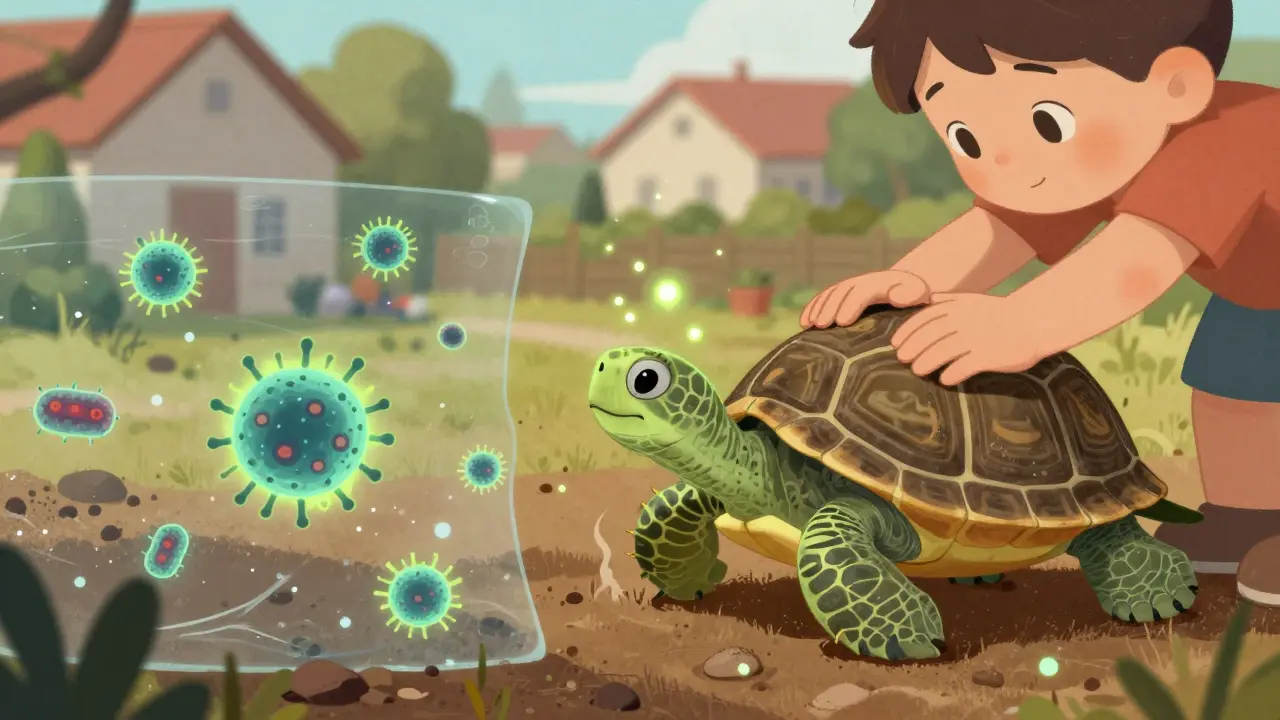
More than 60% of all known infectious diseases in humans started in animals. That’s not a remote threat-it’s happening right now, in backyards, farms, pet stores, and forests near you. From pet turtles spreading salmonella to bats carrying Ebola, the line between animal health and human health isn’t just blurry-it’s nonexistent. And we’re paying the price.
What Exactly Are Zoonotic Diseases?
Zoonotic diseases, or zoonoses, are infections that jump from animals to people. They’re caused by viruses, bacteria, parasites, or fungi that live in animals but can make humans sick. Rabies is the oldest known example-documented since ancient Greece-but today, we’re seeing new ones emerge faster than ever.It’s not just exotic wildlife. Your dog, cat, chicken, or even pet reptile can carry harmful germs. In fact, 75% of all new infectious diseases in the last 20 years came from animals. That includes HIV, Ebola, Lyme disease, and COVID-19. These aren’t rare outliers. They’re the new normal.
How Do These Diseases Jump to Humans?
There are five main ways animals pass diseases to people:- Direct contact: Touching, petting, or being bitten by an infected animal. A dog bite can spread rabies. A cat scratch can give you cat scratch disease.
- Indirect contact: Touching something an animal has contaminated-like a turtle’s tank, a birdcage, or soil with animal feces. Salmonella from pet reptiles is a classic case.
- Vector-borne: Bugs like ticks, mosquitoes, and fleas carry germs from animals to people. Lyme disease spreads through tick bites, often from deer or mice.
- Foodborne: Eating undercooked meat, raw milk, or eggs contaminated with bacteria like Salmonella or E. coli. This affects 1 in 6 Americans every year.
- Waterborne: Drinking or swimming in water polluted by animal waste. Giardia, a parasite from beavers or livestock, causes severe diarrhea after exposure.
One study found that 85% of zoonotic infections could be avoided just by wearing gloves when cleaning up after pets. Simple actions matter.
Common Zoonotic Diseases You Should Know
Here are the most frequent ones, broken down by type:- Bacterial: Salmonella (from reptiles, poultry), Lyme disease (ticks), Brucellosis (raw milk, livestock), Anthrax (infected animals or hides)
- Viral: Rabies (bites from dogs, bats, raccoons), Avian flu (poultry), Hantavirus (rodent droppings)
- Parasitic: Toxoplasmosis (cat litter, undercooked meat), Giardia (contaminated water), Trichinosis (undercooked pork or wild game)
- Fungal: Ringworm (dogs, cats, even horses-it’s not a worm, it’s a fungus)
- Other: Psittacosis (parrots and other birds), Q fever (cows, sheep, goats)
Real-world cases are everywhere. In Wisconsin, hunters got tularemia after handling infected rabbits. A family in Minnesota got sick from their pet turtles. A poultry farmer in California ended up in the hospital for two weeks after catching psittacosis from his flock. These aren’t rare headlines-they’re daily realities.
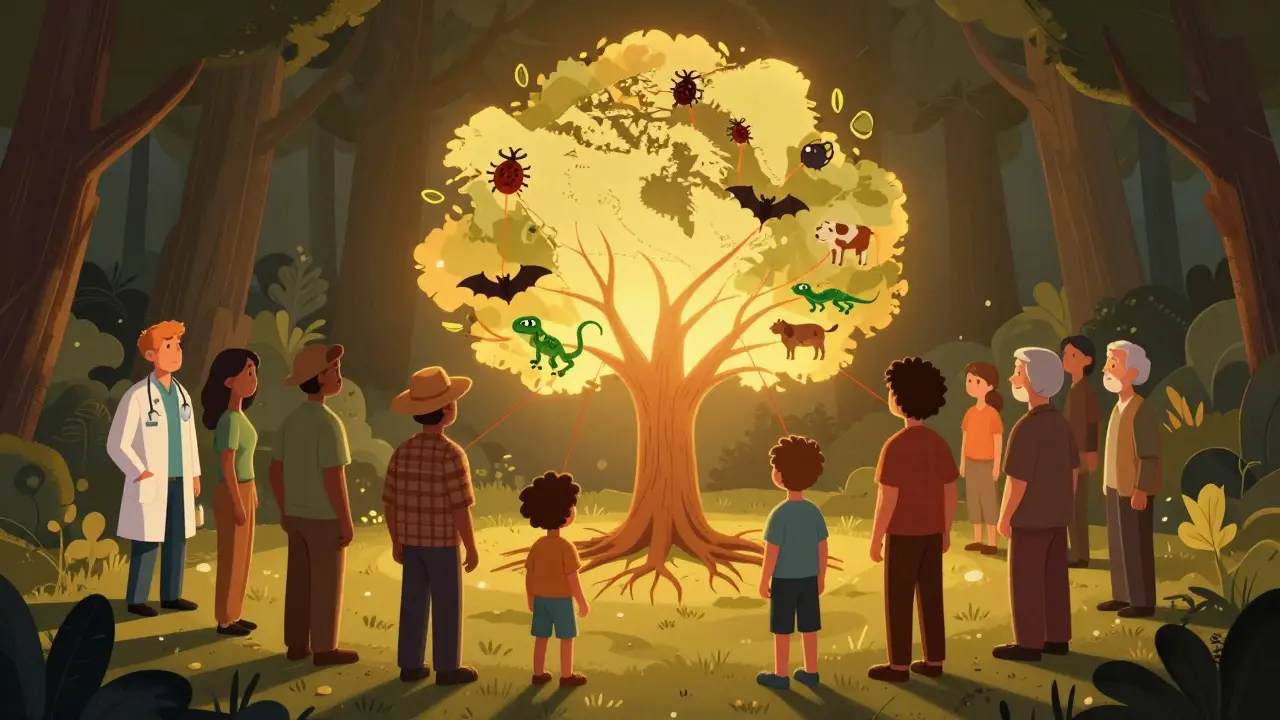
Why Are These Diseases Getting Worse?
It’s not just bad luck. Human behavior is driving the rise in zoonotic diseases:- Deforestation and land use: Cutting down forests forces wild animals into closer contact with people and livestock. This is responsible for over 30% of new outbreaks.
- Wildlife trade: Selling live animals in markets-like bats, pangolins, or primates-creates perfect conditions for germs to jump species.
- Factory farming: Crowded, unsanitary conditions in animal farms breed antibiotic-resistant bacteria. The global cost? Over $3.5 billion a year.
- Climate change: Warmer temperatures let ticks and mosquitoes spread to new areas. By 2050, areas suitable for Lyme disease in North America could increase by 45%.
Dr. Jane Goodall put it bluntly: “Our disrespect for wild animals and their habitats has created the perfect conditions for diseases to jump.” We’re not victims-we’re the cause.
Who’s at the Highest Risk?
Some people are more likely to get sick from animals:- Pet owners: 23% of pet owners in the U.S. have had a zoonotic infection. Ringworm and cat scratch disease are the most common.
- Veterinarians and farm workers: Veterinarians are 8 times more likely to get zoonotic diseases than the average person. Farmers see over 5 cases per 1,000 workers each year.
- Children under 5: Their immune systems are still developing. They’re more likely to put things in their mouths and less likely to wash hands after petting animals.
- People with weak immune systems: Cancer patients, transplant recipients, or those on immunosuppressants are at higher risk of severe illness.
And here’s a scary fact: 68% of doctors in the U.S. have never received proper training in recognizing zoonotic diseases. That means many cases go undiagnosed-or misdiagnosed-as regular flu or food poisoning.
How to Protect Yourself and Your Family
The good news? Most zoonotic diseases are preventable. Here’s what actually works:- Wash your hands: After handling animals, cleaning cages, or touching soil. Use soap and water for at least 20 seconds. This cuts transmission by 90%.
- Don’t kiss your pets: Saliva can carry germs. Avoid letting animals lick your face or open wounds.
- Cook meat properly: Poultry to 165°F, ground beef to 160°F. Use a food thermometer-don’t guess.
- Keep pets healthy: Vaccinate dogs and cats. Use flea and tick preventatives. Don’t let pets roam freely where they can eat dead animals or drink from puddles.
- Avoid wild animals: Never touch baby wildlife, even if it looks abandoned. Rabbits, raccoons, and bats are common carriers. Leave them alone.
- Use gloves: When cleaning up pet waste, gardening, or handling animal carcasses. A simple pair of gloves reduces exposure by 85%.
- Don’t let reptiles near kids: Turtles, lizards, and snakes carry Salmonella. The CDC recommends they’re not pets for children under 5.
In Uganda, a simple program-vaccinating 70% of dogs against rabies-cut human rabies deaths by 92%. Prevention doesn’t need high-tech tools. It needs consistency.
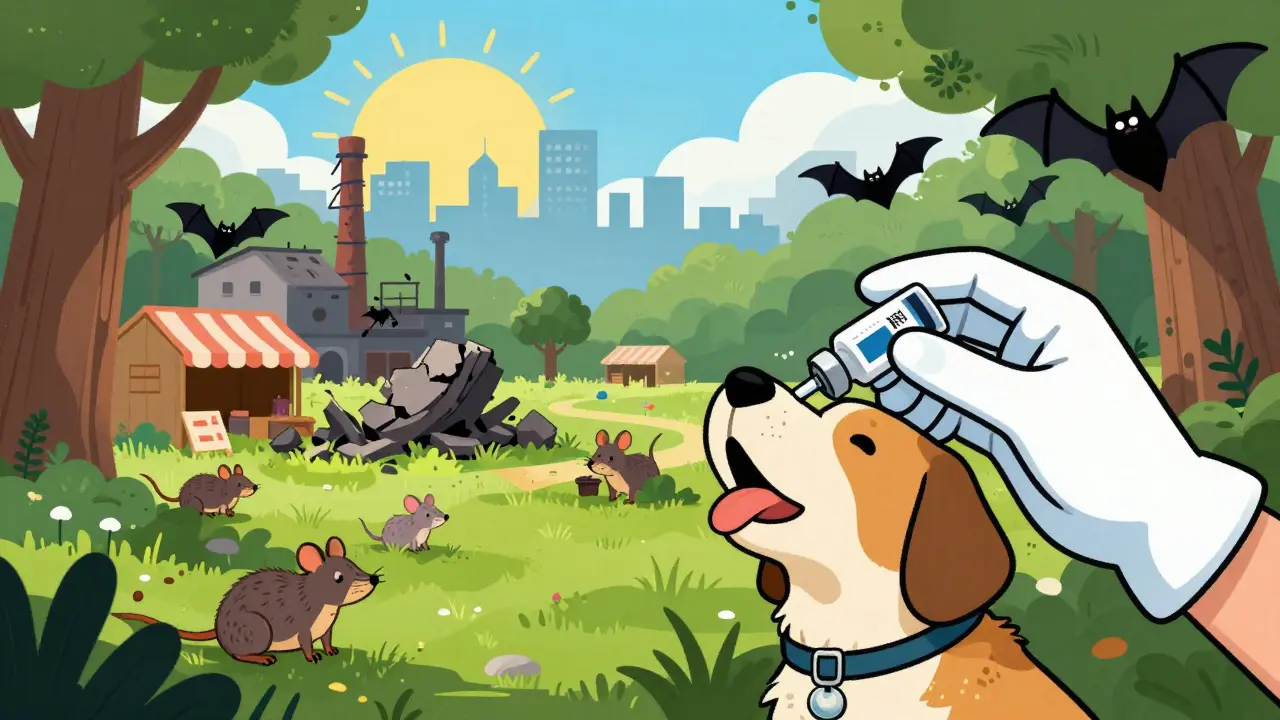
Why One Health Matters
The idea of “One Health” is simple: human health, animal health, and environmental health are linked. You can’t protect one without the others.That’s why countries with strong One Health programs-like those in the EU-have seen zoonotic outbreaks drop by 37%. They track sick animals, monitor wildlife, test water sources, and train doctors and vets together.
The U.S. and Australia have started investing in this approach. The CDC just launched $25 million in grants to create university centers that train doctors, vets, and ecologists together. The goal? Catch outbreaks before they hit humans.
It’s not just about saving lives. It’s about saving money. The World Bank says spending $10 billion a year on One Health could prevent 70% of future pandemics-and return $100 for every dollar spent.
What You Can Do Today
You don’t need to be a scientist or a policymaker to make a difference:- If you have pets, keep up with vet visits and vaccinations.
- If you’re a parent, teach kids to wash hands after playing with animals.
- If you hunt or farm, use protective gear and cook meat safely.
- If you see sick wildlife, don’t touch it-call your local wildlife agency.
- Support policies that protect natural habitats and regulate wildlife trade.
Zoonotic diseases aren’t going away. But they’re not unstoppable. The next outbreak won’t come from a lab-it’ll come from a backyard, a farm, or a forest you thought was safe. The tools to stop it? They’re already in your hands.
Can you get sick from petting your dog or cat?
Yes. While most pets are healthy, they can carry germs like Salmonella, Ringworm, or Bartonella (which causes cat scratch disease). Always wash your hands after petting, especially before eating. Avoid letting pets lick your face or open wounds.
Are reptiles safe as pets?
Reptiles like turtles, lizards, and snakes commonly carry Salmonella. The CDC advises against keeping them as pets for children under 5, elderly people, or anyone with a weakened immune system. Always wash hands thoroughly after handling them or cleaning their tanks.
Can you get rabies from a vaccinated dog?
The risk is extremely low. Rabies vaccines for dogs are over 99% effective when given on schedule. But if you’re bitten by any animal-vaccinated or not-wash the wound immediately and seek medical care. Rabies is almost always fatal once symptoms start.
Is it safe to eat raw milk or undercooked meat?
No. Raw milk can carry Brucella, E. coli, and Salmonella. Undercooked meat-especially pork, poultry, and game-can transmit Trichinella, Toxoplasma, and other parasites. Cooking meat to the right temperature kills these germs. Don’t risk it.
Do I need to worry about zoonotic diseases if I live in the city?
Yes. Urban areas have rats, pigeons, stray cats, and even ticks in parks. People get Lyme disease in cities. Salmonella outbreaks come from pet stores. You don’t need to be in the wilderness to be at risk. Basic hygiene and awareness are your best defenses.
Can climate change make zoonotic diseases worse?
Absolutely. Warmer temperatures let ticks and mosquitoes expand into new areas. Lyme disease is spreading north in the U.S. and Canada. Dengue and Zika are showing up in places they never did before. Climate change is accelerating the spread of animal-borne diseases.


January 11, 2026 AT 23:04 PM
60% of diseases come from animals? That’s not a statistic it’s a warning label on humanity
January 13, 2026 AT 21:15 PM
Okay but can we just take a second to appreciate how wild it is that our pets are basically tiny disease time-bombs?? I love my cat but now I’m terrified to let her lick my face… also handwashing is non-negotiable!!
January 14, 2026 AT 20:37 PM
It is imperative to acknowledge, with empirical rigor, that the anthropogenic exacerbation of zoonotic spillover events is not merely a correlation, but a causally substantiated phenomenon, predicated upon systemic ecological degradation, industrialized animal agriculture, and the commodification of wildlife. The data is unequivocal.
January 15, 2026 AT 09:16 AM
Handwashing reduces transmission by 90%? That’s the most underutilized public health intervention in history. We’ve got CRISPR and mRNA vaccines but people still won’t wash their hands after touching a dog. The problem isn’t biology-it’s laziness and ignorance.
January 15, 2026 AT 20:47 PM
It’s not about fear it’s about awareness. I’ve got a 3-year-old who loves our golden retriever and we just wash hands after playtime. No big drama. No need to panic. Just be smart. Simple stuff works.
January 17, 2026 AT 17:26 PM
Animals are not pets they are mirrors. We project our dominance onto them and then wonder why they bite back. The real zoonosis is our arrogance. We think we own nature. Nature is just waiting to remind us we don’t
January 19, 2026 AT 13:46 PM
One Health is not a buzzword-it’s a framework that’s been proven across Europe and parts of Africa. Integrating veterinary, medical, and environmental surveillance isn’t optional; it’s the only way to prevent the next 10 million death event. We’re already behind.
January 20, 2026 AT 11:50 AM
Wait so if I get sick after petting my hamster, is that technically a zoonotic disease or just bad luck? Also why does everyone keep saying ‘reptiles are dangerous’ but nobody mentions that even goldfish can carry bacteria? Is that just not sexy enough for headlines?
January 22, 2026 AT 08:12 AM
Think about it-we eat meat, we touch animals, we live on land they used to own. The disease isn’t jumping from animal to human. We’re walking into their world and then acting surprised when they fight back. It’s not magic. It’s math. And we’re losing the equation.
January 23, 2026 AT 00:15 AM
My mom used to say ‘if you don’t wash your hands after the dog, you’ll get sick’ and I thought she was being dramatic. Now I’m 32 and I wash my hands like I’m in a hospital. She was right. I owe her a hug and a hand sanitizer bottle.
January 24, 2026 AT 18:16 PM
They say ‘avoid wild animals’ but what about the raccoons that live under my porch? Or the deer that come into my yard every morning? Do I just sit inside and cry? This article is terrifying. I’m never petting another animal again. Ever. Goodbye pets. Goodbye nature. Goodbye joy.