
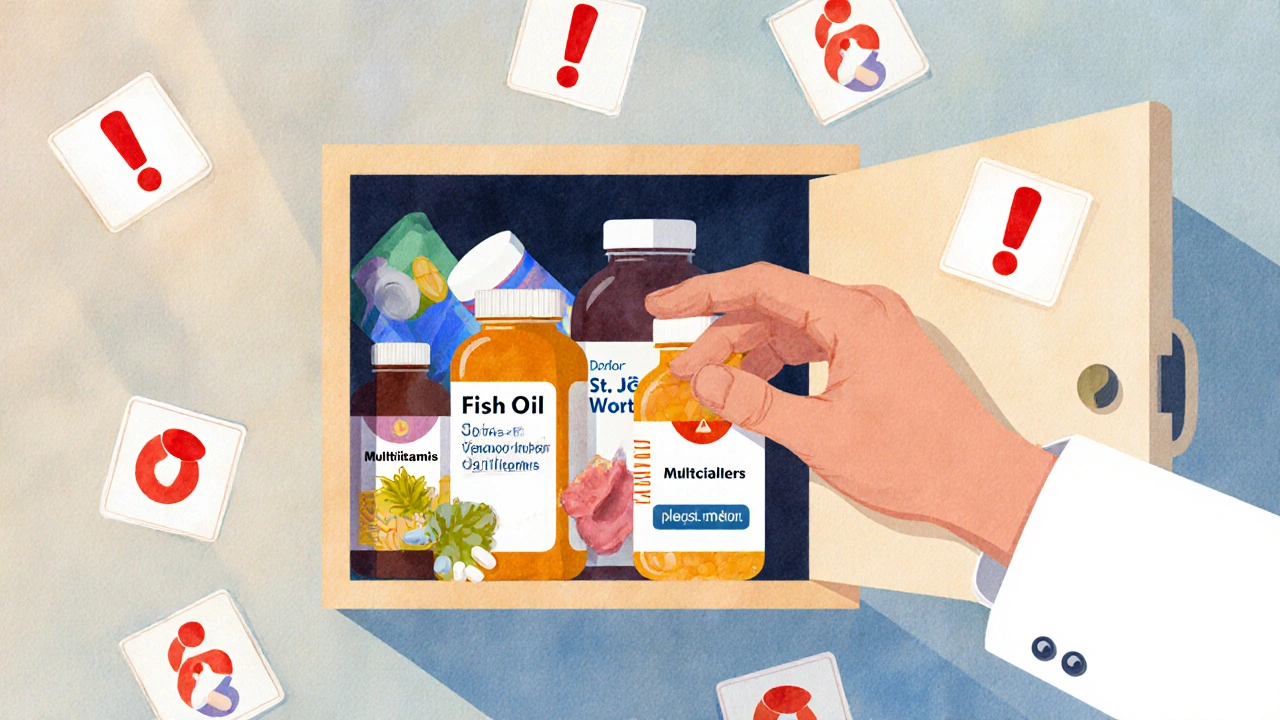
Learn how to accurately share your over-the-counter medications and supplement use with healthcare providers to prevent dangerous interactions. Real data, clear steps, and proven safety practices.
Supplement Safety: What You Need to Know Before Taking Any Pill
When you pick up a bottle of supplement safety, the practice of using dietary and herbal products without causing harm, especially when combined with prescription drugs. Also known as nutritional supplement risk management, it’s not about avoiding supplements—it’s about using them without accidentally hurting yourself. Millions take vitamins, herbs, or protein powders thinking they’re harmless because they’re "natural." But natural doesn’t mean safe. Ginkgo biloba can thin your blood like aspirin. St. John’s wort can turn your antidepressant useless. And if you’re on blood pressure meds, a common energy supplement might spike your heart rate into danger zone.
That’s why herbal interactions, the unintended and sometimes dangerous effects when plant-based supplements mix with prescription drugs are one of the biggest hidden risks in modern health. People don’t tell their doctors about their supplements—maybe they forget, maybe they think it’s not important. But a 2023 study in the Journal of Clinical Pharmacology found that over 40% of patients on blood thinners were taking herbal products that increased bleeding risk, and nearly half of those didn’t mention it to their doctor. Same goes for dietary supplements, products taken to add nutrients or support health, often sold without FDA approval for safety or efficacy. The FDA doesn’t test them before they hit shelves. That means a turmeric capsule could have more active ingredient than labeled—or worse, it could be laced with a hidden drug.
And then there’s supplement side effects, the unwanted physical reactions that occur when a supplement interacts with your body or other medications. They’re not always obvious. Fatigue? Maybe it’s the magnesium you started. Nausea? Could be that green tea extract. Liver damage? That’s been linked to weight-loss supplements sold as "all-natural." You won’t find these warnings on the bottle. You’ll only learn about them after something goes wrong.
What makes this even trickier is that drug-supplement interactions, harmful or ineffective outcomes caused by combining prescription medications with over-the-counter supplements often mimic the symptoms of your original condition. If you’re on warfarin and start taking ginkgo, you might just think your bruising is getting worse because you’re aging. But it’s the supplement. If you’re on statins and take red yeast rice, you might blame muscle pain on exercise—when it’s actually a dangerous buildup of the same active compound in both.
This collection of articles doesn’t just list risks. It shows you exactly which supplements clash with common meds—like how Ginkgo Biloba and blood thinners create a ticking time bomb, or why taking melatonin with antidepressants can throw your whole system off. You’ll see real examples: what happened when someone mixed Ashwagandha with thyroid meds, why people on insulin need to watch their chromium intake, and how a simple magnesium pill can interfere with antibiotics. These aren’t theoretical warnings. These are cases that happened.
There’s no magic checklist that covers every supplement. But knowing the patterns—what kinds of herbs affect the liver, which ones change how your body processes drugs, which ones are most likely to be contaminated—gives you power. You don’t need to avoid supplements. You just need to know what to ask before you swallow that next pill.