
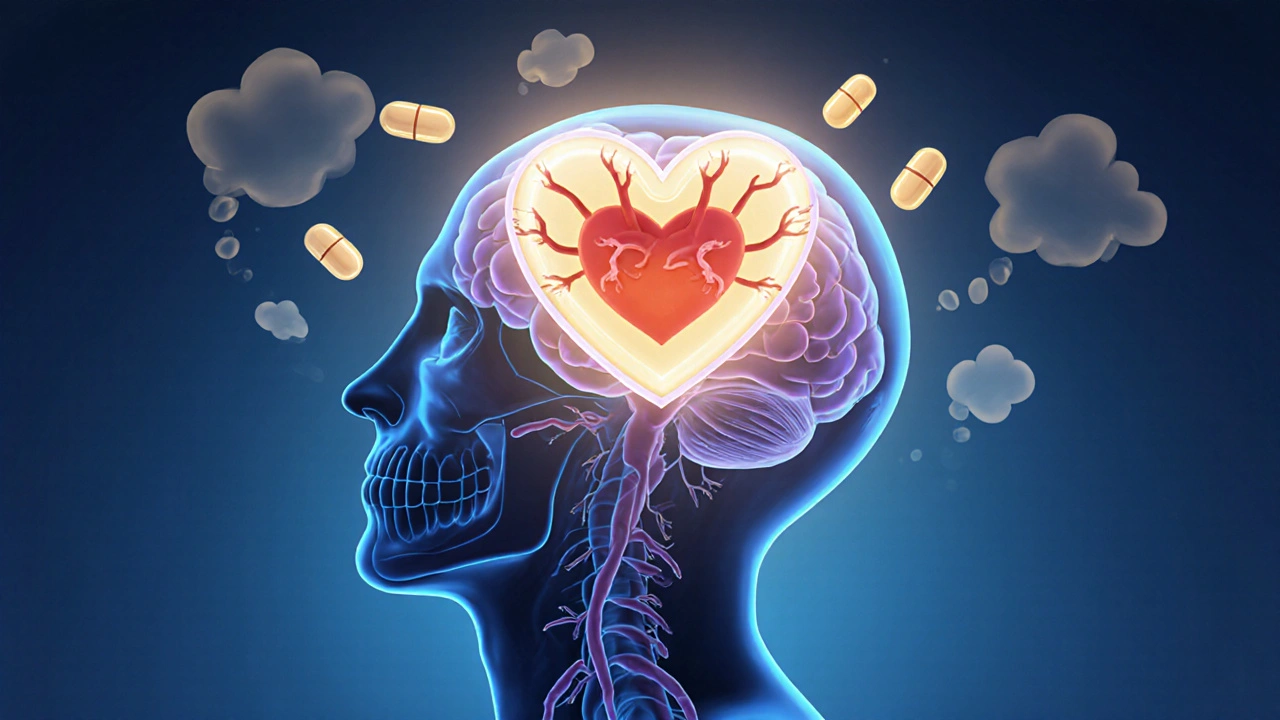
Statins can cause temporary memory issues in rare cases, but most evidence shows they protect against dementia. Learn how to tell if your memory problems are linked to statins-and what to do next.
Statins and Memory Loss: What You Need to Know About the Real Risk
When you take a statin, a class of cholesterol-lowering drugs prescribed to reduce heart attack and stroke risk. Also known as HMG-CoA reductase inhibitors, they work by blocking an enzyme your liver uses to make cholesterol. Millions rely on them daily, but a quiet concern keeps coming up: statins and memory loss. Is it real? Or just a rumor that won’t die?
Some people report fuzzy thinking, trouble remembering names, or feeling mentally sluggish after starting a statin. These aren’t just anecdotes. In 2012, the FDA added a warning about rare, reversible cognitive side effects after reviewing patient reports and clinical data. But here’s the catch: large, long-term studies—including one published in the Journal of the American College of Cardiology tracking over 1,000 adults for five years—found no consistent link between statins and lasting memory decline. In fact, some research suggests statins might even lower dementia risk by improving blood flow to the brain. So why the confusion? Because side effects are messy. If you start a new medication and then notice memory lapses, your brain naturally connects the two. That doesn’t mean one caused the other.
Not all statins are the same when it comes to brain exposure. Lipophilic statins like simvastatin and atorvastatin cross the blood-brain barrier more easily than hydrophilic ones like rosuvastatin or pravastatin. That’s why some doctors switch patients to a less brain-penetrating version if cognitive complaints arise. And it’s not just about memory. Statins can also cause muscle pain, fatigue, or elevated liver enzymes—symptoms that might get mistaken for brain fog. If you’re worried, don’t stop cold turkey. Talk to your provider. They can check your liver enzymes, review your dose, and consider alternatives like ezetimibe or PCSK9 inhibitors if needed.
What’s clear is this: the risk of a heart attack or stroke from uncontrolled cholesterol far outweighs the chance of temporary memory issues for most people. But if you’re one of the few who genuinely feels different on a statin, your experience matters. It’s not in your head. It’s a real phenomenon, even if it’s rare. The key is knowing how to spot it, when to speak up, and what options exist beyond just pushing through.
Below, you’ll find real-world insights from people who’ve dealt with this, doctors who’ve studied it, and data that separates fear from facts. You’ll learn how to tell if it’s the statin—or something else. And you’ll see what steps actually help when brain fog shows up.