
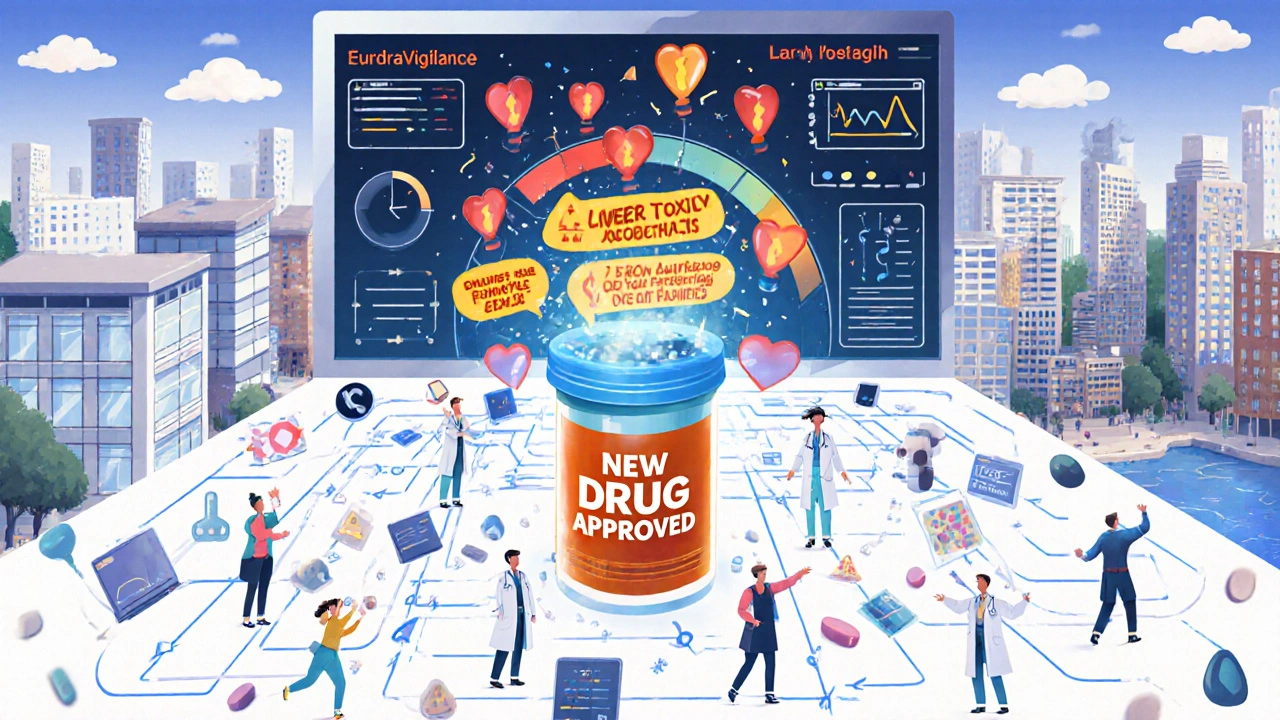
Drug safety signals emerge after clinical trials end, revealing hidden risks only visible when millions use a drug. Learn how real-world data, statistical tools, and human reporting uncover dangers regulators couldn't predict.
Signal Detection: How Medications Reveal Hidden Risks and Interactions
When you take a pill, you trust it’s safe—but what if the real risks only show up after thousands of people have used it? That’s where signal detection, the process of identifying unexpected health risks from real-world medication use. It’s how drug safety teams spot dangers that clinical trials miss—like a rare liver injury from a common painkiller, or a deadly mix between an anxiety pill and alcohol. This isn’t guesswork. It’s data-driven detective work, using reports from doctors, patients, and pharmacies to find patterns no lab could predict.
Signal detection doesn’t just look at one drug. It watches how drugs interact. For example, when someone takes Ginkgo Biloba, a popular herbal supplement used for memory along with warfarin, a blood thinner prescribed to prevent clots, the risk of bleeding goes up. That’s not in the Ginkgo bottle. But when enough people report nosebleeds or bruising after combining them, signal detection picks it up. The same goes for beta-blockers, heart medications that can hide low blood sugar symptoms in diabetics. If a few patients miss their warning signs, it’s just bad luck. If hundreds do, it becomes a signal—and a warning gets issued.
These signals don’t come from fancy labs. They come from real people. Someone taking carbamazepine, a seizure and nerve pain drug and noticing a rash after starting a new antibiotic. A pharmacist noticing that three patients on fosfomycin, a single-dose UTI treatment had unexpected allergic reactions. These tiny data points, collected over time, build the picture. And they’re why you’re told to tell your doctor about every supplement, OTC pill, or herbal remedy you take—even if it seems harmless.
What you’ll find below isn’t just a list of articles. It’s a collection of real cases where signal detection made a difference. From why mixing Xanax with opioids is deadly, to how buying cheap generics online can hide quality risks, to why dehydration makes bloating worse even when you’re taking the right meds—these are all stories shaped by hidden signals. These are the risks you won’t read on the label. But now you know where to look.