
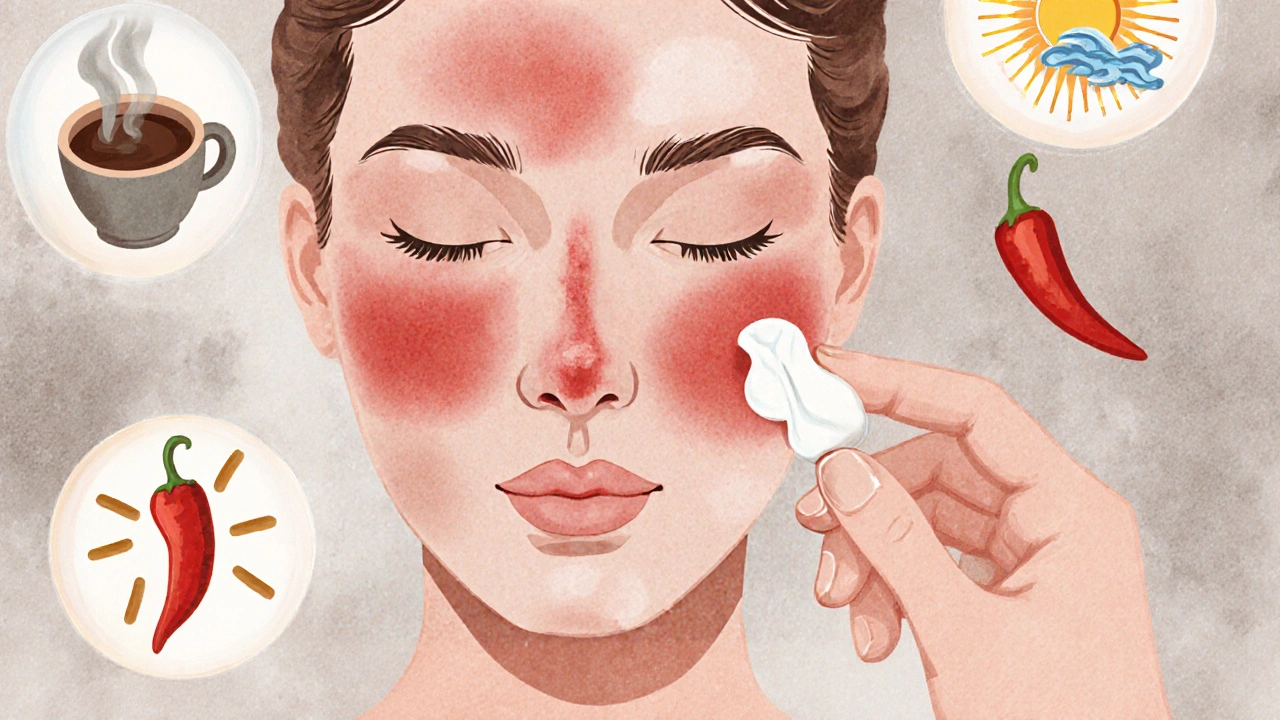
Rosacea causes persistent facial redness and bumps. Topical antibiotics like metronidazole and ivermectin reduce inflammation and Demodex mites, but results take weeks. Learn how to use them right and manage triggers.
Rosacea: Causes, Triggers, and How Medications Can Help
Rosacea, a chronic skin condition that causes persistent redness, visible blood vessels, and sometimes bumps on the face. Also known as acne rosacea, it’s not just bad skin—it’s a real medical issue that affects millions, often mistaken for acne, allergies, or simple sunburn. Unlike acne, rosacea doesn’t go away with washing or over-the-counter creams. It flares up in cycles, and while it’s not contagious or dangerous, it can seriously impact how you feel about your appearance.
What triggers it? Heat, spicy food, alcohol, stress, even sunlight. For some, it’s a glass of wine. For others, it’s a hot shower or a workout. The rosacea flare-up isn’t random—it’s your body’s reaction to things that widen blood vessels in your face. That’s why treatments often target blood vessel control, not just surface redness. Topical medications like brimonidine or oxymetazoline shrink those vessels temporarily. Oral antibiotics like doxycycline reduce inflammation, not because there’s an infection, but because they calm the immune response. Newer drugs like ivermectin cream work by targeting mites and inflammation together, offering real relief for many.
There’s also a strong link between rosacea and gut health, though it’s not proven yet. Some people notice fewer flares when they cut out gluten, dairy, or processed sugar. Others find relief with probiotics or low-histamine diets. It’s not one-size-fits-all. What works for your neighbor might do nothing for you. That’s why tracking your triggers matters more than any trend. Keep a simple log: what you ate, how hot it was, how stressed you felt, and when your face turned red. Patterns emerge fast.
And yes, rosacea can get worse over time if ignored. Left untreated, it can lead to thickened skin on the nose (rhinophyma), eye irritation, or emotional distress that lingers long after the redness fades. But the good news? Most cases respond well to the right mix of medication, sun protection, and lifestyle tweaks. You don’t need to hide your face. You just need to know what’s really going on under the skin.
Below, you’ll find real-world guides on how medications interact with your body, what to watch for when combining treatments, and how to avoid common mistakes that make rosacea worse. These aren’t fluff pieces—they’re practical, evidence-based insights from people who’ve been there.