
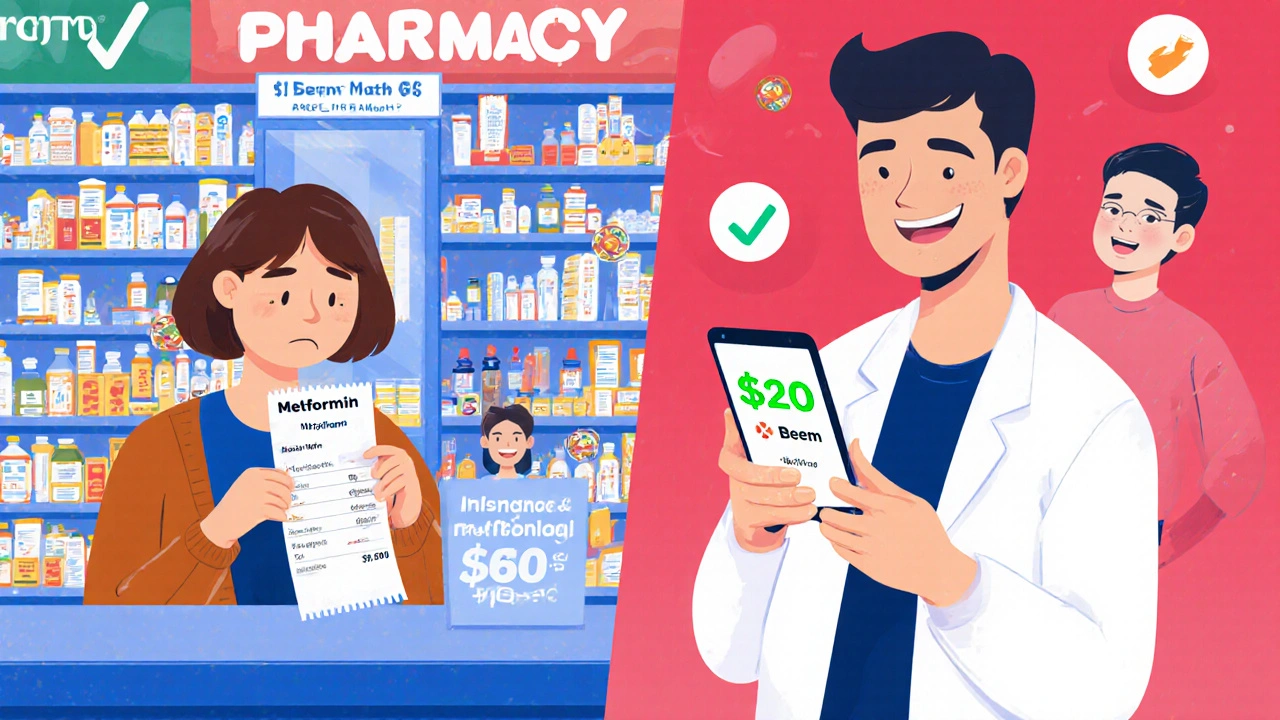
Discover how e-pharmacies like GoodRx and Beem slash generic drug prices compared to retail pharmacies. Save up to 80% on common prescriptions without insurance. Real savings, real options.
Retail Pharmacy Costs: What You Really Pay and How to Save
When you walk into a retail pharmacy, a local or chain store that dispenses prescription and over-the-counter medications to the public. Also known as community pharmacy, it's where most people get their daily pills—whether it’s insulin, blood pressure meds, or pain relievers. But have you ever checked the receipt and wondered why the same drug costs $120 here and $30 online? It’s not just about location. Retail pharmacy costs are shaped by supply chains, insurance deals, manufacturer pricing, and even how much the store pays its staff.
Behind every pill is a chain of decisions. The generic medications, brand-name drugs that are chemically identical but sold without a patent. Also known as off-patent drugs, they're supposed to be cheaper—but not always. In Europe, public tendering systems force pharmacies to buy in bulk at fixed prices, cutting costs for everyone. In the U.S., it’s different. A single dose of fosfomycin might cost $15 at a discount pharmacy but $80 at a major chain if your insurance doesn’t cover it. And that’s not even counting the hidden fees: service charges, dispensing fees, or even the cost of a consultation you didn’t ask for. Meanwhile, OTC medication costs, prices for drugs you can buy without a prescription, like ibuprofen or acetaminophen. Also known as non-prescription drugs, they’re often marked up 300% or more just because they’re on a shelf near the checkout. That $10 bottle of Tylenol? The actual active ingredient costs less than 10 cents.
Drug shortages, foreign manufacturing delays, and corporate pricing strategies all play a role. When a single factory in India stops making an ingredient, prices spike across the U.S. And if your insurer has a deal with one pharmacy chain but not another, you’re stuck paying more—even if you’re just buying aspirin. The truth? You don’t need to pay what’s listed. You can compare prices using free tools, ask for cash discounts, switch to generics, or even buy in bulk for long-term meds. Some pharmacies offer $4 lists for common prescriptions. Others let you order online and pick up in-store for half the price. The system is complex, but you’re not powerless.
Below, you’ll find real breakdowns of how drugs like Advair, Mobic, Kamagra Polo, and even Ginkgo Biloba are priced—and how people are saving hundreds a year by understanding the hidden rules. From insulin to anxiety meds, these aren’t just stories. They’re savings plans you can use today.