
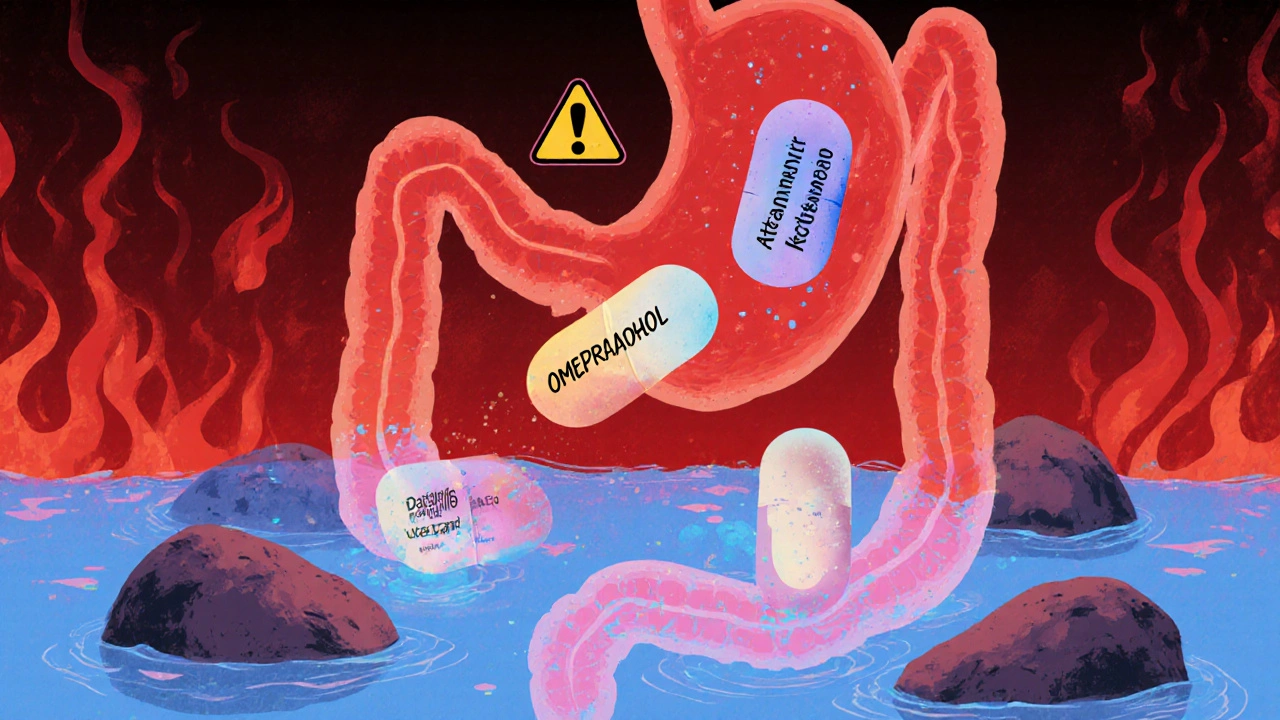
Acid-reducing medications like PPIs and H2 blockers can seriously reduce the absorption of other drugs, leading to treatment failure. Learn which medications are at risk and how to protect your health.
PPIs: What They Are, How They Work, and What You Need to Know
When you hear PPIs, proton pump inhibitors are medications that block acid production in the stomach to treat heartburn and acid reflux. Also known as proton pump inhibitors, they’re among the most prescribed drugs in the world—but that doesn’t mean they’re safe for long-term use without oversight. If you’ve been taking one for months or years because your doctor said "it’s fine," you might want to rethink that. These drugs work by shutting down the acid pumps in your stomach lining, which sounds helpful until you realize your stomach needs acid to digest food, kill bacteria, and absorb nutrients like magnesium, calcium, and B12.
That’s why people on long-term PPIs often end up with new problems: bone fractures, kidney issues, or even infections like C. diff. It’s not magic—it’s biology. Your stomach isn’t supposed to be completely acid-free. And while PPIs help with GERD, gastroesophageal reflux disease is a chronic condition where stomach acid flows back into the esophagus, causing irritation and pain, they don’t fix the root cause. Many cases of GERD are tied to diet, weight, or hiatal hernias—not just excess acid. Yet most patients never get guided toward lifestyle changes because the pill seems like an easier fix.
And here’s the thing: you’re not alone. Millions take PPIs daily, often without knowing there are alternatives. Some switch to H2 blockers like famotidine. Others find relief with dietary tweaks—cutting out caffeine, spicy foods, or late-night meals. There’s also stomach acid, the natural digestive fluid produced by the stomach, crucial for breaking down food and protecting against harmful microbes—and sometimes, the problem isn’t too much of it, but too little. Low stomach acid can mimic GERD symptoms, leading people to take PPIs when they should be doing the opposite.
The posts below aren’t just about PPIs. They’re about the bigger picture: how medications interact, what hidden risks come with long-term use, and how to spot when a drug might be doing more harm than good. You’ll find real comparisons between PPIs and other acid-reducing options, stories of people who reversed their symptoms without pills, and warnings about mixing PPIs with other common drugs like blood thinners or antibiotics. This isn’t fear-mongering. It’s about making informed choices. If you’re on a PPI, or thinking about starting one, these articles will help you ask the right questions—and maybe even find a better path forward.