
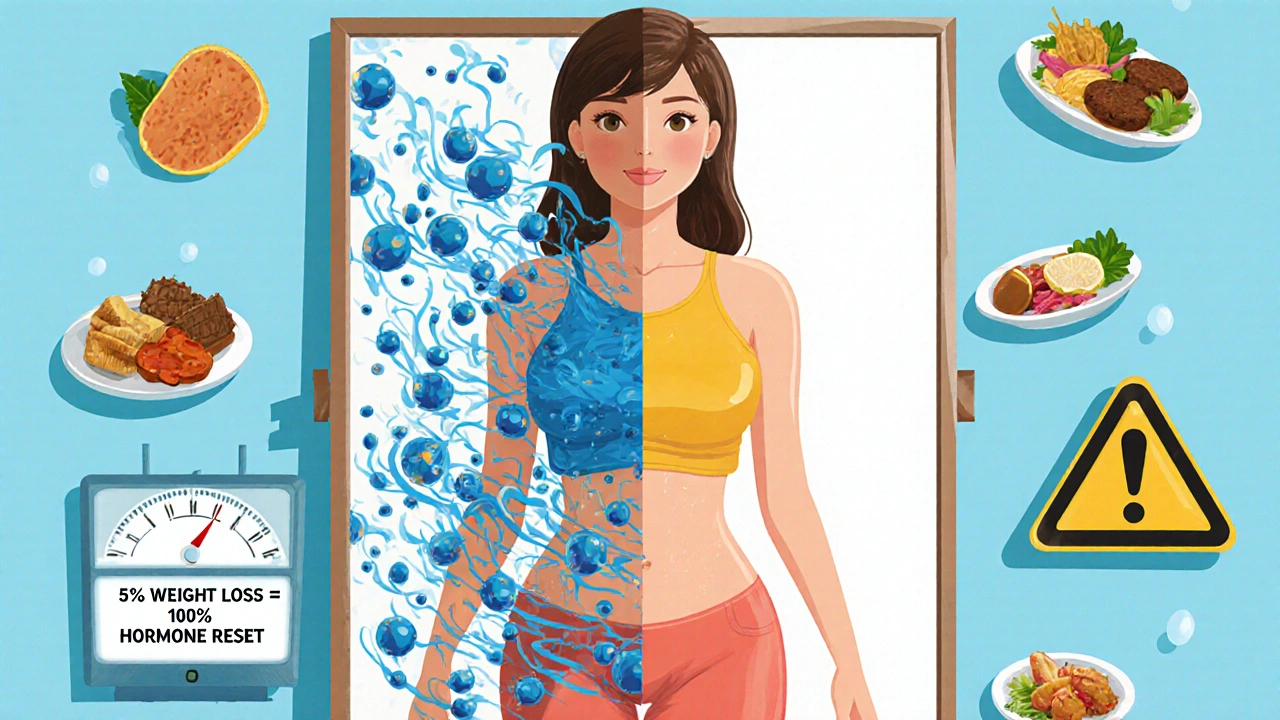
PCOS makes weight loss hard because of insulin resistance. Learn how diet changes can break the cycle of weight gain, cravings, and hormonal imbalance-and how to eat for real, lasting results.
PCOS Weight Gain: Causes, Connections, and What Actually Works
When you have PCOS weight gain, a common and frustrating symptom of polycystic ovary syndrome that’s tied to hormonal and metabolic dysfunction. Also known as polycystic ovary syndrome-related obesity, it’s not about laziness or willpower—it’s biology. Women with PCOS often carry extra weight around the belly, even when eating well and exercising. That’s because PCOS isn’t just about irregular periods or acne—it’s a metabolic disorder. The real driver? insulin resistance, a condition where cells stop responding properly to insulin, causing the body to produce more of it. High insulin levels tell your body to store fat, especially in the abdomen, and make it harder to burn it off.
This is why dieting alone rarely works. Cutting calories without fixing the insulin issue is like trying to drain a bathtub with the faucet still on. hormonal imbalance, specifically elevated androgens like testosterone, also plays a big part. These hormones shift fat storage, increase cravings for carbs, and lower energy levels, making exercise feel impossible. Many people with PCOS also deal with sleep problems and stress, which raise cortisol and make weight gain worse. The good news? You don’t need to starve yourself or buy expensive supplements. Small, consistent changes—like eating more protein and fiber, reducing processed sugars, and getting enough sleep—can help your body respond better to insulin over time. Some medications, like metformin, are prescribed specifically to improve insulin sensitivity, and studies show they help with weight loss in PCOS when combined with lifestyle changes.
What you’ll find in the posts below aren’t quick fixes or miracle diets. Instead, you’ll see real comparisons between medications, supplements, and practical health strategies that actually connect to PCOS weight gain. From how insulin resistance affects drug choices to why certain OTC pain relievers or herbal supplements might help—or hurt—your progress, these articles cut through the noise. You’ll learn how to talk to your provider about your meds, spot hidden triggers in everyday products, and understand why some weight loss methods fail people with PCOS. This isn’t about perfection. It’s about working with your body, not against it.