
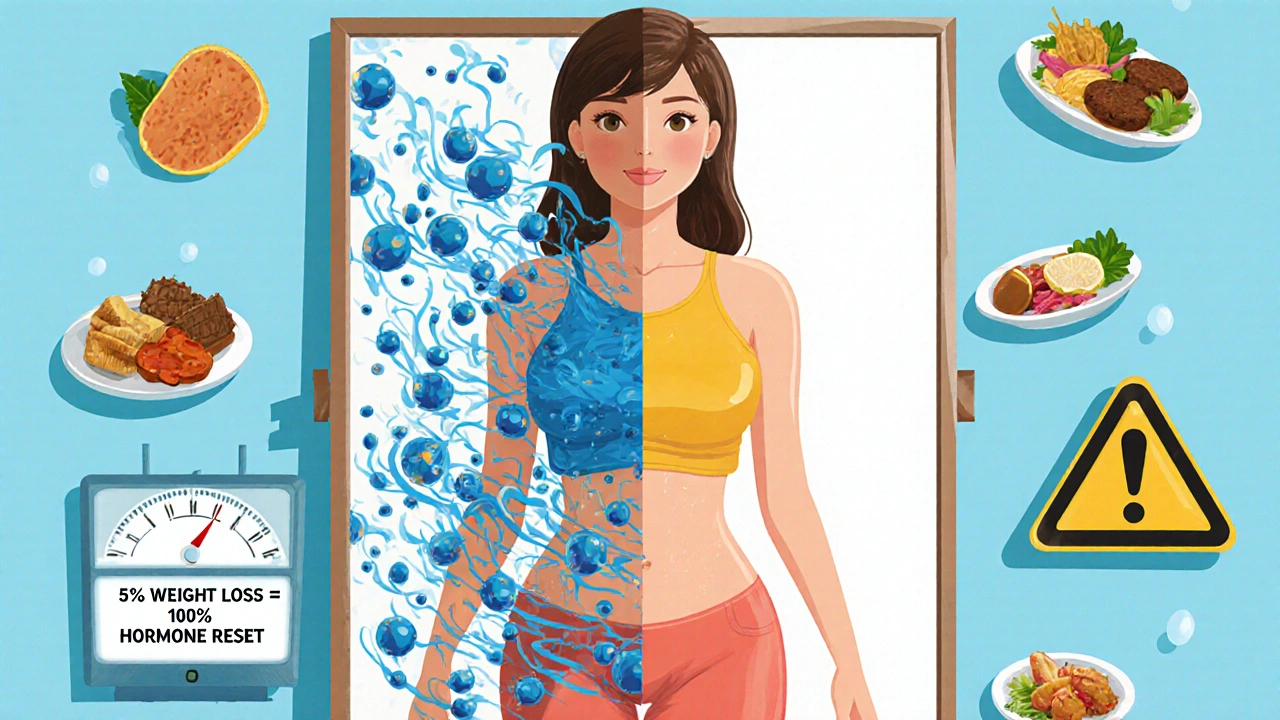
PCOS makes weight loss hard because of insulin resistance. Learn how diet changes can break the cycle of weight gain, cravings, and hormonal imbalance-and how to eat for real, lasting results.
PCOS Diet: What to Eat, What to Avoid, and Real Results
When you have PCOS, Polycystic Ovary Syndrome, a common hormonal disorder affecting women of reproductive age. Also known as polycystic ovarian syndrome, it often comes with weight gain, irregular periods, acne, and trouble getting pregnant. The PCOS diet isn’t about quick fixes or starving yourself—it’s about eating in a way that calms down your hormones and helps your body use insulin properly.
Insulin resistance is the hidden driver behind most PCOS symptoms. When your body doesn’t respond well to insulin, it makes more of it, which then pushes your ovaries to make extra testosterone. That’s why you might get unwanted hair, breakouts, or struggle to lose weight. The right foods can break that cycle. Focus on low glycemic foods, foods that don’t spike your blood sugar quickly, like beans, non-starchy vegetables, and whole grains. Skip the white bread, sugary snacks, and processed carbs—they make insulin resistance worse. Studies show that even a modest weight loss of 5-10% can bring back regular periods and improve fertility.
Another big piece? anti-inflammatory diet, a way of eating that reduces chronic inflammation, which is often high in women with PCOS. Think fatty fish like salmon, walnuts, olive oil, berries, and leafy greens. These aren’t just healthy—they actively help lower the inflammation that makes PCOS symptoms worse. Avoid fried foods, processed meats, and sugary drinks—they feed inflammation and make things harder.
Don’t forget protein. Eating enough at every meal helps stabilize blood sugar and keeps you full longer. Eggs, chicken, tofu, lentils, and Greek yogurt are great choices. Pair them with healthy fats like avocado or nuts. Many women with PCOS find that eating smaller, balanced meals every 3-4 hours keeps their energy up and cravings down.
Some people swear by supplements like inositol or vitamin D, but those work best when paired with real food changes. You can’t out-supplement a bad diet. And while keto or intermittent fasting might sound tempting, they’re not magic bullets. What works for one person might backfire for another. The goal isn’t perfection—it’s consistency.
What you’ll find in the articles below are real comparisons and practical tips: how to pick the right carbs, why some fats help and others hurt, what supplements actually have evidence behind them, and how to eat in a way that fits your life—not a diet book. No gimmicks. No extreme rules. Just clear, no-fluff advice based on what works for women with PCOS day after day.