
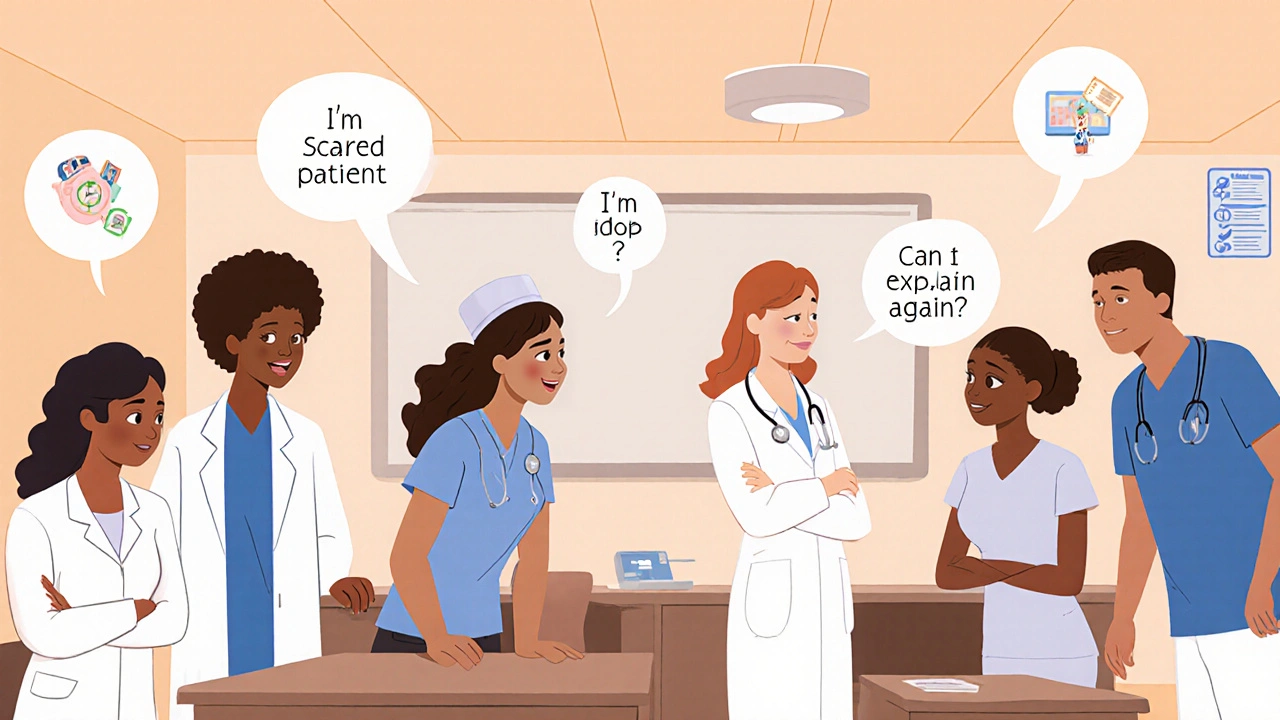
Institutional communication training programs in healthcare are proven to reduce errors, improve patient satisfaction, and lower malpractice claims. Learn how structured education is transforming patient-provider interactions and why most programs still miss key equity and sustainability issues.
Patient Education: Understand Your Medications and Stay Safe
When it comes to your health, patient education, the process of giving people clear, practical knowledge about their medications and health conditions. It's not just about reading labels—it's about knowing why you're taking something, what could go wrong, and how to talk to your doctor about it. Too many people swallow pills without asking questions, and that’s where things get risky. A simple mix of an over-the-counter painkiller and a supplement like Ginkgo Biloba can spike your bleeding risk. Or maybe you’re taking insulin and a beta-blocker without realizing one hides the signs of low blood sugar. drug interactions, when two or more substances affect each other’s behavior in your body aren’t rare—they’re common, and most of them are preventable.
OTC medications, drugs you can buy without a prescription, like Tylenol, Advil, or even antacids aren’t harmless just because they’re easy to get. People think if it’s on the shelf, it’s safe. But acetaminophen can damage your liver if you take too much—or if you’re already drinking alcohol or taking other meds. And supplement use, the daily habit of taking herbal products, vitamins, or minerals is often hidden from doctors. You might think telling your provider about your fish oil or probiotics is overkill. But if you’re on blood thinners, that ginkgo or garlic pill could be a silent threat. Patient education means learning how to speak up, track what you’re taking, and understand the real science behind what’s in your medicine cabinet.
These aren’t abstract ideas—they’re daily decisions. Someone with PCOS needs to know how insulin resistance affects weight and what foods actually help. Someone with a UTI needs to know why fosfomycin might be a better choice than an overused antibiotic. If you’re managing epilepsy, anxiety, or chronic pain, patient education tells you how to balance effectiveness with safety. It’s not about memorizing drug names. It’s about asking: Why am I taking this? What could go wrong? What should I tell my doctor? The posts below give you exactly that: no fluff, no jargon, just clear facts on what works, what doesn’t, and what could hurt you if you don’t know better.