
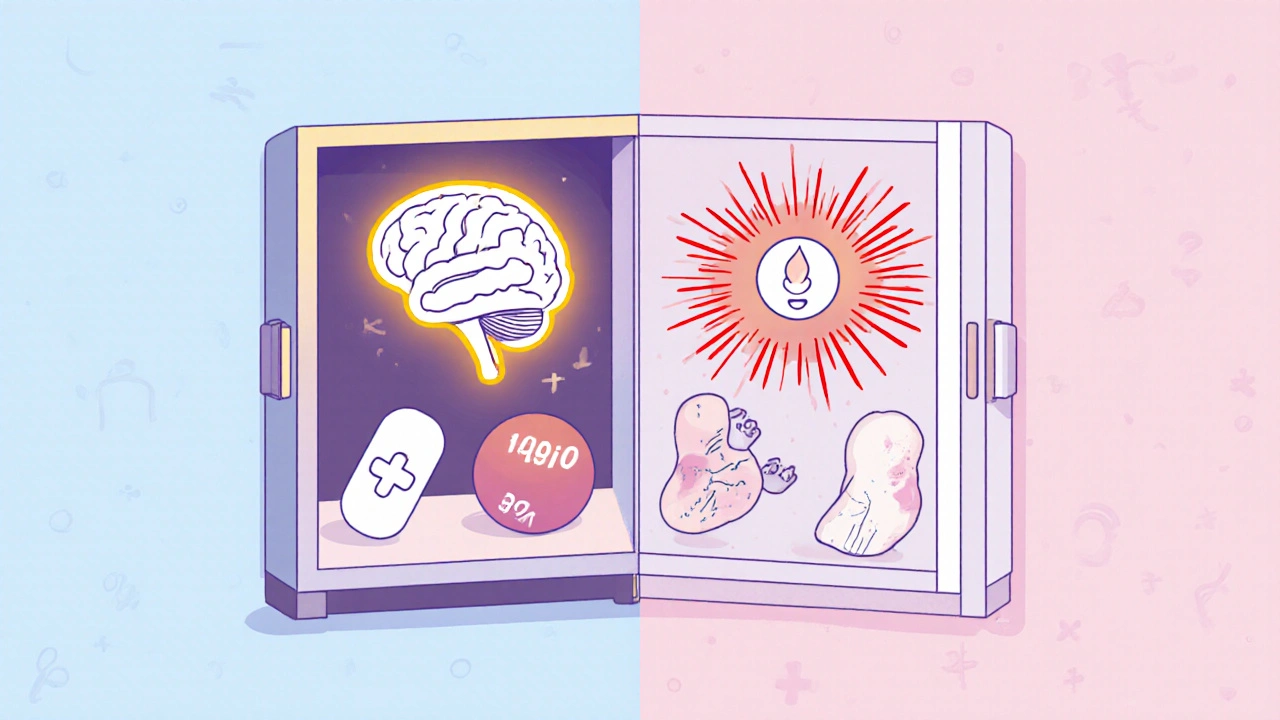
Learn how to choose between acetaminophen and NSAIDs for pain relief. Understand safety, effectiveness, dosing, and when to use each based on your condition and health history.
Pain Relievers: What Works, What Risks, and How to Choose Safely
When you reach for a pain reliever, a medication used to reduce or eliminate discomfort from headaches, muscle aches, arthritis, or injuries. Also known as analgesics, these drugs are among the most common medicines people take daily — but few understand how they really work or what they might be risking. Tylenol (acetaminophen) and NSAIDs like ibuprofen and naproxen are everywhere, from medicine cabinets to convenience stores. But they’re not harmless. Taking them wrong — or mixing them with other meds — can quietly damage your liver, kidneys, or stomach, sometimes without warning.
Not all pain relievers are the same. acetaminophen, a widely used pain and fever reducer that works in the brain, not by reducing inflammation is safer for your stomach than NSAIDs, a class of drugs including ibuprofen, naproxen, and meloxicam that reduce inflammation and pain by blocking enzymes in the body. But acetaminophen can cause serious liver damage if you take more than 4,000 mg a day — or if you drink alcohol while using it. NSAIDs, on the other hand, can cause ulcers, raise blood pressure, or hurt kidney function, especially with long-term use. And they don’t play nice with blood thinners, antidepressants, or even some herbal supplements like ginkgo biloba. One study found that over 20% of ER visits for pain reliever issues were due to accidental overdoses or bad combinations.
What you might not realize is that many of these risks show up in places you’d never expect. A daily aspirin for heart health? It can turn a simple headache remedy into a bleeding risk. Taking meloxicam for arthritis while also using a stomach acid reducer? That combo might stop your body from absorbing the painkiller properly. Even something as simple as dehydration can make NSAID side effects worse. These aren’t theoretical dangers — they’re real, documented, and happening to people right now.
So how do you use pain relievers without putting yourself at risk? Start by knowing exactly what you’re taking. Check labels — many cold and flu meds already contain acetaminophen. Don’t assume "natural" means safe — ginkgo, fish oil, or turmeric can increase bleeding risk when paired with NSAIDs. Talk to your provider about every pill, capsule, or drop you take, even if it’s "just" an OTC pain reliever. And if you’re using one regularly for more than a few days, ask if there’s a better long-term solution.
Below, you’ll find real comparisons and warnings based on actual cases — from how Tylenol stacks up against ibuprofen, to why Mobic might be a smarter choice than other NSAIDs for some people, and how common drug interactions are silently undermining treatment. This isn’t guesswork. It’s what people need to know before they swallow another pill.