
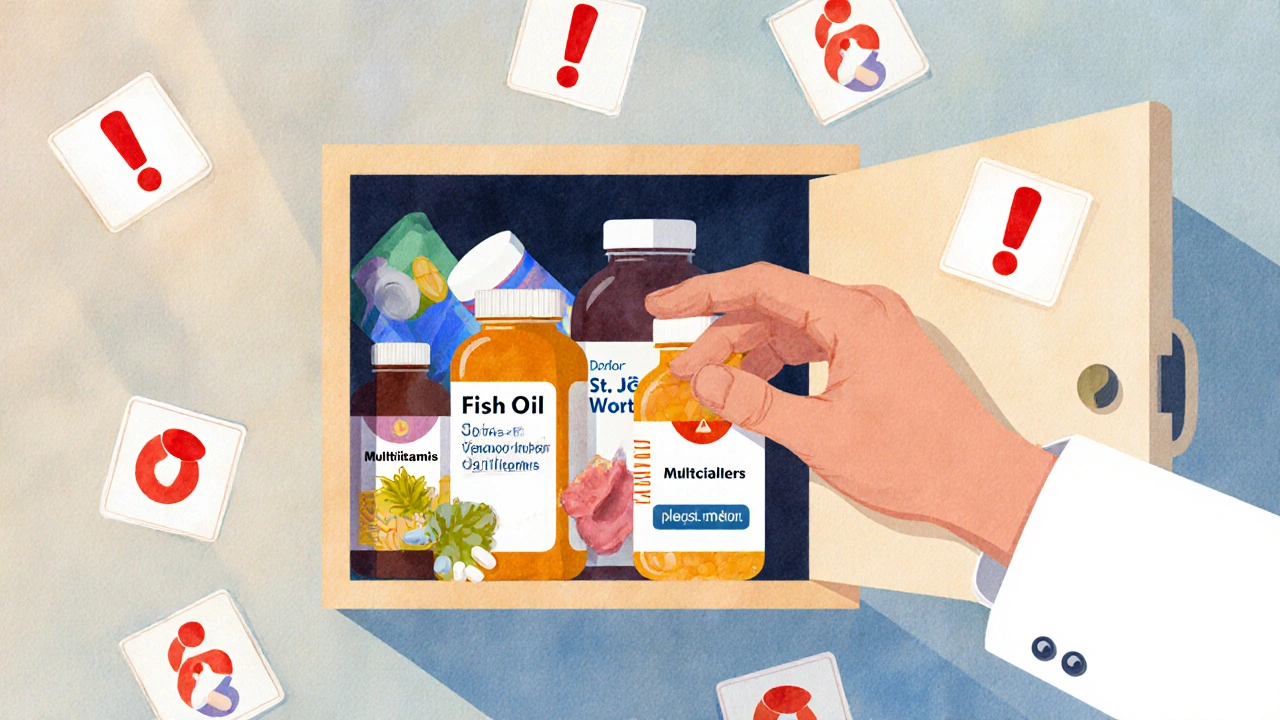
Learn how to accurately share your over-the-counter medications and supplement use with healthcare providers to prevent dangerous interactions. Real data, clear steps, and proven safety practices.
Medication Interactions: What You Need to Know Before Mixing Drugs
When you take more than one medicine, your body doesn’t always know how to handle them. Medication interactions, harmful or unexpected effects that happen when two or more drugs, supplements, or foods affect each other in the body. Also known as drug interactions, they can turn a safe treatment into a serious risk. This isn’t just about pills you get from a doctor—it’s also about herbal stuff like Ginkgo Biloba, over-the-counter painkillers, or even grapefruit juice. These aren’t harmless extras. They can change how your body processes your main meds, sometimes making them too strong, too weak, or just plain dangerous.
Take blood thinners, medications that prevent dangerous clots but can bleed you out if not managed carefully. Also known as anticoagulants, they include warfarin, aspirin, and clopidogrel. Mix them with Ginkgo Biloba, and you’re increasing your chance of internal bleeding. Combine benzodiazepines like Xanax with alcohol or opioids, and you’re risking breathing failure. Even something as simple as taking carbamazepine with another drug can throw off your entire treatment plan. These aren’t rare cases—they happen every day because people assume if it’s natural, over-the-counter, or prescribed by someone else, it’s safe to mix. It’s not.
Herbal supplement interactions, unexpected reactions between plant-based remedies and prescription drugs are one of the biggest blind spots. People think if it’s sold in a health store, it’s harmless. But Ginkgo, St. John’s Wort, even garlic supplements can interfere with heart meds, antidepressants, and chemotherapy. And it’s not just supplements. Your diet matters too—grapefruit can wreck how your liver breaks down dozens of drugs. Even dehydration can make side effects worse, as seen in cases where bloating and fluid imbalance affect how meds are absorbed.
You don’t need to be a pharmacist to protect yourself. Just ask: Is this new thing I’m taking—whether it’s a pill, a tea, or a vitamin—going to change how my other meds work? If you’re on insulin and beta-blockers, you might not feel your blood sugar drop until it’s too late. If you’re on antabuse alternatives like naltrexone, mixing alcohol could still cause trouble. And if you’re using a cheap generic from an online pharmacy, you might not even know what’s really in it.
The posts below cover real-world cases where these interactions went wrong—and how people fixed them. You’ll find clear breakdowns of what happens when anxiety meds mix with sleep aids, how PCOS and insulin resistance change drug metabolism, why fosfomycin is a smart choice for UTIs, and how to spot if your painkiller is secretly harming your liver. No fluff. No jargon. Just what you need to know before you take the next pill.