
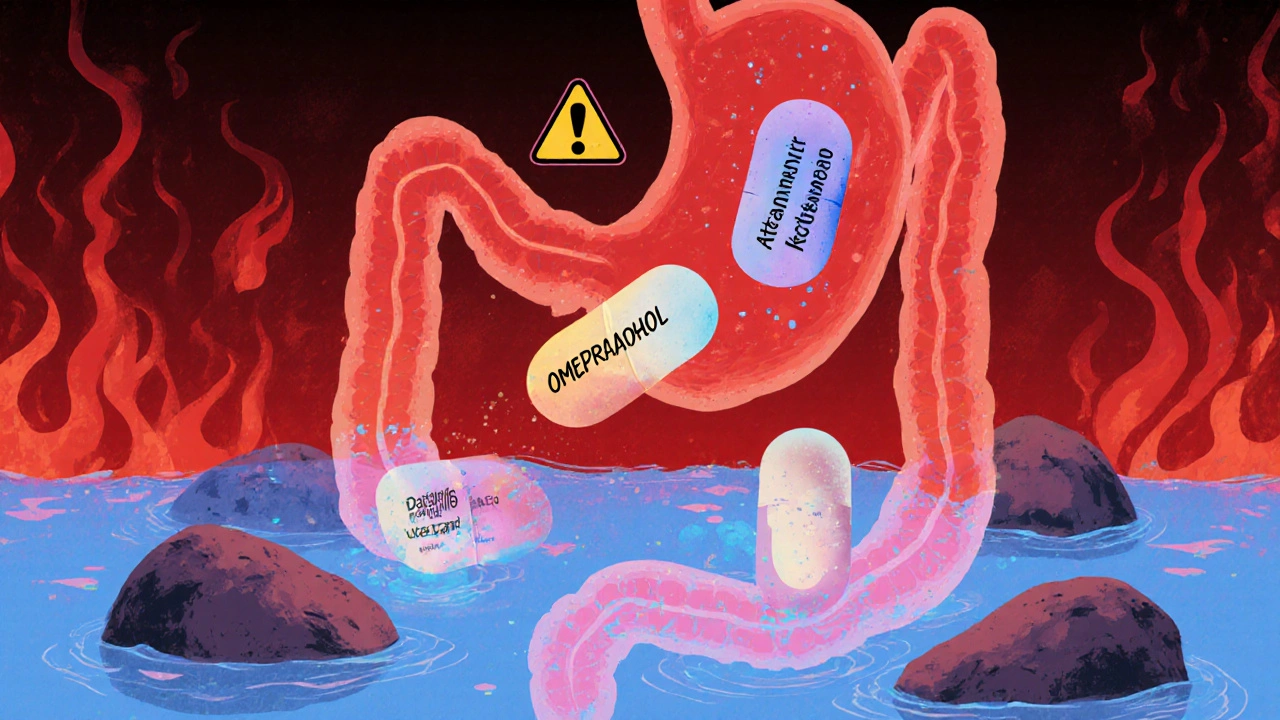
Acid-reducing medications like PPIs and H2 blockers can seriously reduce the absorption of other drugs, leading to treatment failure. Learn which medications are at risk and how to protect your health.
Medication Absorption: How Your Body Takes In Drugs and Why It Matters
When you swallow a pill, it doesn’t just disappear and start working. Medication absorption, the process by which a drug enters your bloodstream from its site of administration. Also known as drug uptake, it’s the first step that decides whether your medicine will help, hurt, or do nothing at all. A drug can be perfectly formulated, but if your body doesn’t absorb it properly, you’re just wasting your time—and money.
Not all pills work the same way. Bioavailability, the percentage of a drug that actually reaches your bloodstream varies wildly. Take ibuprofen: if you take it on an empty stomach, it hits your system fast. Take it after a big meal? It might take twice as long to kick in. Same pill. Different results. And it’s not just about food. Your gut health, liver function, even the time of day can change how much of a drug gets absorbed. That’s why some people feel nothing from a dose that works perfectly for someone else.
And then there are interactions. If you’re taking drug interactions, when one substance changes how another is absorbed or processed—say, a blood thinner like warfarin and ginkgo biloba—the result can be dangerous. Ginkgo might speed up how fast your body clears the drug, making it less effective. Or it might slow absorption, raising your risk of bleeding. It’s not magic. It’s chemistry. And it’s happening inside you right now, whether you know it or not.
Oral meds aren’t the only game in town. Patches, injections, sprays—they all have different absorption rules. A nitroglycerin spray under your tongue works in seconds because it skips the gut and goes straight into your blood. A topical cream? It barely makes it past your skin. Even the shape of a pill matters. Some are coated to dissolve only in the intestines, not the stomach. Others are designed to release slowly over hours. If you crush or chew them, you break the system.
And here’s the kicker: many of the drugs you take daily—like carbamazepine, acetaminophen, or insulin—are affected by how well they’re absorbed. If your body doesn’t pull in enough, your condition won’t improve. Too much? You risk side effects or even toxicity. That’s why doctors ask about what you eat, what supplements you take, and whether you drink alcohol. They’re not being nosy. They’re trying to figure out if your meds are even getting where they need to go.
What you’ll find in the posts below isn’t just a list of drug names. It’s a real-world look at how absorption plays out in daily life. From why your anxiety meds don’t work after a greasy burger, to how fake generics might be missing the active ingredient entirely, to why your painkiller suddenly stopped helping—every article ties back to this one invisible process. You’ll learn how to spot when absorption is failing, how to fix it, and what to ask your provider before you swallow the next pill. This isn’t theory. It’s your body’s silent rulebook—and you need to read it.