
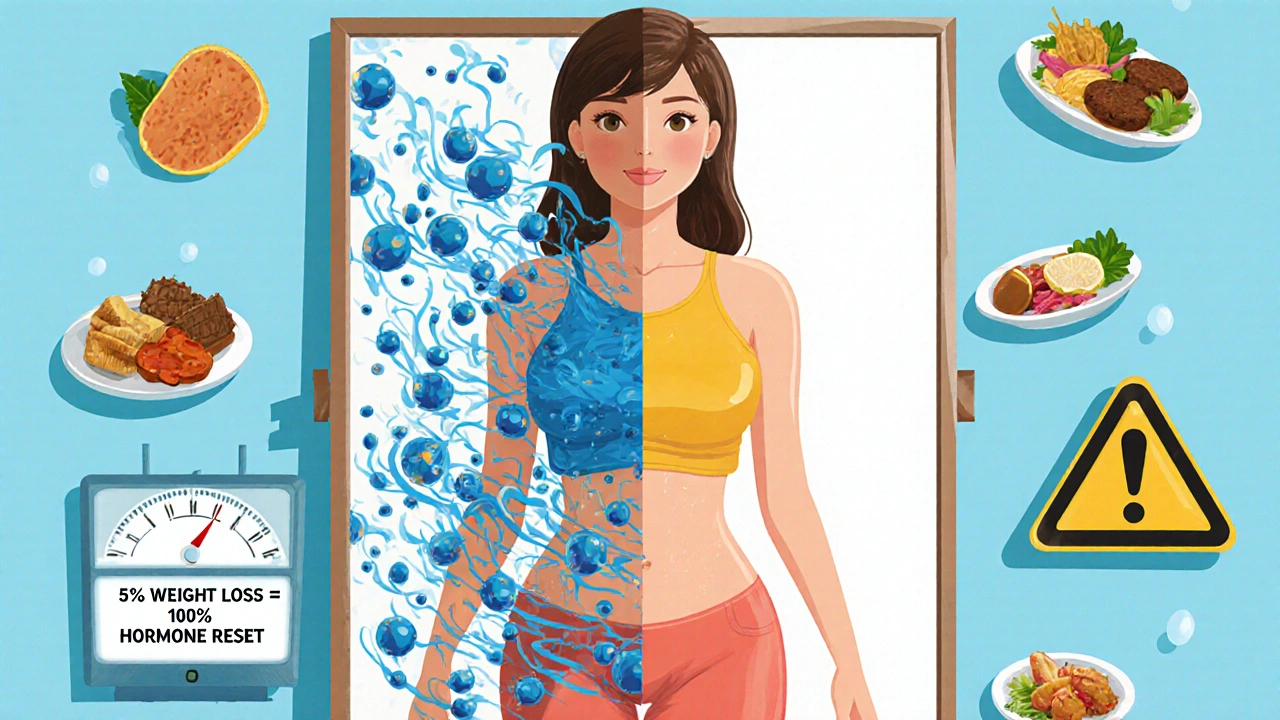
PCOS makes weight loss hard because of insulin resistance. Learn how diet changes can break the cycle of weight gain, cravings, and hormonal imbalance-and how to eat for real, lasting results.
Insulin Resistance PCOS: Causes, Links, and What You Can Do
When you have insulin resistance PCOS, a condition where the body doesn’t respond properly to insulin, often paired with polycystic ovary syndrome. Also known as metabolic PCOS, it’s not just about irregular periods or acne—it’s a sign your body’s energy system is stuck in overdrive. This isn’t rare. About 70% of women with polycystic ovary syndrome, a hormonal disorder causing enlarged ovaries with small cysts and irregular cycles. Also known as PCOS, it also have insulin resistance. That means your pancreas pumps out more insulin to try to move sugar into cells, but your muscles and fat don’t listen. The extra insulin then tells your ovaries to make more testosterone, which messes up ovulation, causes weight gain around the belly, and makes acne worse.
It’s not just a reproductive issue—it’s a metabolic one. insulin sensitivity, how well your cells respond to insulin. Also known as glucose uptake, it drops in people with this combo. That’s why many end up with prediabetes or type 2 diabetes before 40. And it’s not just about sugar. High insulin levels also raise blood pressure, increase bad cholesterol, and lower good cholesterol—pushing you toward metabolic syndrome, a cluster of conditions including high blood pressure, high blood sugar, excess belly fat, and abnormal cholesterol. Also known as syndrome X, it that raises heart disease risk. This is why treating insulin resistance PCOS isn’t about popping birth control pills alone—it’s about fixing the root cause.
You’ll find real strategies in the posts below. Some show how metformin helps lower insulin and restart ovulation. Others compare how diet changes—like cutting refined carbs or trying intermittent fasting—actually work better than drugs for some women. You’ll see how tracking blood sugar with a CGM gives more insight than yearly glucose tests. And you’ll learn why some supplements like inositol and magnesium show real results in studies, not just anecdotes. This isn’t about quick fixes. It’s about understanding how your body works and using that knowledge to take back control. The tools are here. The science is clear. Now it’s about what you do next.