
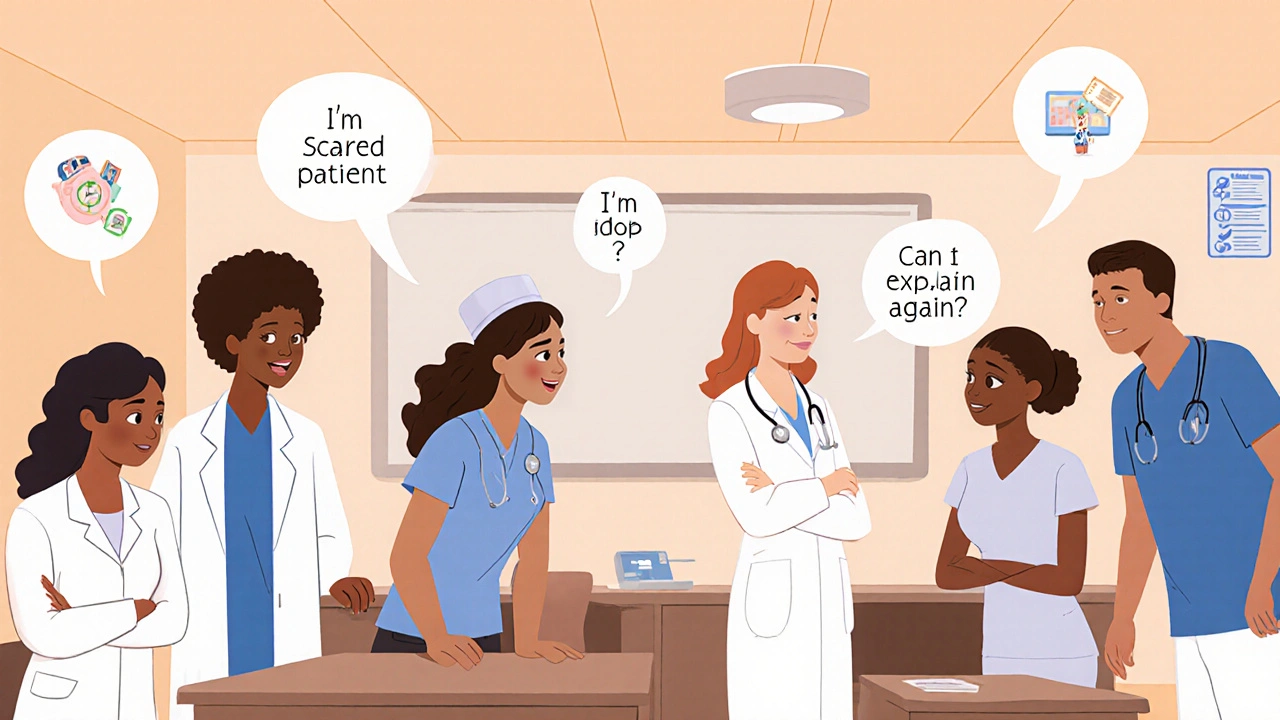
Institutional communication training programs in healthcare are proven to reduce errors, improve patient satisfaction, and lower malpractice claims. Learn how structured education is transforming patient-provider interactions and why most programs still miss key equity and sustainability issues.
Institutional Programs in Pharmacy: How Public Systems Shape Drug Access and Costs
When you think about how medications get to pharmacies, you might picture a doctor writing a prescription or a drugstore shelf. But behind the scenes, institutional programs, structured systems used by governments and health organizations to buy medications in bulk. Also known as public drug procurement, these programs decide which drugs are available, at what price, and for who—often more than any single pharmacy or doctor. These aren’t just behind-the-scenes policies. They directly affect whether you can get a cheap generic, if a life-saving drug is in stock, or if your insurance covers a specific brand.
tendering systems, competitive bidding processes used by public health agencies to select drug suppliers. Also known as public procurement auctions, it’s how countries like those in Europe cut generic drug prices by up to 70%—not by negotiating with one company, but by inviting dozens to bid and picking the best offer based on price, quality, and reliability. These systems don’t just save money. They force manufacturers to compete on value, not marketing. And when a country like Germany or Sweden uses MEAT evaluation, a method that scores bids on multiple criteria like cost, delivery time, and safety records. Also known as Most Economically Advantageous Tender, it ensures the cheapest bid isn’t always the winner. That’s why European hospitals rarely run out of basic antibiotics, while the U.S. sees shortages from time to time.
These programs also shape the global supply chain. When a government commits to buying 10 million doses of a generic drug every year, manufacturers shift production to meet that demand. That’s why so many pills in your medicine cabinet come from India or China—they’re built to serve large institutional buyers, not individual customers. But that dependence also creates risk. If a factory in one country shuts down, entire regions can face drug shortages. That’s why newer institutional programs now require multi-shoring, the practice of sourcing critical drugs from multiple geographic regions to avoid single-point failures. Also known as supply chain diversification, it’s becoming a standard rule in national drug policies.
And it’s not just about cost. Institutional programs control which drugs get approved for public use. A drug might be FDA-approved, but if it doesn’t meet a country’s tendering criteria—say, it’s too expensive compared to a generic alternative—it won’t be stocked in public hospitals. That’s why drugs like fosfomycin or naltrexone are widely used in Europe but still niche in the U.S.—they fit better into institutional buying models. Even something as simple as a pregnancy test card or a pain reliever can be affected, because hospitals and clinics buy in bulk, and their choices trickle down to pharmacies.
What you’ll find here isn’t a list of policies or government reports. It’s real-world examples of how these systems work—how they save billions, prevent shortages, and sometimes leave patients scrambling. You’ll see how e-pharmacies like GoodRx compete with institutional pricing, how drug safety signals emerge from large-scale public use, and why your insurance might cover one painkiller but not another. These aren’t abstract concepts. They’re the hidden rules that decide what medicine ends up in your hand.