
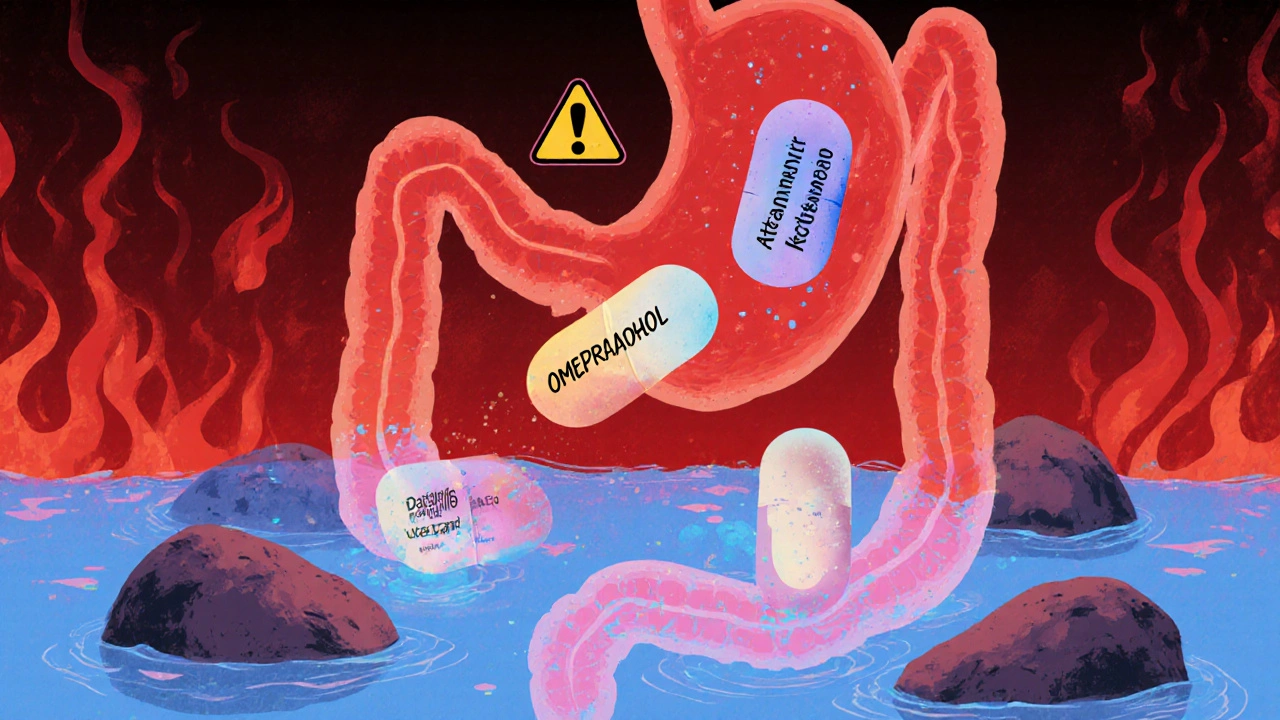
Acid-reducing medications like PPIs and H2 blockers can seriously reduce the absorption of other drugs, leading to treatment failure. Learn which medications are at risk and how to protect your health.
H2 Blockers: What They Are, How They Work, and What You Need to Know
When your stomach makes too much acid, it can cause heartburn, ulcers, or GERD. That’s where H2 blockers, a class of medications that reduce stomach acid production by blocking histamine receptors in the stomach lining. Also known as histamine H2-receptor antagonists, they’re one of the oldest and most straightforward ways to calm acid-related discomfort. Unlike antacids that just neutralize acid after it’s made, H2 blockers stop the acid from being produced in the first place. That means longer relief—often 12 hours or more—with just one dose.
Common H2 blockers include famotidine, the active ingredient in Pepcid, still widely used and considered safe for short-term relief, and ranitidine, formerly sold as Zantac, which was pulled from most markets in 2020 due to contamination with a probable carcinogen. Other options like cimetidine (Tagamet) and nizatidine (Axid) are less common today but still available. These drugs work best when taken 30 to 60 minutes before meals or at bedtime, especially if you know certain foods or habits trigger your symptoms.
They’re not just for occasional heartburn. Doctors still prescribe H2 blockers for peptic ulcers, Zollinger-Ellison syndrome, and even to prevent stress ulcers in hospitalized patients. But they’re not a cure-all. If you’re relying on them daily for more than two weeks, it’s time to talk to a provider. Chronic acid issues might point to something deeper—like H. pylori infection, a hiatal hernia, or even Barrett’s esophagus. And while H2 blockers are generally safer than proton pump inhibitors (PPIs) for long-term use, they’re not risk-free. Some people report headaches, dizziness, or digestive upset. Older adults and those with kidney problems need lower doses.
What’s interesting is how much the landscape has changed. After the ranitidine recall, many people switched to famotidine or PPIs. But now, with growing awareness of PPI side effects—like bone loss, kidney issues, and nutrient malabsorption—there’s renewed interest in H2 blockers as a middle-ground option. They don’t shut down acid production as completely as PPIs, which can be a good thing for some. And unlike antacids, they don’t interfere with nutrient absorption the same way.
Below, you’ll find real-world advice on how to use these drugs safely, what to avoid mixing them with, and how to spot counterfeit versions online. You’ll also see comparisons with other acid-reducing treatments, stories from people who’ve managed their symptoms for years, and warnings about what to watch for if your symptoms change. This isn’t just a list of pills—it’s a guide to understanding your stomach, your meds, and how to take control without overdoing it.