
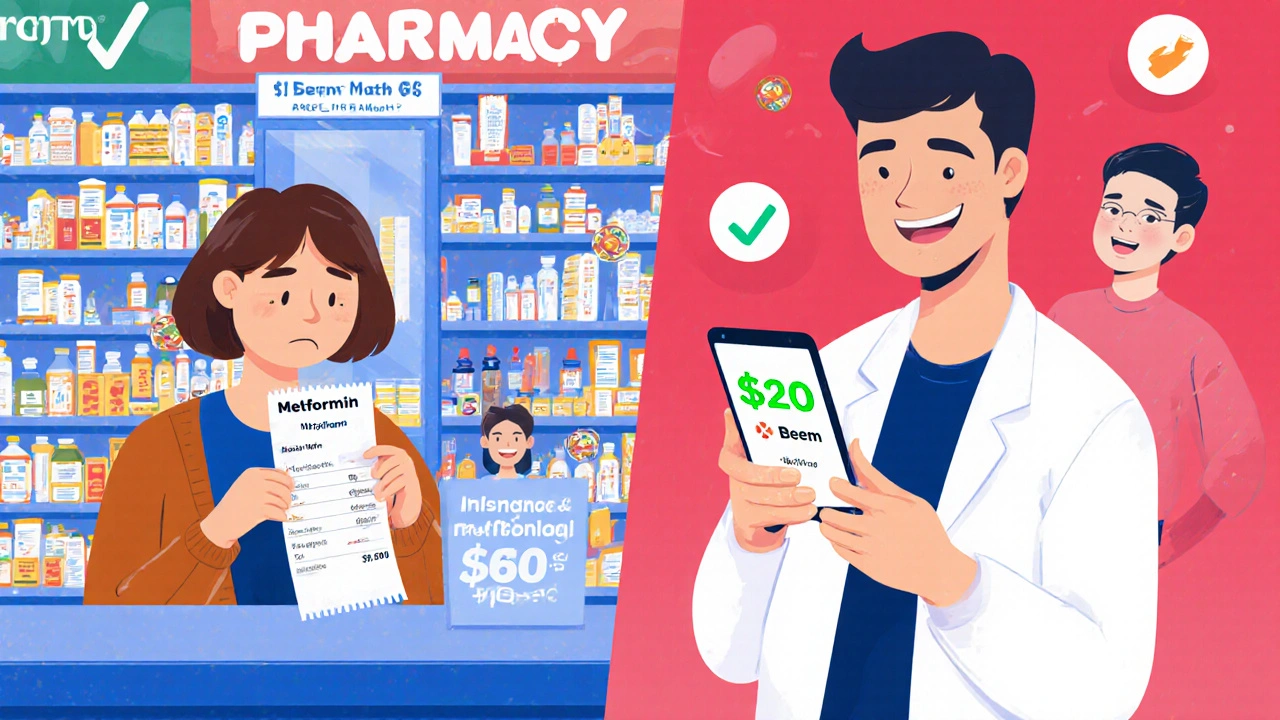
Discover how e-pharmacies like GoodRx and Beem slash generic drug prices compared to retail pharmacies. Save up to 80% on common prescriptions without insurance. Real savings, real options.
GoodRx vs CVS: Compare Drug Prices, Savings, and Pharmacy Options
When you need a prescription filled, GoodRx, a price-comparison service that negotiates discounts with pharmacies across the U.S. and CVS, a major U.S. pharmacy chain that offers its own discount programs and loyalty rewards. are two of the most common choices. But they work in completely different ways. GoodRx doesn’t sell drugs—it finds the lowest cash price at nearby pharmacies, including CVS. CVS sells drugs directly, with its own pricing, coupons, and ExtraCare program. So which one saves you more? It depends on the drug, your location, and whether you’re paying cash or using insurance.
Many people assume CVS is cheaper because it’s a pharmacy, but that’s not always true. For example, a 30-day supply of metformin might cost $15 at CVS with ExtraCare, but GoodRx could show you the same pill for $4 at a nearby Walmart or Walgreens. GoodRx pulls real-time pricing from hundreds of pharmacies, so you’re not locked into one store’s markup. CVS, on the other hand, offers predictable pricing for its own members, free delivery, and sometimes free generic drugs through its $4 list—but only if you’re buying from them. If you’re using GoodRx, you can walk into CVS, show the coupon, and still pay the discounted rate. That’s the key: GoodRx coupons, discount vouchers accepted at most U.S. pharmacies, including CVS, Walgreens, and Walmart. work at CVS, but CVS doesn’t always match GoodRx’s lowest price unless you ask.
Then there’s the issue of convenience. CVS lets you refill prescriptions through its app, get reminders, and pick up your meds while grabbing coffee or groceries. GoodRx gives you no pharmacy loyalty, no refill tracking, and no help if your prescription gets lost. But it gives you the power to shop around. If you take multiple meds, comparing each one on GoodRx before heading to CVS could save you hundreds a year. And if you’re uninsured or on a high-deductible plan, that’s not a small thing. Some people use both: they check GoodRx first, then use CVS’s ExtraCare card if it’s a better deal. It’s not an either-or choice—it’s a strategy.
What about insurance? GoodRx doesn’t replace insurance. If you have it, always check your copay first. But if your insurance doesn’t cover a drug, or your copay is higher than the GoodRx cash price, you can skip the insurance and pay cash using the coupon. CVS sometimes lets you do the same—switching from insurance to cash to save money—but they won’t always tell you. You have to ask. And if you’re buying over-the-counter meds like ibuprofen or prenatal vitamins, GoodRx doesn’t help, but CVS’s ExtraCare deals might.
Bottom line: GoodRx is your price hunter. CVS is your one-stop shop. The best way to save? Use GoodRx to find the lowest price, then go to CVS if they match it—or better yet, use GoodRx at CVS. You’re not choosing between them—you’re using one to beat the other.
Below, you’ll find real comparisons, hidden tricks, and direct advice from people who’ve saved hundreds using these tools. No theory. Just what works.