
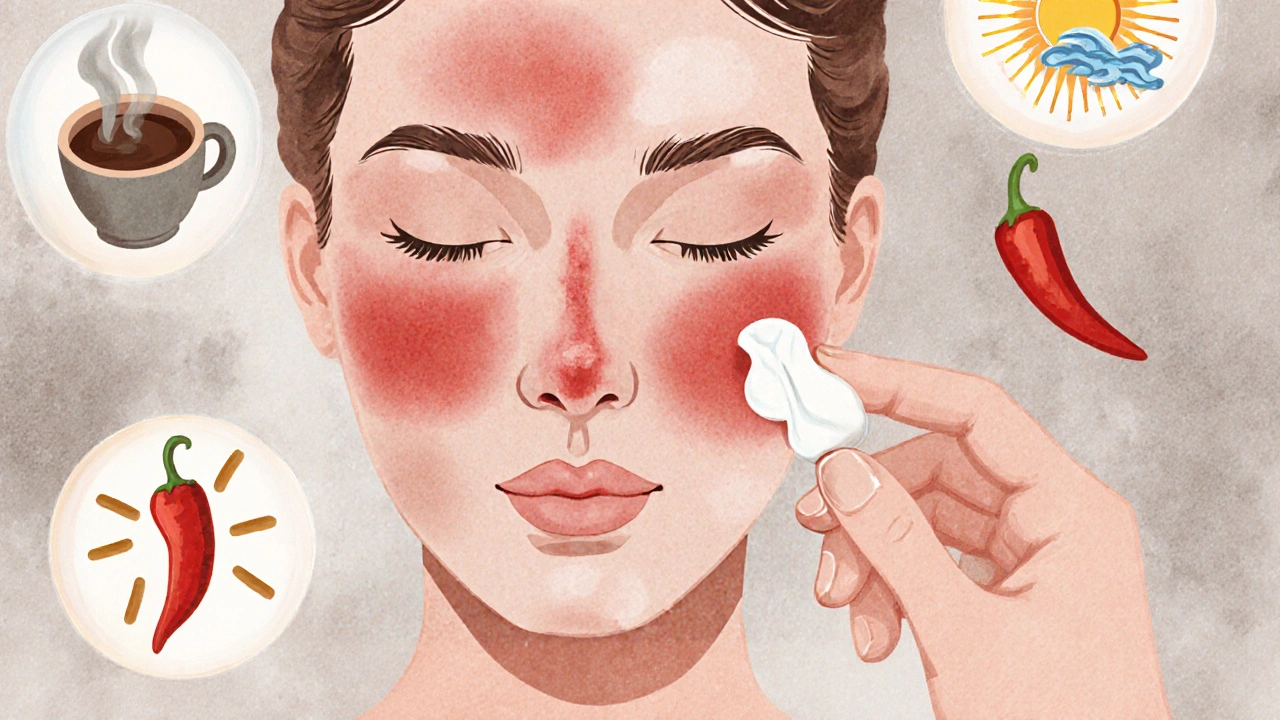
Rosacea causes persistent facial redness and bumps. Topical antibiotics like metronidazole and ivermectin reduce inflammation and Demodex mites, but results take weeks. Learn how to use them right and manage triggers.
Facial Flushing: Causes, Triggers, and Medications That Can Cause It
When your face turns red without warning, it’s not always embarrassment—it could be facial flushing, a sudden reddening of the face due to blood vessel dilation, often linked to medications, hormonal changes, or underlying health conditions. Also known as flushing reaction, it’s more than a cosmetic issue—it’s a signal your body is reacting to something inside or outside you.
Many people mistake facial flushing for simple blushing, but it can be tied to serious drug reactions. For example, niacin, used to manage cholesterol, is a common trigger—so common that doctors warn patients about it upfront. Rosacea, a chronic skin condition that causes persistent redness and visible blood vessels, often on the face can look like flushing but is different in origin and treatment. Then there’s hot flashes, sudden waves of heat, often with facial redness, linked to menopause and hormonal shifts. These aren’t the same as drug-induced flushing, but they’re often confused. And while some flushes fade quickly, others stick around—and that’s when you need to look closer at what you’re taking.
Medications don’t always cause flushing directly. Sometimes it’s a side effect of how they interact with your body’s chemistry. Tricyclic antidepressants, older psychiatric drugs that affect neurotransmitters and can alter blood vessel control are known to cause it. So are certain opioids, painkillers that can trigger histamine release, leading to redness and warmth in the face. Even common drugs like statins, cholesterol-lowering pills that occasionally cause vasodilation as a side effect have been linked to flushing in rare cases. And if you’re on acid-reducing medications, like PPIs or H2 blockers that change stomach pH and affect how other drugs are absorbed, you might not realize they’re indirectly contributing to flushing by altering how your body handles other substances.
It’s not just about the drug itself—it’s about your liver, your hormones, your nervous system. If your liver isn’t clearing drugs properly—say, due to liver disease, a condition that cuts drug metabolism by 30-50%, letting toxins and side effects build up—flushing can become more frequent or intense. The same goes for people on long-acting injectables, like antipsychotic shots that release medication slowly, making side effects harder to predict or control. Flushing might be the first clue that something’s off balance.
And here’s the thing: if you’re taking supplements like Ginkgo biloba, an herbal remedy that thins the blood and can widen blood vessels, you might be adding fuel to the fire—especially if you’re also on blood pressure meds or anticoagulants. Even alcohol dependence treatment drugs, like Antabuse and its alternatives, which work by making your body react badly to alcohol, can cause flushing as part of their intended effect.
What you’ll find below isn’t just a list of articles. It’s a practical guide to connecting the dots between that sudden warmth in your cheeks and what’s really going on inside your body. Whether it’s a harmless reaction or a red flag for something deeper, you’ll see which medications, supplements, and health conditions are most often linked to facial flushing—and what to do next.