
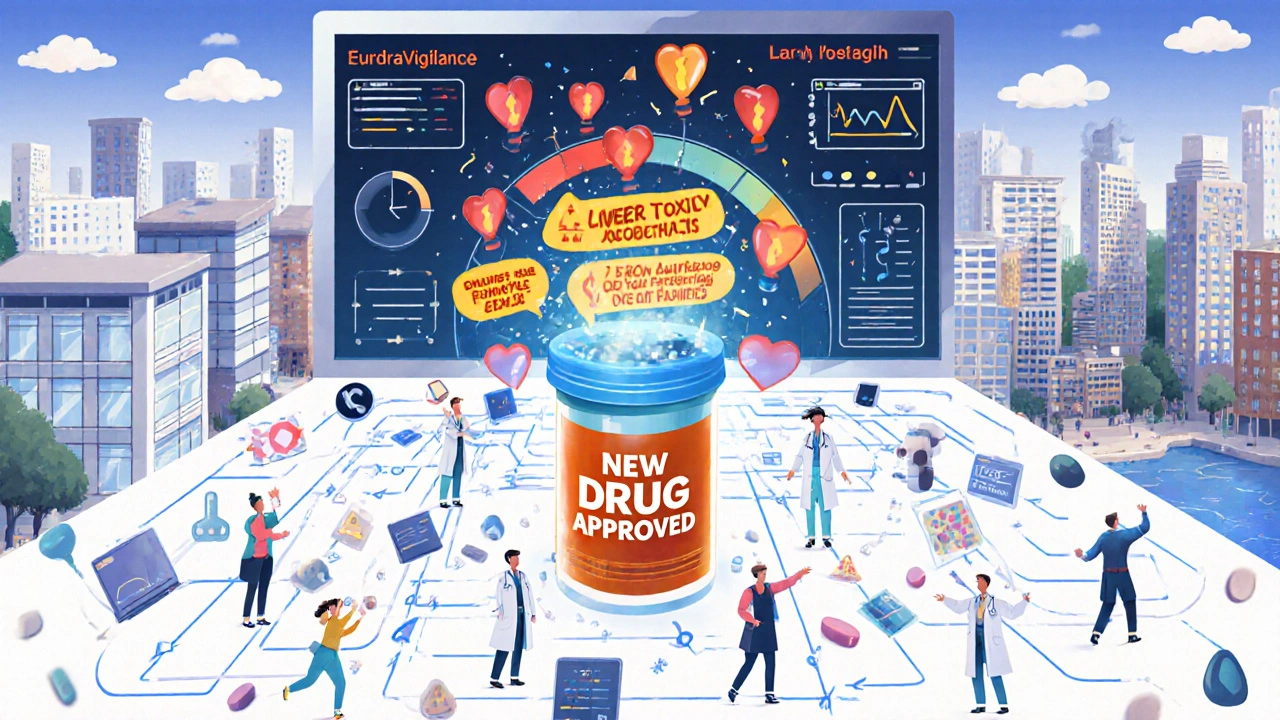
Drug safety signals emerge after clinical trials end, revealing hidden risks only visible when millions use a drug. Learn how real-world data, statistical tools, and human reporting uncover dangers regulators couldn't predict.
Drug Safety Signals: What They Are and Why They Matter
When a medication starts showing unexpected side effects—like sudden liver damage, irregular heartbeats, or dangerous interactions—it doesn’t just get pulled off shelves overnight. First, it triggers a drug safety signal, an early warning from real-world patient data that a medicine might pose a previously unknown risk. Also known as adverse drug reaction signals, these are the quiet alarms that keep millions safe by catching problems before they become epidemics. Think of them as the early warning system for your pills. They’re not rumors. They’re patterns spotted in thousands of patient reports, hospital records, and pharmacy databases.
These signals don’t come from lab tests alone. They emerge when real people take real drugs in real life. For example, a spike in reports of severe skin reactions after taking a new generic antibiotic? That’s a signal. A cluster of patients on the same blood thinner developing internal bleeding? That’s a signal. And when enough of these reports pile up, regulators like the FDA or EMA step in. They don’t panic. They investigate. They compare usage rates, check for other causes, and decide if the drug needs a stronger warning, a dosage limit, or even a recall. This whole process is called pharmacovigilance, the science and activities focused on detecting, assessing, understanding, and preventing adverse effects of medicines. It’s the invisible safety net behind every prescription you fill.
What makes this system work? It’s not just doctors reporting. It’s patients speaking up. When you tell your provider about that strange rash after starting a new pill, or that dizzy spell you didn’t have before, you’re feeding the system. Even over-the-counter drugs and supplements—like Ginkgo biloba mixing with blood thinners or NSAIDs causing hidden liver damage—can trigger signals. The posts here cover real cases: how benzodiazepines and opioids together raise overdose risk, how insulin and beta-blockers mask low blood sugar symptoms, and why Antabuse alternatives like naltrexone were developed after safety concerns emerged. These aren’t hypotheticals. They’re outcomes of signals that turned into action.
Drug safety signals aren’t about fear. They’re about awareness. They’re why you’re now told to avoid alcohol with certain meds, why your pharmacist asks about every supplement you take, and why your doctor checks your liver enzymes before prescribing carbamazepine. The system isn’t perfect—but it’s alive, growing, and shaped by every patient who speaks up. Below, you’ll find clear, practical guides on how to spot hidden risks, understand medication interactions, and protect yourself without overcomplicating your health routine. These aren’t just articles. They’re tools to help you ask the right questions before you swallow that next pill.