
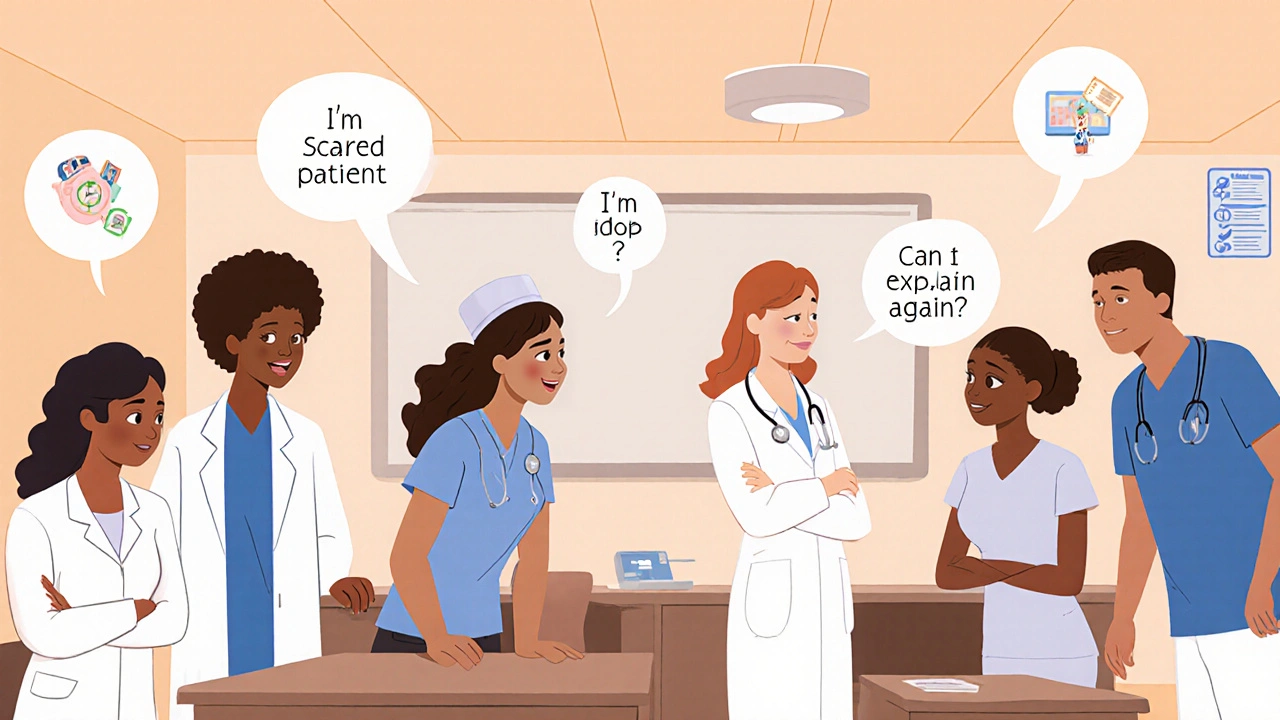
Institutional communication training programs in healthcare are proven to reduce errors, improve patient satisfaction, and lower malpractice claims. Learn how structured education is transforming patient-provider interactions and why most programs still miss key equity and sustainability issues.
Communication Training: How to Talk Better with Doctors and Pharmacies
When you're taking communication training, the practice of learning how to clearly and confidently share health information with medical professionals. It's not about sounding smart—it's about making sure you're understood. Most people don’t realize how often critical details get lost in doctor visits. You take OTC medications, drugs you can buy without a prescription, like pain relievers or allergy pills every day. You pop supplements, vitamins, herbs, or other products sold as health aids because they’re labeled "natural." But if you don’t tell your provider exactly what you’re using, you could be risking serious interactions. A study from the FDA found that over 40% of emergency visits linked to supplement use happened because the patient didn’t mention them to their doctor.
Think about it: if you’re on blood thinners and take Ginkgo Biloba, you’re increasing your chance of bleeding. If you’re on insulin and use beta-blockers, you might not feel your blood sugar drop until it’s too late. These aren’t hypothetical risks—they’re real, documented dangers. But here’s the catch: your doctor can’t help if they don’t know. Communication training isn’t about memorizing medical terms. It’s about learning how to say: "I take this every morning," "I stopped this last week," or "I’m not sure if this is safe with what I’m already on." It’s about asking: "Could this mess with my other meds?" and "What happens if I mix these?" The posts below show exactly how these gaps show up—in drug interactions, hidden side effects, and preventable emergencies.
What you’ll find here isn’t theory. It’s real stories from people who learned the hard way. One person took Antabuse alternatives, medications used to treat alcohol dependence, like naltrexone or acamprosate but didn’t tell their doctor they were also using herbal remedies. Another didn’t mention their daily pain relievers, common OTC drugs like acetaminophen or ibuprofen before starting a new prescription, leading to liver damage. These aren’t mistakes made by careless people—they’re mistakes made by people who didn’t know how to speak up. The good news? You can learn how. This collection gives you the exact phrases to use, the questions to ask, and the red flags to watch for. No jargon. No fluff. Just what works when it matters most.