
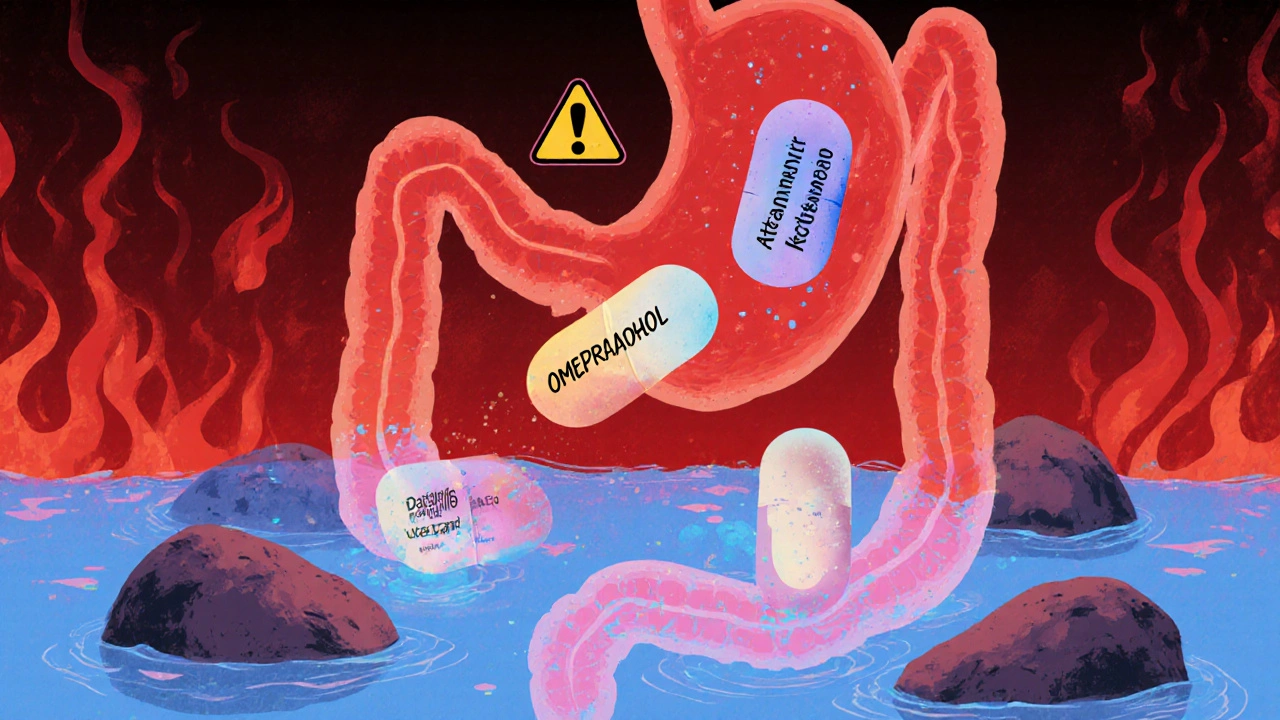
Acid-reducing medications like PPIs and H2 blockers can seriously reduce the absorption of other drugs, leading to treatment failure. Learn which medications are at risk and how to protect your health.
Acid-Reducing Medications: What Works, What to Avoid, and How to Use Them Safely
When your stomach churns with too much acid, acid-reducing medications, drugs designed to lower stomach acid production or neutralize it. Also known as anti-reflux medications, they’re among the most common treatments for heartburn, GERD, and ulcers. You’ve probably seen ads for them—PPIs like omeprazole, H2 blockers like famotidine, or over-the-counter antacids like Tums. But not all of them work the same way, and not all are safe for long-term use.
Proton pump inhibitors, a class of drugs that shut down the stomach’s acid-producing pumps. Also known as PPIs, they’re powerful—often the first choice for chronic acid reflux. But studies show using them for more than a few months can increase risks like bone fractures, kidney problems, and nutrient deficiencies. Then there’s H2 blockers, medications that reduce acid by blocking histamine receptors in the stomach lining. Also known as histamine-2 receptor antagonists, they’re less potent than PPIs but often safer for occasional use. And antacids, fast-acting, non-prescription options that neutralize acid on contact. Also known as stomach acid neutralizers, they give quick relief but don’t fix the root cause. Mixing these with other drugs—like blood thinners, antibiotics, or even supplements—can backfire. For example, some PPIs reduce how well your body absorbs vitamin B12 or magnesium over time.
Many people take acid-reducing meds for years without realizing they might be masking something bigger—like a hiatal hernia, H. pylori infection, or even early signs of esophageal damage. The real goal isn’t just to silence the burn, but to understand why it’s happening. That’s why some people find relief by changing their diet, losing weight, or avoiding late-night meals—no pill needed.
Below, you’ll find real-world guides on how these drugs interact with other medications, what alternatives exist, and how to spot when you’re overusing them. Whether you’re on a PPI right now or just popping Tums after dinner, this collection gives you the facts—not the marketing.