

Why Antibiotics Are Sometimes Necessary During Pregnancy
Getting an infection while pregnant isn’t rare - about 1 in 5 pregnant people will need an antibiotic at some point. Urinary tract infections, bacterial vaginosis, strep throat, and even pneumonia can happen. Left untreated, these infections can lead to serious problems like preterm labor, low birth weight, or even sepsis. The goal isn’t to avoid antibiotics entirely - it’s to use the right one, at the right time, in the right dose.
Not all antibiotics are created equal when you’re pregnant. Some are safe. Others can harm the baby. That’s why doctors don’t just pick any antibiotic. They look at decades of research, real-world data from thousands of pregnancies, and the specific risks tied to each drug.
Antibiotics That Are Generally Safe During Pregnancy
The safest antibiotics for pregnancy belong to two main families: penicillins and cephalosporins.
- Amoxicillin (Amoxil, Larotid) is the most commonly prescribed. It crosses the placenta but doesn’t cause birth defects. Studies tracking over 130,000 pregnancies found no increased risk of major malformations. It’s used for everything from sinus infections to Group B Strep during labor.
- Ampicillin works similarly and is often used in hospitals during delivery.
- Cephalexin (Keflex) and cefaclor are great alternatives if someone has a penicillin allergy - as long as it’s not a true anaphylactic reaction. About 90% of people who think they’re allergic to penicillin aren’t. A simple skin test can confirm this.
These drugs have been used for decades in pregnant patients. The data is solid. No red flags. No surprises. That’s why they’re first-line choices.
Other Safe Options - With Important Caveats
Some antibiotics are safe, but only under certain conditions.
- Clindamycin (Cleocin) is often used for bacterial vaginosis or dental infections. It reaches the fetus at about one-third of the mother’s level. No link to birth defects has been found in human studies. It’s a go-to for those with penicillin allergies who can’t take cephalosporins.
- Nitrofurantoin (Macrobid) is the top choice for simple bladder infections during the second and third trimesters. But it’s avoided in the first trimester. A 2011 study found a small increase in cleft lip risk - about 2.4% higher than average. After week 12, it’s considered very safe because it doesn’t cross the placenta much.
- Metronidazole (Flagyl) is tricky. Animal studies at extremely high doses showed possible DNA damage. But in humans? No consistent risk. It’s avoided in the first trimester out of caution, but widely used in the second and third for bacterial vaginosis and trichomoniasis. Topical gels (like Metrogel) are even safer - they barely enter the bloodstream.
- Azithromycin (Zithromax) is now considered safe for chlamydia and other STIs during pregnancy. A 2024 update from ACOG confirmed no increased risk of heart defects after reviewing over 10,000 exposed pregnancies.
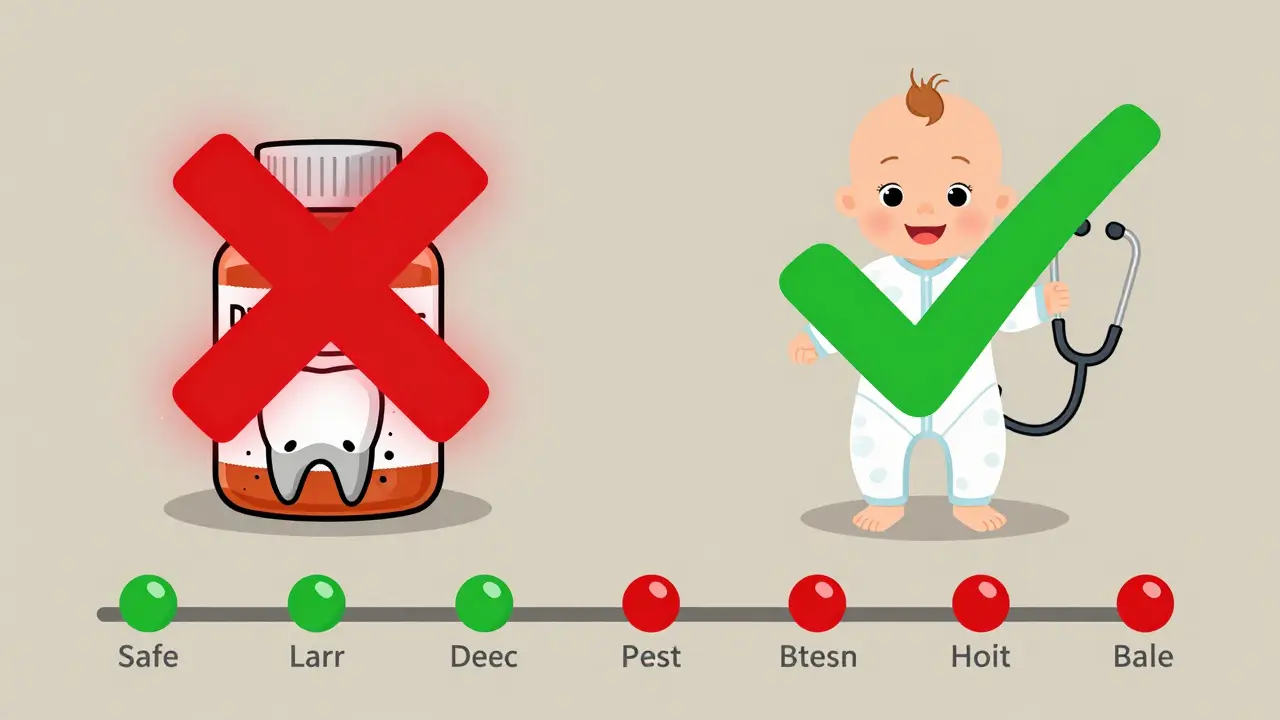
Antibiotics to Avoid During Pregnancy
Some antibiotics have clear, proven risks. These are not used unless there’s no other option - and even then, only in life-threatening situations.
- Tetracyclines (doxycycline, minocycline) are a hard no after week 5. They bind to developing bones and teeth, causing permanent gray or brown stains in baby’s teeth. They can also weaken bone growth. Even a single dose can cause lasting harm.
- Sulfonamides (Bactrim, Septra) are linked to neural tube defects like spina bifida when used in the first trimester. Risk is about 2.6 times higher. Avoid in early pregnancy. May be used later if no alternatives exist.
- Macrolides like erythromycin and clarithromycin can increase the risk of infantile hypertrophic pyloric stenosis - a condition that causes severe vomiting in newborns. Risk is about 2.3 times higher if taken in the first trimester. Azithromycin is the safer macrolide.
- Aminoglycosides (gentamicin, tobramycin) can damage the baby’s hearing. Even at normal doses, up to 20% of exposed babies may develop sensorineural hearing loss. Used only in serious infections like sepsis, with strict blood level monitoring.
- Fluoroquinolones (ciprofloxacin, levofloxacin) are banned in the EU during pregnancy. The FDA says they’re not absolutely forbidden, but only for life-threatening infections like anthrax or multidrug-resistant pneumonia. Animal studies show joint damage. Human data is limited, so they’re avoided unless absolutely necessary.
Common Side Effects - And How to Manage Them
Even safe antibiotics can cause discomfort. Most side effects are mild, but they’re real - and they can make you want to stop taking the medicine.
- Nausea - Happens in 15-20% of people taking amoxicillin. Take it with food. Avoid empty stomachs.
- Diarrhea - Affects 5-25% depending on the drug. It’s usually harmless. But if it lasts more than 48 hours after finishing the course, or includes blood or severe cramps, call your doctor. It could be C. diff, a serious gut infection.
- Vaginal yeast infections - Antibiotics kill good bacteria too. This can lead to itching or discharge. Over-the-counter antifungal creams are safe during pregnancy.
- Allergic reactions - Rash, hives, swelling. True penicillin allergy is rare. Many people outgrow it. If you think you’re allergic, get tested. Avoiding penicillins unnecessarily means you might get a less safe alternative.
Don’t stop antibiotics just because you feel side effects. The infection is still there. Untreated infections are far more dangerous than side effects.
What Good Counseling Looks Like
Most problems with antibiotics during pregnancy come from fear - not science. Patients stop taking meds because they’re scared. Or they take the wrong one because no one explained the risks.
Good counseling includes four things:
- Why you need it - Explain the infection. Untreated UTIs can lead to kidney infections. Untreated Group B Strep can cause pneumonia in newborns.
- Why this antibiotic - "We’re using amoxicillin because it’s been studied in over 100,000 pregnancies and shown to be safe. We’re not using doxycycline because it can stain your baby’s teeth."
- What side effects to expect - "You might feel nauseous for the first few days. Take it with toast. Diarrhea is common but should go away. If it lasts more than two days after finishing, call us."
- Why finishing the course matters - "Stopping early might make the infection come back - and this time, it could be harder to treat."
A 2021 study found that when doctors did this kind of counseling, patients were 37% less likely to quit their antibiotics early. Adherence went up. Complications went down.
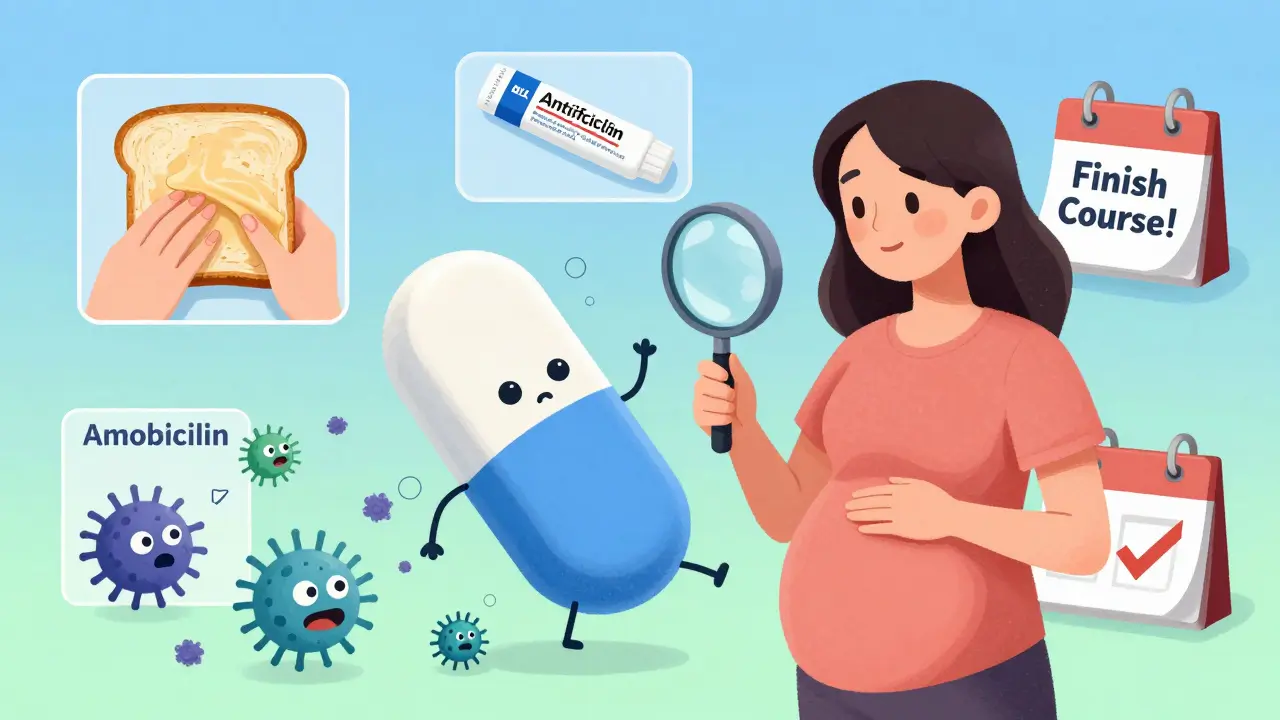
What You Can Do - Before, During, and After
Here’s how to stay in control:
- Before you get pregnant - If you’ve ever had a bad reaction to an antibiotic, write it down. Don’t just say "I’m allergic to penicillin." Say what happened. Did you get a rash? Swelling? Trouble breathing? That helps your doctor decide if it’s a true allergy.
- During pregnancy - Never take leftover antibiotics. Never take someone else’s. Always tell your OB or midwife about every medication, even OTC ones.
- After delivery - If you’re breastfeeding, most pregnancy-safe antibiotics are also safe for nursing. Amoxicillin, cephalexin, azithromycin - all fine. Metronidazole is okay too, but you might need to wait a few hours after taking it.
What’s Changing in 2026
The science is evolving. In 2024, the NIH launched the AMRIP study - tracking 15,000 pregnant women exposed to antibiotics to find out what happens to their babies long-term. That’s the biggest study of its kind ever done.
Also, the FDA is now encouraging drug companies to include pregnant women in clinical trials. For decades, they were left out. That meant we had to guess about safety. Now, we’re getting real data.
What’s still missing? Data on newer antibiotics like tedizolid and delafloxacin. We don’t know enough about them yet. So doctors stick with the old, well-studied ones.
Bottom Line
You don’t have to choose between being sick and hurting your baby. Safe antibiotics exist. They’re well-studied. They work. The key is working with your provider to pick the right one - not the most convenient one, not the one you heard about online, but the one backed by science.
If you’re prescribed an antibiotic during pregnancy, ask: Why this one? Is it safe? What are the side effects? What happens if I don’t take it? You have the right to know. And with the right info, you can take care of yourself - and your baby - without fear.


January 1, 2026 AT 14:21 PM
Amoxicillin safe? Sure. But did you check the fillers? Corn starch, lactose, FD&C dyes-those are the real villains. Your ‘safe’ antibiotic is just a Trojan horse for allergens.
January 2, 2026 AT 00:21 AM
The fact that we’re even having this conversation is a testament to the systemic failure of obstetric medicine. We’ve reduced pregnancy to a pharmacokinetic equation, ignoring the holistic bio-psycho-spiritual integrity of the maternal-fetal interface. Penicillins? Please. The real issue is epigenetic disruption via microbiome depletion.
January 3, 2026 AT 09:42 AM
Oh honey, you just described the entire CDC’s playbook in 10 paragraphs. Let me guess-your OB also told you to ‘eat for two’ and ‘avoid sushi’? 😌
January 3, 2026 AT 13:56 PM
Tetracyclines? More like TERRIBLEclines. The idea that we’re still using antibiotics that stain teeth like a 1970s cigarette addict’s grin is a crime against pediatric aesthetics. If your baby’s molars look like a vintage ashtray, you didn’t fail-they failed you.
January 4, 2026 AT 05:14 AM
The assertion that ‘90% of penicillin allergies are misdiagnosed’ is statistically misleading. The true rate of IgE-mediated hypersensitivity remains below 1%. The overestimation stems from conflating nausea with anaphylaxis-a diagnostic fallacy that endangers public health.
January 5, 2026 AT 18:49 PM
Big Pharma is hiding the truth. These ‘safe’ antibiotics? They’re laced with glyphosate. The FDA knows. The WHO knows. But they’re too busy kissing pharma’s ring to tell you. Your baby’s gut is being poisoned-slowly. 🚨
January 7, 2026 AT 15:27 PM
Yo, I’m from the South and my mama said if you’re sick, drink chicken soup and pray. But I got a UTI last year and the doc gave me Macrobid. No drama. No crying. Just took it like a champ. Baby’s 2 now and runs like a cheetah. So… maybe science works?
January 8, 2026 AT 00:17 AM
Nitrofurantoin in first trimester? 2.4% higher risk? That’s not a ‘small increase’-that’s a red flag waving in a hurricane! Why are we still prescribing this? Who signed off? Who’s accountable? Where’s the oversight?!!!
January 9, 2026 AT 21:36 PM
I love how this post doesn’t just dump facts-it gives you the why. That’s rare. Most docs just hand you a script and say ‘take this.’ But knowing *why* amoxicillin is safe? That’s power. That’s peace. You’re not just treating an infection-you’re protecting a future.
January 10, 2026 AT 19:02 PM
The epistemological tension here is fascinating: we rely on longitudinal cohort data from the 1980s to make decisions in 2026, yet we exclude pregnant women from modern RCTs. Is this precaution-or epistemic colonialism? The data gap isn’t neutral. It’s a moral hazard dressed in clinical caution.
January 12, 2026 AT 00:58 AM
Metronidazole gel? That’s the MVP. You put it on like lotion, it kills the bad bugs, and your blood levels stay chill. No drama. No nausea. Just clean vibes. Why isn’t this the first-line for BV? Everyone’s still swallowing pills like it’s 1999.
January 13, 2026 AT 21:55 PM
You say ‘no increased risk’ but ignore confounding variables. What about maternal BMI? Gestational diabetes? Prior antibiotic exposure? The studies are observational, not controlled. You’re giving false reassurance wrapped in a lab coat.
January 14, 2026 AT 14:33 PM
I took clindamycin for a tooth abscess at 18 weeks. Two weeks later, my baby kicked like a UFC fighter. Was that the antibiotics? The stress? The universe? I still don’t know. But I cried every time I swallowed that pill. And now my kid is 4 and hates baths. Coincidence? I think not.
January 15, 2026 AT 03:59 AM
This is the kind of post I wish my OB had written. Seriously. I was terrified of every pill. But knowing amoxicillin’s been in 130k pregnancies? That’s not just data-it’s a hug from science. 🤗 And yes, I did get a yeast infection. Used Monistat. No shame. It’s normal. You’re not broken.
January 15, 2026 AT 18:50 PM
Your critique is valid-but incomplete. The absence of RCTs doesn’t equate to absence of evidence. The longitudinal cohort data from Scandinavia, Canada, and the UK are robust. We’re not guessing-we’re extrapolating from real-world outcomes with statistical power. The risk of *not* treating is far greater than the risk of the drug.