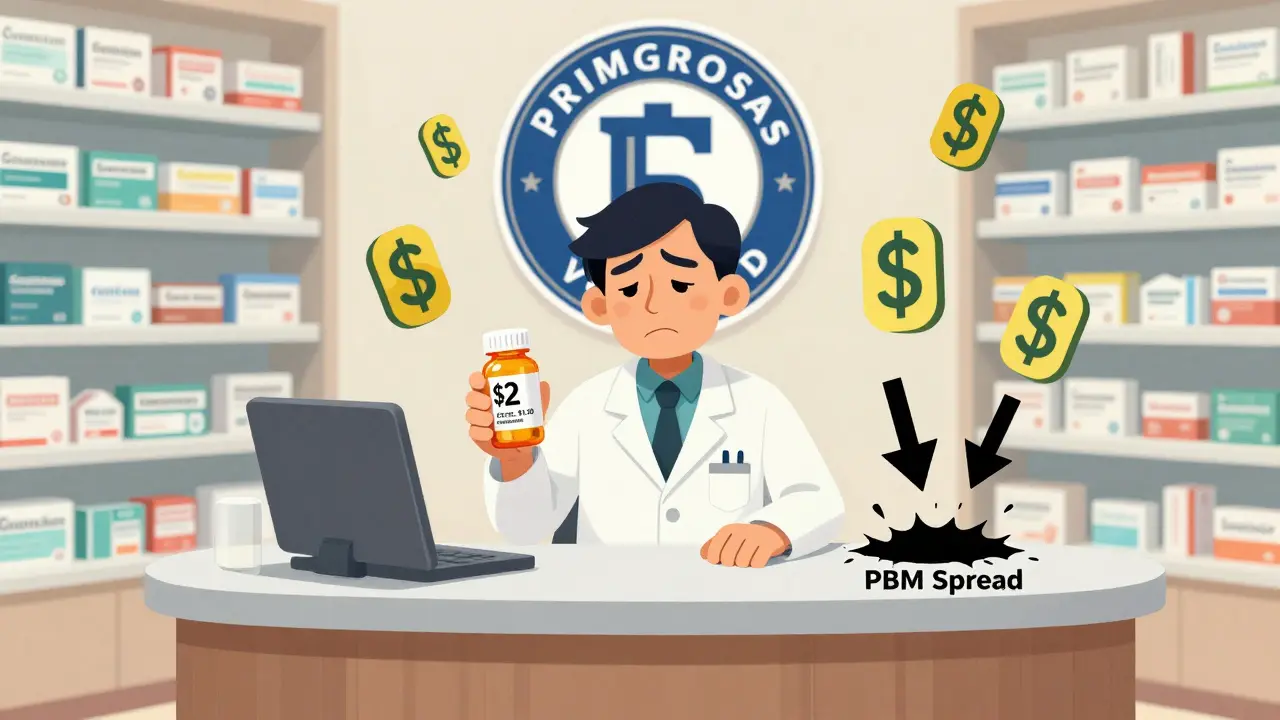
When you pick up a prescription at the pharmacy, you might not think about how much the pharmacy actually gets paid for it. But the system behind that payment - called pharmacy reimbursement - is what keeps pharmacies open, influences which drugs you get, and even determines whether your medication is affordable. The big shift over the last 30 years has been the move from brand-name drugs to generics. Today, more than 90% of prescriptions filled in the U.S. are for generic drugs. That sounds like a win - cheaper drugs, right? But the financial reality is far more complicated. How pharmacies are paid for these generics doesn’t always match the goal of lowering costs. In fact, the current reimbursement system sometimes does the opposite.
How Pharmacies Get Paid for Generic Drugs
Pharmacies don’t just get paid what they pay for the drug. They get paid based on a formula set by insurance companies, Medicare, or Pharmacy Benefit Managers (PBMs). There are two main ways this works: cost-plus reimbursement and Maximum Allowable Cost (MAC) lists.
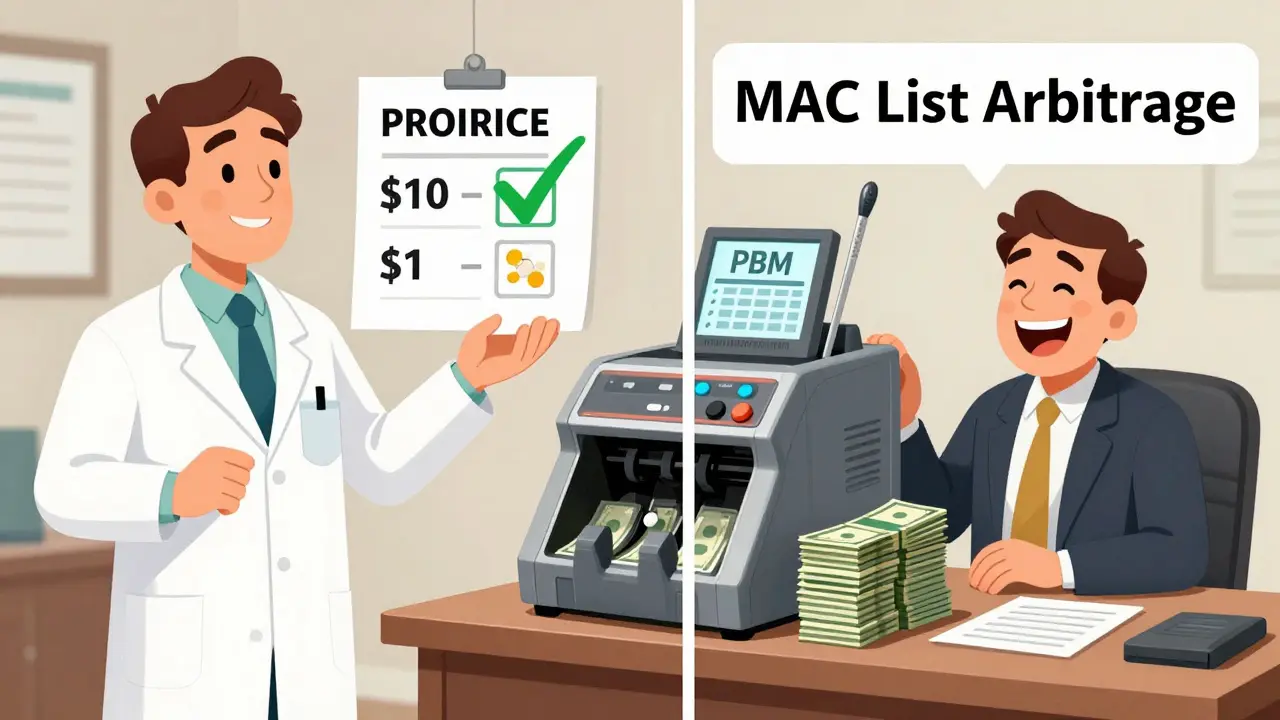
Cost-plus means the pharmacy gets its actual cost for the drug plus a fixed fee for dispensing it. Simple. Fair. But it’s rare these days. Most pharmacies operate under MAC lists - a list of maximum prices payers will reimburse for each generic drug. These lists are controlled by PBMs, not pharmacies or doctors. And here’s the catch: MAC lists don’t always reflect what the pharmacy actually paid. Sometimes they’re set higher than acquisition cost. Sometimes they’re set lower. It depends on who’s making the rules.
For example, if a pharmacy buys a generic drug for $2, but the MAC is set at $5, the pharmacy pockets $3 - plus the dispensing fee. That sounds great. But if the MAC is set at $1.50, the pharmacy loses money on that drug. And that’s not theoretical. In 2022, nearly 1 in 5 independent pharmacies reported losing money on at least one generic drug they dispensed. That’s not sustainable.
The Hidden Profit in Generic Substitution
Generics are supposed to save money. And they do - for patients and insurers. But the way reimbursement is structured creates strange incentives. PBMs profit from something called “spread pricing.” That’s when they tell the insurer they’re paying $10 for a drug, but they actually pay the pharmacy $6. The $4 difference? That’s the spread. And it’s hidden from everyone except the PBM.
Here’s how it gets twisted: PBMs have a financial reason to put higher-priced generics on their formularies. Why? Because if they can get a pharmacy to dispense a $10 generic instead of a $2 generic - even if both are equally effective - they make more profit from the spread. Research from the PMC shows that in some cases, two generics from the same class had prices 20 times apart. That’s not a difference in quality. That’s a difference in profit.
Pharmacies, meanwhile, are stuck in the middle. They want to fill prescriptions, but they can’t afford to lose money on them. So they might stock only the generics that pay the best. That means if your doctor prescribes a low-cost generic, but the PBM’s MAC list favors a pricier version, the pharmacy might not even have the cheaper one on the shelf.
Therapeutic Substitution: The Real Savings Opportunity
Most people think generic substitution means swapping a brand-name drug for its generic twin. But there’s a bigger opportunity: therapeutic substitution. That’s when you switch from one brand-name drug to a completely different generic drug that works just as well - but costs way less.
For example, instead of switching from brand-name Lipitor to generic atorvastatin, a pharmacist might switch you from brand-name Lipitor to a different generic cholesterol drug that costs 90% less. The Congressional Budget Office found that in 2007, switching just seven types of brand-name drugs to cheaper alternatives could have saved $4 billion. That’s 10 times more than the savings from simple generic substitution.
But here’s the problem: PBMs rarely promote therapeutic substitution. Why? Because it’s harder to control. It requires clinical judgment. It requires transparency. And it doesn’t leave room for spread pricing. So while pharmacies are incentivized to fill prescriptions, they’re rarely incentivized to find the cheapest option - even if it’s clinically safe.
Who’s Getting Hurt?
It’s easy to blame PBMs. But the real damage is felt by smaller pharmacies and patients.
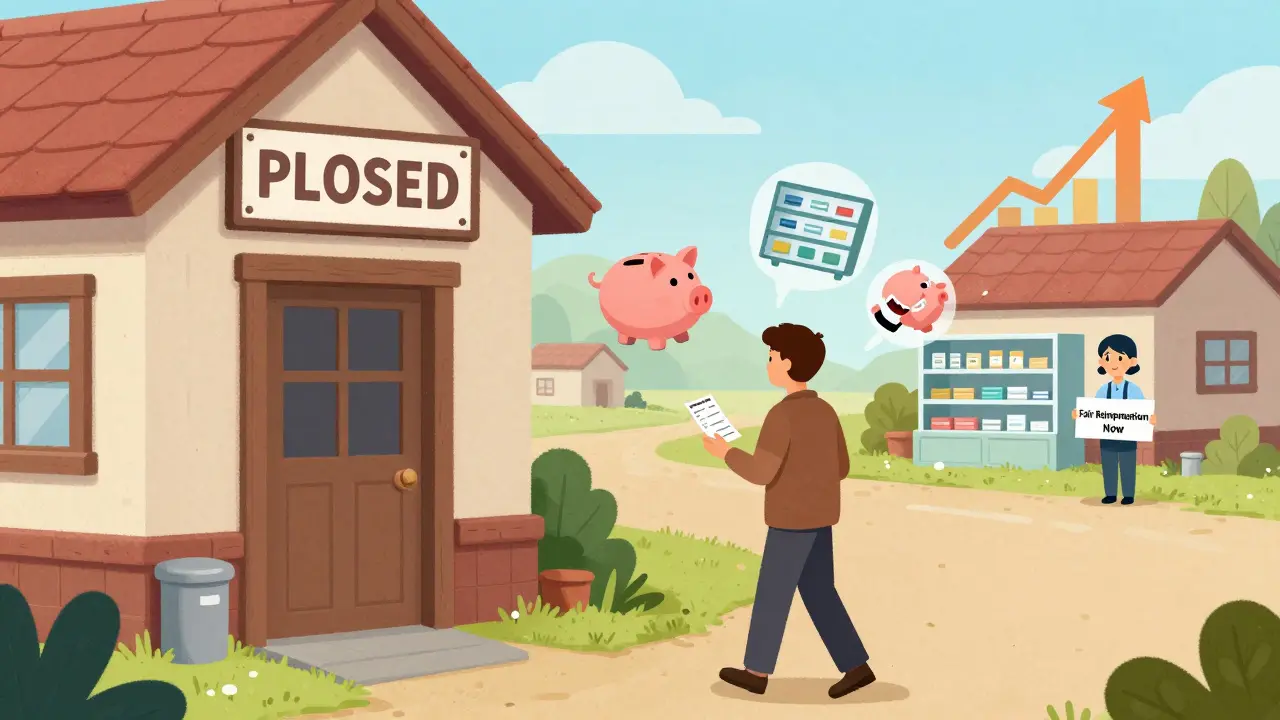
Between 2018 and 2022, over 3,000 independent pharmacies shut down. Why? Because they couldn’t survive on reimbursement rates that didn’t cover their costs. Big chains like CVS and Walgreens have the volume and negotiating power to keep going. But small, local pharmacies? They’re getting squeezed out. And when those close, patients lose access - especially in rural areas.
Patients aren’t off the hook either. Even though generics are cheaper, many still pay high copays because the PBM’s MAC list doesn’t reflect the true cost. A patient might be told their generic costs $15, but the pharmacy paid $3 for it. The $12 difference? That’s not going to the patient. It’s going into the PBM’s profit.
And here’s the kicker: when reimbursement rates drop too low, pharmacies start cutting corners. They stop stocking high-cost specialty drugs. They reduce hours. They stop offering counseling. All because they can’t afford to lose money on the generics they’re forced to dispense.
What’s Changing? Regulatory Pressure and New Rules
Things are starting to shift. The Federal Trade Commission (FTC) launched major investigations into PBM practices in 2023, specifically looking at how MAC lists are set and whether they’re being used to inflate profits.
The Inflation Reduction Act of 2022 forced Medicare Part D to disclose pricing information. That’s a start. And 15 states now have Prescription Drug Affordability Boards (PDABs) that set Upper Payment Limits (UPLs). These boards can cap how much PBMs charge for certain drugs. That means pharmacies might finally get paid fairly.
But it’s slow. And it’s messy. PBMs still control 80% of the market. Their contracts with pharmacies are opaque. And until reimbursement is tied directly to actual acquisition cost - not inflated lists or hidden spreads - the system will keep favoring profit over savings.
What Should Pharmacies Do?
Pharmacists aren’t powerless. Here’s what they can do:
- Know your MAC list. Track what you’re paid versus what you pay. If you’re consistently losing money on a drug, talk to your PBM.
- Advocate for therapeutic substitution. If a cheaper, equally effective alternative exists, suggest it. Document the clinical reasoning.
- Push for transparency. Demand to see how MAC lists are calculated. Ask for data on acquisition costs.
- Join forces. Independent pharmacies are stronger together. Join state pharmacy associations to push for fair reimbursement.
It’s not about fighting PBMs. It’s about fixing a system that’s broken by design. The goal isn’t to stop generic substitution. It’s to make sure it actually saves money - for patients, for pharmacies, and for the system as a whole.
Where This Is Headed
Experts predict that by 2031, drug pricing reforms could lower average prescription costs by 5-15%. But that won’t happen unless reimbursement changes. The current model - where pharmacies get paid based on hidden spreads and arbitrary MAC lists - is unsustainable. The future belongs to models that pay pharmacies based on what they actually pay for the drug, plus a fair dispensing fee. No more spreads. No more hidden markups. Just transparency.
For now, pharmacies are caught between the need to survive and the responsibility to serve. Until the system is fixed, the cheapest drug isn’t always the one you get. And that’s not just bad for business. It’s bad for health.
Why do pharmacies sometimes run out of the cheapest generic drug?
Pharmacies stock drugs based on reimbursement, not cost. If the PBM’s Maximum Allowable Cost (MAC) for the cheapest generic is set below what the pharmacy paid for it, the pharmacy loses money every time it sells that drug. To avoid losses, they stop stocking it - even if it’s the most affordable option for the patient. This is especially common with small, independent pharmacies that can’t absorb losses.
Do generic drugs work the same as brand-name drugs?
Yes. By law, generic drugs must contain the same active ingredient, strength, dosage form, and route of administration as the brand-name version. They must also meet the same FDA standards for safety and effectiveness. The only differences are in inactive ingredients (like fillers or dyes) and packaging. These don’t affect how well the drug works.
What’s the difference between generic substitution and therapeutic substitution?
Generic substitution means swapping a brand-name drug for its exact generic version - like switching from Lipitor to atorvastatin. Therapeutic substitution means switching to a different drug entirely that treats the same condition but costs less - like switching from a brand-name blood pressure drug to a completely different generic that’s been proven just as effective. Therapeutic substitution can save far more money, but it’s rarely encouraged under current reimbursement rules.
Why do PBMs favor higher-priced generics?
PBMs profit from spread pricing - the difference between what they charge insurers and what they pay pharmacies. If they set the MAC for a generic at $10, but the pharmacy only paid $2 for it, the PBM keeps $8. Higher-priced generics create bigger spreads. So PBMs have a financial incentive to include more expensive generics on their formularies, even if cheaper, equally effective options exist.
Can pharmacists choose which generic to dispense?
It depends. In many states, pharmacists can substitute a generic for a brand-name drug unless the prescriber says “dispense as written.” But they can’t always choose between two generics. If the PBM’s MAC list only covers one version, or if the pharmacy doesn’t stock others due to reimbursement issues, the pharmacist may have no real choice. Their ability to select the most cost-effective option is often limited by PBM contracts, not clinical judgment.