
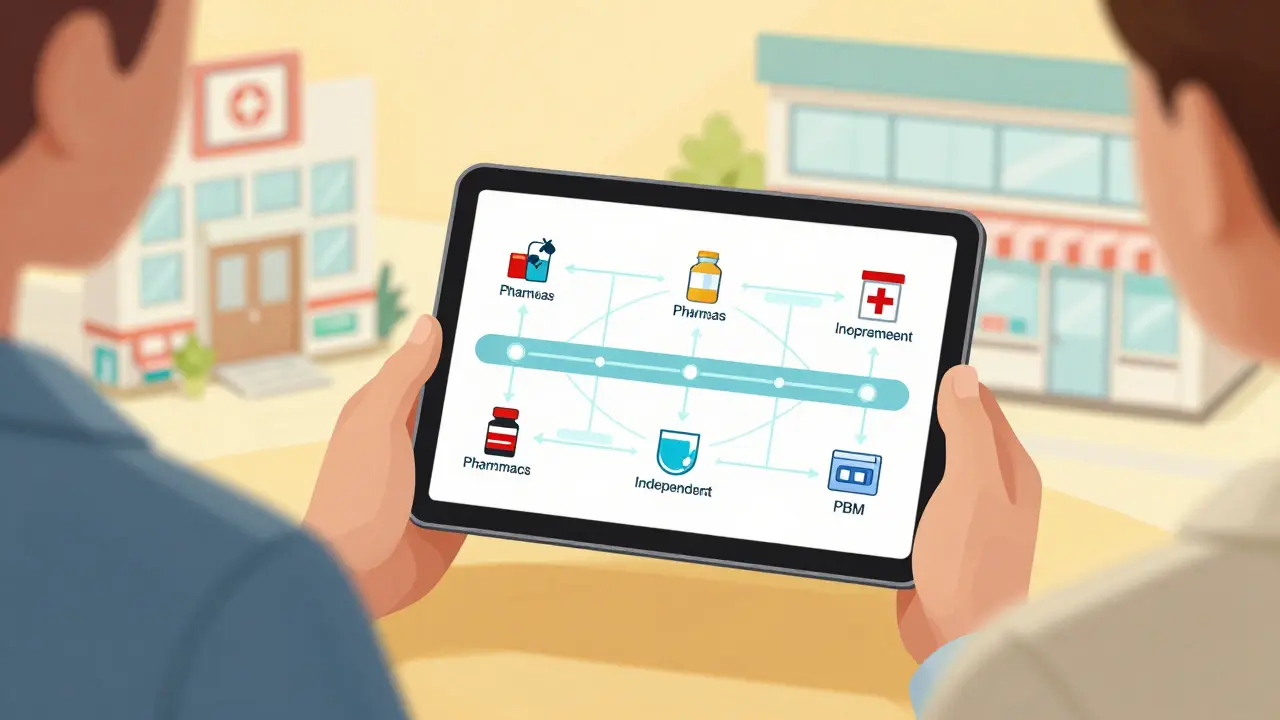
Every year, half of all medication errors happen when patients move between healthcare settings-like leaving the hospital or switching pharmacies. That's not just a statistic; it's a real risk for you or someone you know. This is where personal health records come in. Unlike electronic health records (EHRs) controlled by doctors, Personal Health Records (PHRs)patient-controlled digital systems that consolidate prescription histories from multiple sources into a unified view put you in charge of your own medication data.
What exactly are personal health records for meds?
PHRs are your personal health tool. They pull together all your medication info from different places: prescriptions filled at pharmacies, over-the-counter drugs you buy, supplements, and even what you tell your doctor. The key difference from EHRs is who controls the data. With EHRs, hospitals and clinics manage your records. With PHRs, you do. You decide who can see your medication history-your pharmacist, doctor, or family members. This control is crucial when you use multiple pharmacies because each one might have a piece of the puzzle.
How PHRs pull data from multiple pharmacies
PHRs don't magically know your meds. They gather data from three main sources. First, pharmacy benefit managers (PBMs) like Express Scripts or OptumRx share prescription claims. These cover about 92% of filled prescriptions. Second, direct feeds from pharmacies-both chain stores and independents-send dispensing records. Third, you can manually add medications you take, like vitamins or OTC drugs. Systems like Australia's My Health Recordthe national digital health platform use FHIR standards to connect all these sources. FHIR is a tech language that lets different systems talk to each other. By 2023, 86% of major U.S. health systems had adopted FHIR APIs, making data sharing smoother. But even with FHIR, challenges remain. For example, cash purchases at pharmacies often don't get reported automatically, so you might need to add those yourself.
Real benefits you can count on
Using a PHR for medication management has real-world perks. A 2022 study in JAMA Internal Medicine found medication errors cost the U.S. healthcare system about $528 per patient annually. PHRs cut these errors by up to 43% when integrated with EHRs. Pharmacists using PHR tools spend 35% less time on reconciliation, freeing up 7.2 hours weekly for patient care. In Australia, My Health Record reduced duplicate prescribing by 28% after full rollout. For patients, it means fewer surprises at the pharmacy and more confidence in your treatment plan. A University of Pittsburgh Medical Center survey showed 82% of chronic disease patients felt "more confident managing medications" with PHR access. That confidence comes from seeing all your meds in one place-no more guessing what's been prescribed elsewhere.
Common challenges and how to handle them
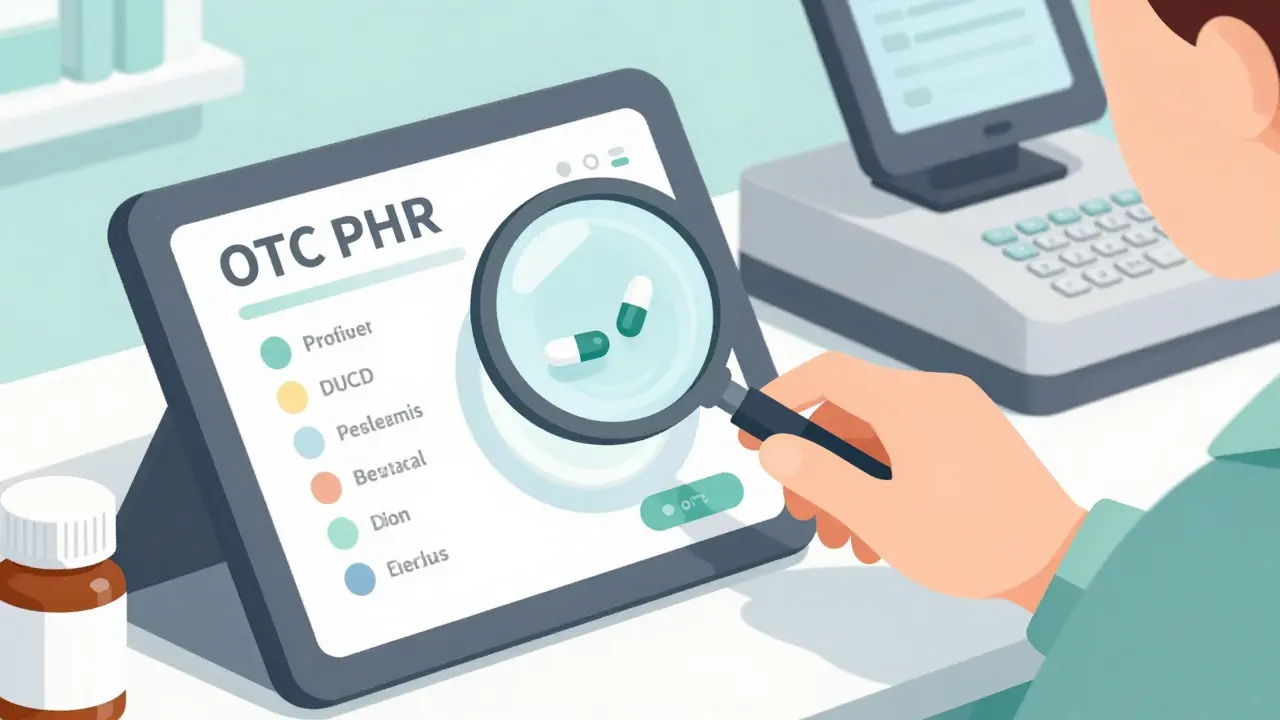
PHRs aren't perfect. One big issue is over-the-counter (OTC) medications. A 2021 study found only 37% of PHRs capture OTC data. If you take ibuprofen daily or a daily vitamin, it might not show up in your record unless you add it manually. Patient-entered data can also be inaccurate. Dr. Richard Wang of Duke University found 61% of patient-entered medications had dosage errors in a 12,000-record audit. Another problem is data retention. Some systems only keep pharmacy data for 13 months, meaning if you haven't visited a pharmacy in over a year, their records might disappear. To fix these issues, review your PHR monthly. Add OTCs and supplements yourself. Double-check dosage entries. If your PHR misses a prescription, ask your pharmacy to resubmit the data. Small habits like this keep your record accurate and useful.
Choosing the right PHR system
Not all PHRs are built the same. Here's how three major systems stack up:
| System | Coverage | Key Strength | Limitation |
|---|---|---|---|
| Apple Health Records | 68% medication history completeness | Easy to use for iPhone users | Doesn't capture all cash purchases |
| My Health Record (Australia) | 93% population enrollment | Integrated with 7,800+ pharmacies | Only 57% of pharmacists contribute data regularly |
| Surescripts | 92% completeness | Handles 22 billion annual transactions | OTC medications often missing |
Apple Health Records works well for iPhone users who want simplicity. My Health Record is Australia's go-to system, with near-universal pharmacy integration but inconsistent data contributions. Surescripts is the backbone for many U.S. pharmacies, handling massive transaction volumes but still missing some OTC details. The best choice depends on where you live and how you use pharmacies. If you're in Australia, My Health Record is your best bet. For U.S. users, Surescripts integration is common through your pharmacy's software. Always check what your local pharmacies support.
Steps to get your meds in order
Here's a simple checklist to manage your medications with a PHR:
- Check compatibility: Ask your pharmacy if they support PHR integration. Most major chains do, but independents might need you to opt-in.
- Review monthly: Log into your PHR at least once a month. Look for missing prescriptions or errors.
- Add OTCs and supplements: Manually enter everything you take outside prescriptions. Include brand names, dosages, and frequency.
- Share selectively: Only grant access to trusted healthcare providers. You control who sees your data.
- Update after changes: If you start or stop a medication, update your PHR immediately. Don't wait for your next pharmacy visit.
These steps take just a few minutes but make a huge difference. A University of Florida College of Pharmacy study showed patient education reduced data entry errors by 52%. Consistency is key-your PHR is only as accurate as the data you put in.
Can personal health records track over-the-counter medications?
Yes, but not automatically. Most PHRs only pull prescription data from pharmacies. OTC medications like painkillers or vitamins usually need to be added manually. About 37% of PHRs capture OTC data without patient input, according to a 2021 study. To ensure accuracy, always enter OTCs yourself and update them when your regimen changes.
How secure is my medication data in a PHR?
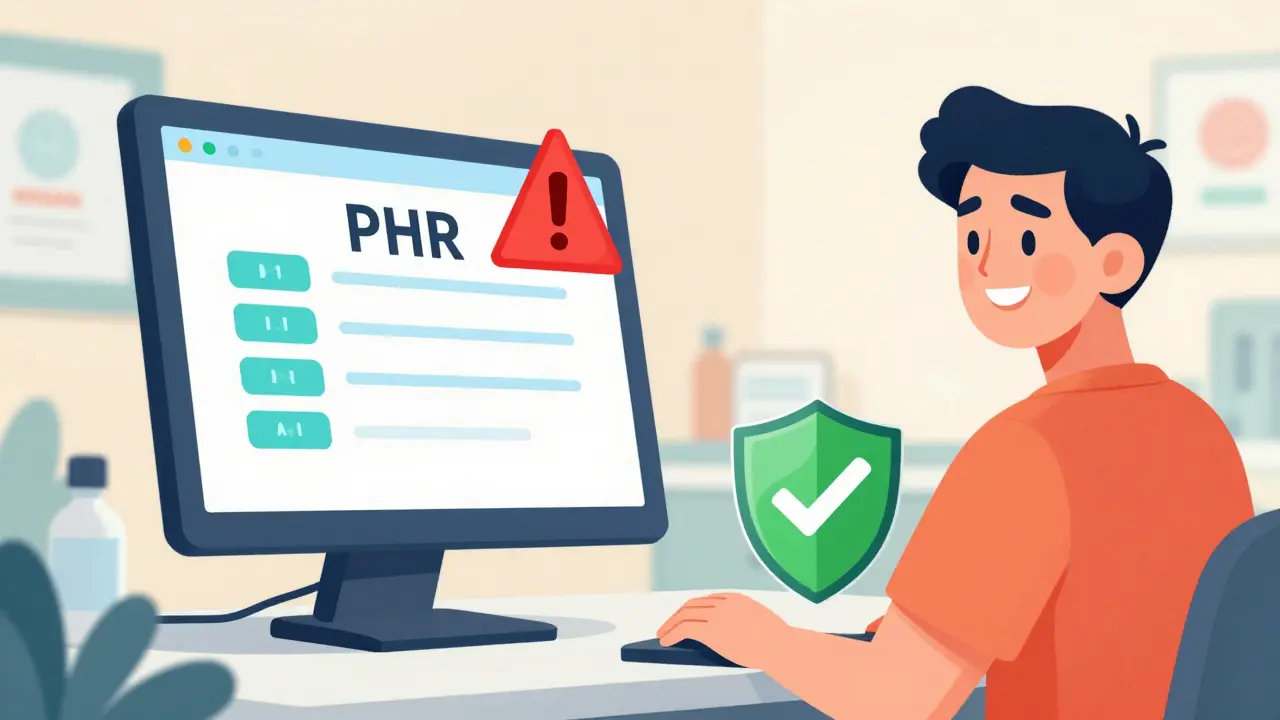
PHRs use strong security measures. Most certified systems encrypt data with AES-256 encryption and comply with HIPAA standards in the U.S. or similar privacy laws elsewhere. A 2022 audit found 98% of certified PHRs meet NIST Cybersecurity Framework standards. You also control access-only share your data with providers you trust. Always use strong passwords and two-factor authentication for extra security.
Why do some pharmacies not update my PHR?
Pharmacy data sharing depends on their software and policies. Independent pharmacies often use older systems that don't connect to PHRs automatically. In Australia, only 57% of community pharmacists regularly contribute data to My Health Record due to workflow disruptions. U.S. pharmacies using Surescripts typically share data, but cash purchases or small independent pharmacies may not. Always check with your pharmacy if your data isn't updating.
Do PHRs work across different countries?
PHRs are mostly country-specific due to different health systems and regulations. Australia's My Health Record integrates with local pharmacies, while U.S. systems like Surescripts focus on American pharmacies. Apple Health Records works globally but pulls data only from pharmacies that support it in your region. If you travel or move countries, your PHR may not automatically transfer. Always check with local healthcare providers about compatibility when moving.
How do PHRs reduce medication errors?
PHRs create a complete medication list that doctors and pharmacists can see. This prevents duplicate prescriptions or dangerous drug interactions. A 2023 Health Affairs study found PHRs reduce medication reconciliation errors by 43% when integrated with clinical systems. For example, if you get a new prescription from one doctor but already take a similar drug from another pharmacy, the PHR flags the conflict. This is especially crucial during hospital admissions, where 53% of patients have medication discrepancies without a PHR.


February 5, 2026 AT 22:36 PM
My PHR missed two prescriptions when I switched pharmacies, putting me on a dangerous drug combo.
February 6, 2026 AT 13:57 PM
PHRs aggregate data via FHIR standards but integration gaps persist PBMs and pharmacies often fail to sync due to legacy systems OTC data entry is critical but often neglected this leads to reconciliation errors must improve interoperability
February 6, 2026 AT 21:04 PM
As someone who's lived in multiple countries, PHRs are a game-changer. In Australia, My Health Record works great but in the US it's patchy. Always check what your local pharmacies support. It's all about community trust. 🌍
February 7, 2026 AT 07:38 AM
PHR-EHR integration is key for reducing errors. A 2022 JAMA study shows 43% reduction in errors. But data retention is a problem-some systems only keep 13 months. We need better standards for long-term data storage. Let's work together on this.
February 8, 2026 AT 10:12 AM
PHRs are a government plot to track everyone! They're collecting all your meds data to sell to Big Pharma. Did you know that 86% of health systems use FHIR? That's a red flag. They're building a database to control us. Trust no one! 🔥
February 10, 2026 AT 01:16 AM
PHRs are great, but... they're not perfect! Data from cash purchases isn't always reported. And OTC meds? Often missing! This is a huge problem. We need better systems! Seriously, people need to be aware!
February 10, 2026 AT 04:30 AM
Personal health records empower patients, but it's important to remember that technology alone isn't enough. Human oversight is crucial. When I worked in healthcare, I saw how PHRs reduced errors, but only when staff were trained to use them properly. It's about balance. For example, a 2022 study in JAMA Internal Medicine found medication errors cost the U.S. healthcare system about $528 per patient annually. PHRs cut these errors by up to 43% when integrated with EHRs. Pharmacists using PHR tools spend 35% less time on reconciliation, freeing up 7.2 hours weekly for patient care. In Australia, My Health Record reduced duplicate prescribing by 28% after full rollout. For patients, it means fewer surprises at the pharmacy and more confidence in your treatment plan. A University of Pittsburgh Medical Center survey showed 82% of chronic disease patients felt 'more confident managing medications' with PHR access. That confidence comes from seeing all your meds in one place-no more guessing what's been prescribed elsewhere. However, challenges remain. OTC medications aren't automatically captured; only 37% of PHRs do this without patient input. Patient-entered data can be inaccurate, with 61% of entries having dosage errors in some audits. Data retention is another issue-some systems only keep pharmacy data for 13 months. Small habits like reviewing your PHR monthly and adding OTCs manually can make a huge difference. Consistency is key-your PHR is only as accurate as the data you put in.
February 12, 2026 AT 01:18 AM
PHRs are cool but sometimes messy. Like, if you pay cash for meds, they might not show up. Gotta manually add stuff. But overall, it's a good system. My Health Record in Australia is solid, but in the US it's hit or miss. Check what your pharmacy supports. Easy peasy!
February 13, 2026 AT 16:00 PM
PHRs are amazing! 🌟 Especially for chronic patients. In India, we need more adoption. My Health Record in Australia is great example. Let's work together to make healthcare better for all! 🙌
February 15, 2026 AT 15:59 PM
PHRs are super helpful! 😊 But sometimes data doesn't sync right. Like if you buy meds without insurance, it might not show up. Gotta double check. Overall, it's a good system though. 🤞
February 16, 2026 AT 01:36 AM
PHRs are a threat to national security.
February 16, 2026 AT 03:54 AM
PHRs are a surveillance tool for the government collecting all your data.
February 17, 2026 AT 16:40 PM
PHRs are useless. Everyone knows this. The real problem is doctors not updating records properly. And the government's FHIR standards? Total junk. I've been in healthcare for 20 years and this is all hype. Wake up people!