
Sleep-Friendly Antidepressant Selector
Select Your Sleep Concern
Current Medication (Optional)
Recommended Antidepressants
Key Considerations
- Timing
- Duration
- Side Effects
When you start an antidepressant, you expect your mood to improve. But for many, the first thing that changes is sleep - and not for the better. Insomnia, restless nights, vivid dreams, or waking up at 3 a.m. and being unable to fall back asleep are common. It’s not just in your head. It’s chemistry. Antidepressants don’t just affect sadness or anxiety; they directly mess with your brain’s sleep wiring. And if you’re already struggling with sleep because of depression, this can feel like a cruel twist.
Why Do Antidepressants Change Your Sleep?
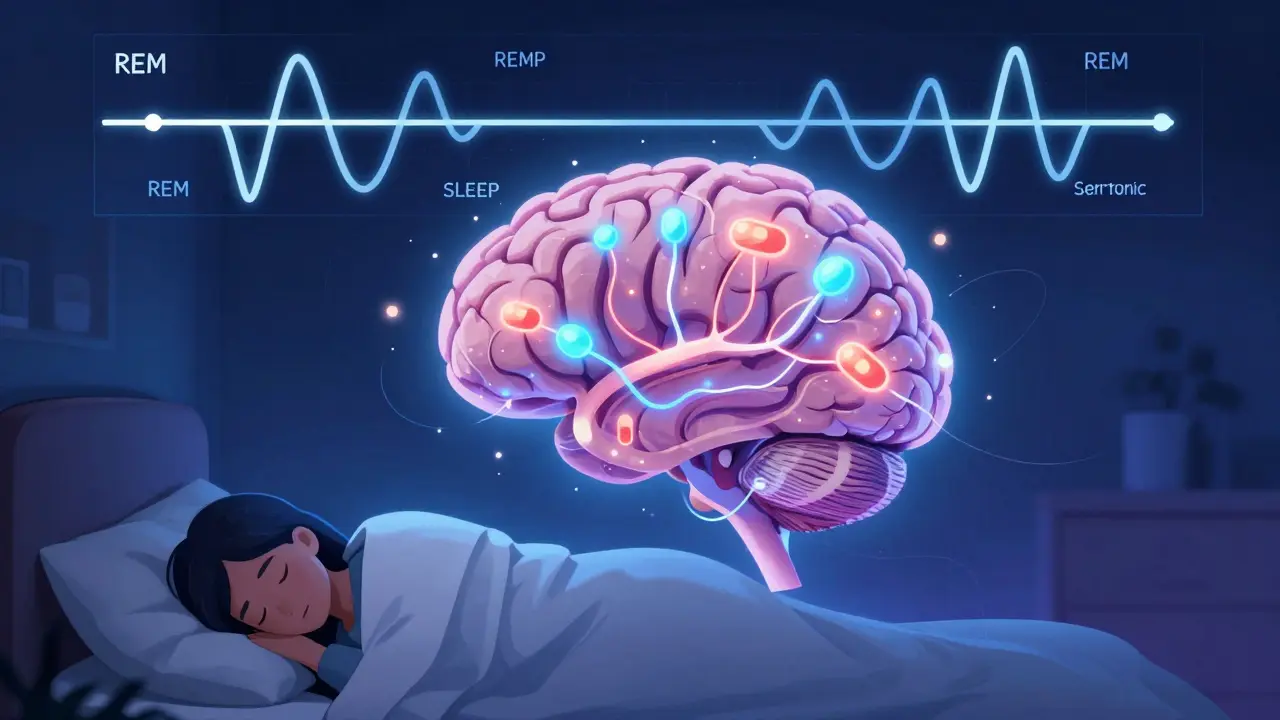
It all comes down to neurotransmitters - the brain’s chemical messengers. Most antidepressants work by boosting serotonin, norepinephrine, or dopamine. But these same chemicals control your sleep-wake cycle. Increase serotonin too fast, and your REM sleep (the dream phase) gets suppressed. That’s why people on SSRIs like fluoxetine or sertraline often report fewer dreams at first - and then, sometimes, terrifying nightmares when their brain finally catches up.
Studies show that 87% of antidepressants alter sleep architecture in the first few weeks. SSRIs reduce REM sleep by 18-29% and push back when you enter REM by up to 80 minutes. That sounds technical, but here’s what it feels like: you fall asleep okay, but your sleep feels shallow. You wake up tired, even after 8 hours. Some people report feeling like they’re never truly resting.
On the flip side, some antidepressants like mirtazapine and trazodone do the opposite - they make you drowsy. That’s why doctors sometimes prescribe them at night, even if the main goal is treating depression. But here’s the catch: too much drowsiness in the morning can feel like a hangover. It’s not rest - it’s chemical sedation.
Which Antidepressants Are Worst for Insomnia?
If you’re already battling insomnia, some antidepressants will make it worse. Fluoxetine (Prozac) is the biggest offender. In studies, 78% of people taking fluoxetine had trouble sleeping in the first two weeks. Sertraline (Zoloft) isn’t far behind at 65%. Paroxetine (Paxil) can cause night sweats and disrupted sleep too.
Why? These drugs boost serotonin quickly and don’t have any sedating properties. Your brain gets a jolt of energy it wasn’t expecting. Even if you take them in the morning, the effects can linger into the evening. One 2020 study found that taking SSRIs before 9 a.m. reduced insomnia risk by 41% compared to taking them later. If you’re on one of these and can’t sleep, ask your doctor if switching your dose time helps.
Bupropion (Wellbutrin) is another troublemaker. It’s not an SSRI, but it’s often added to SSRIs to boost mood. That combo? A recipe for sleepless nights. FDA data shows the risk of insomnia jumps 2.4 times when you combine bupropion with an SSRI. If you’re on both and can’t sleep, this might be why.
Which Antidepressants Help With Sleep?
Not all antidepressants wreck your sleep. Some actually fix it.
Mirtazapine (Remeron) is the most studied for this. At low doses (7.5-15 mg), it improves sleep onset by 28 minutes and adds 53 minutes of total sleep time. It works by blocking certain serotonin receptors that keep you awake. In one trial, 81% of users said it helped them sleep. But here’s the trade-off: at doses above 30 mg, it causes serious daytime drowsiness. You might sleep great at night - but feel like a zombie during the day.
Trazodone (Desyrel) is another go-to for sleep. It’s not FDA-approved as an antidepressant at low doses, but doctors use it off-label all the time. At 25-50 mg at bedtime, it cuts nighttime wakefulness by 37%. Many patients rate it 4.1 out of 5 for sleep improvement. But again - the morning grogginess is real. One patient on Reddit said, “I sleep like a log, but I can’t function until noon.”
Agomelatine (Valdoxan) is newer and works differently. It targets melatonin receptors, helping reset your body clock. In head-to-head studies, it reduced REM sleep suppression by 8% - compared to 22% with SSRIs. It’s not available everywhere, but if you can get it, it’s one of the gentlest options for sleep.
Timing Matters More Than You Think
It’s not just which drug you take - it’s when you take it.
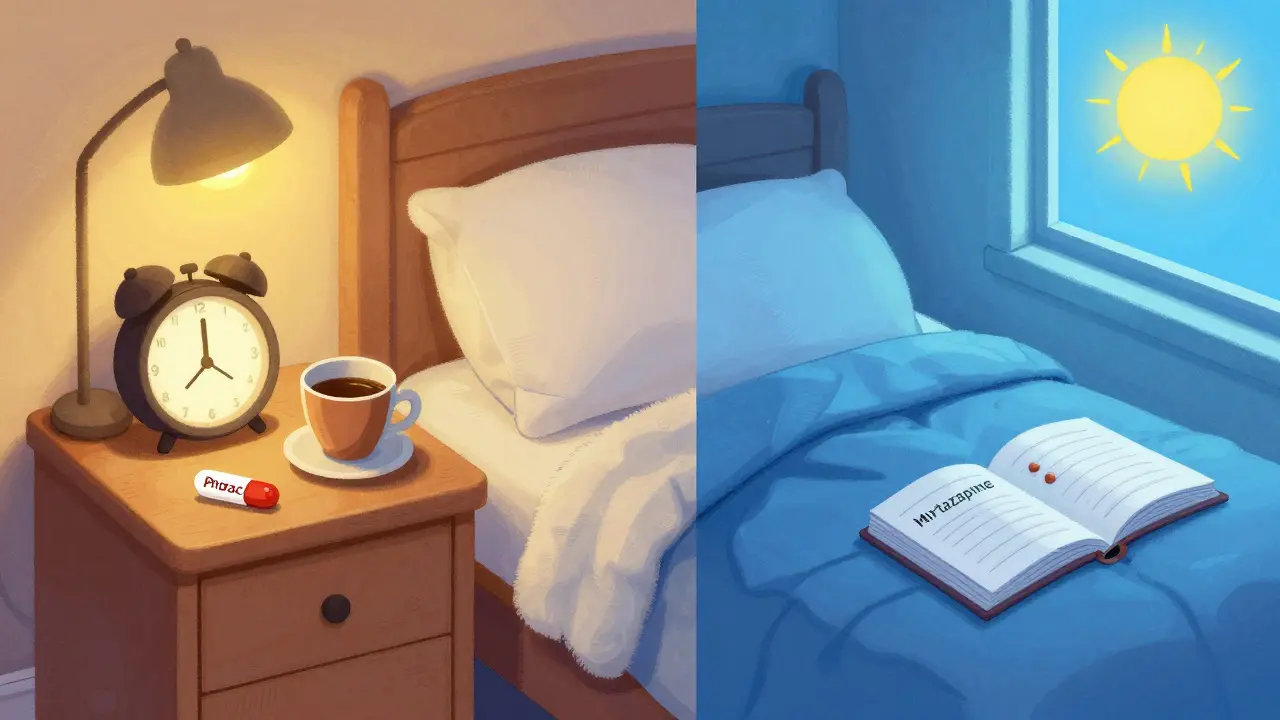
SSRIs and SNRIs should be taken in the morning. Always. Even if you’re not feeling energized. Taking them after noon increases the chance of insomnia by nearly half. One study found that moving an SSRI from 6 p.m. to 8 a.m. improved sleep quality in 72% of patients.
Sedating antidepressants like mirtazapine and trazodone? Take them 2-3 hours before bed. Not right before. Taking them too late can cause grogginess, nausea, or even disrupted sleep if your body is still processing the drug when you’re trying to wake up.
And here’s a trick some people discover on their own: splitting the SSRI dose. Half in the morning, half in the early afternoon. It’s not officially approved, but a University of Michigan trial launched in March 2024 is testing it. Early reports from 41% of Reddit users suggest it reduces insomnia without hurting mood improvement. Talk to your doctor before trying this - but it’s an option worth exploring.
What to Do If You’re Already Struggling
If you started an antidepressant and now you’re lying awake at night, don’t panic. This is common - and often temporary.
- Give it 2-4 weeks. For most people, sleep improves on its own as the body adjusts. The 2005 Riemann study showed sleep disruption peaks around day 3-7, then slowly fades.
- Keep a sleep diary. Write down when you go to bed, when you wake up, how many times you wake during the night, and how you feel in the morning. This helps your doctor spot patterns.
- Don’t drink caffeine after noon. Alcohol might make you sleepy, but it ruins sleep quality later. Avoid both.
- Get sunlight in the morning. Even 10-15 minutes helps reset your circadian rhythm. This is especially important if you’re on an SSRI.
- If you’re still struggling after 4 weeks, talk to your doctor about switching or adding a sleep-friendly medication.
Don’t stop your antidepressant cold turkey. That can trigger withdrawal symptoms, including worse insomnia. Always adjust under medical supervision.
When to Worry - Red Flags
Most sleep changes are annoying, not dangerous. But some signals mean you need help:
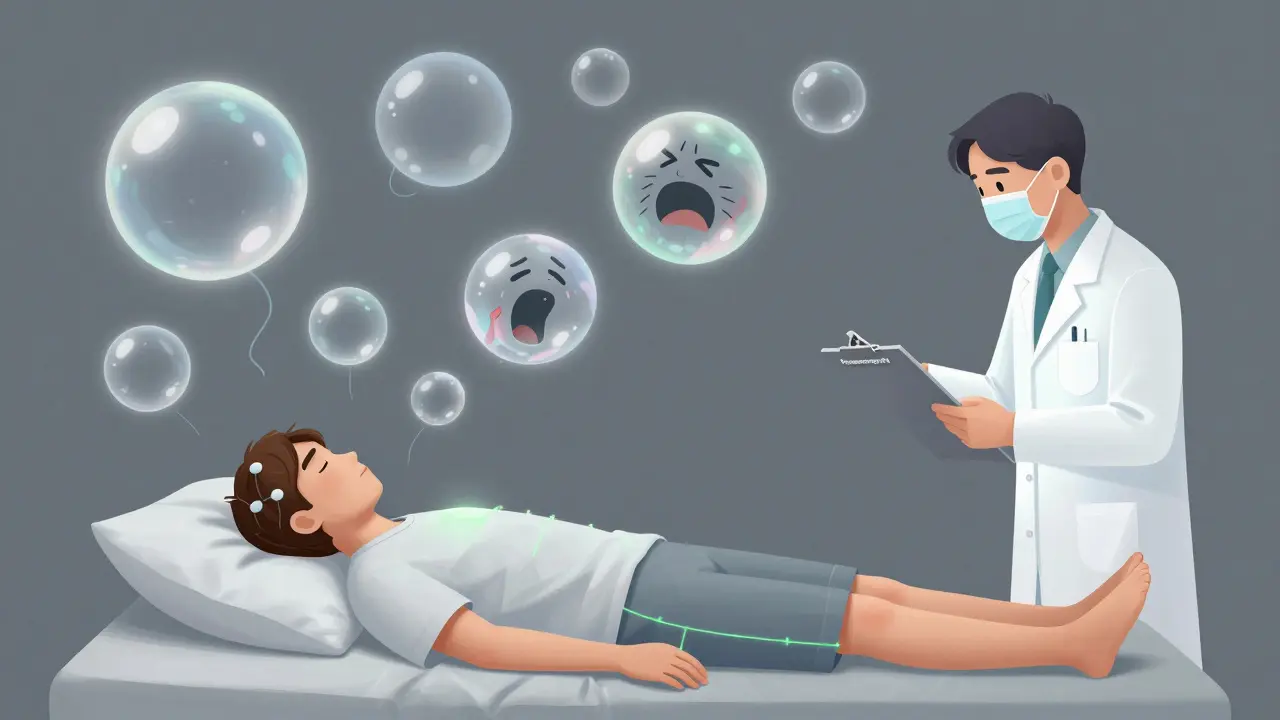
- You’re acting out your dreams - punching, yelling, kicking in your sleep. This could be REM sleep behavior disorder, which SSRIs can trigger in 68% of users (vs. 22% in non-users).
- Your legs feel like they’re crawling or tingling at night, and you have to move them to feel better. That’s restless legs syndrome, worsened by 65% of SSRIs.
- You’re sleeping more than 10 hours a day and still exhausted. This could mean your depression is worsening, not improving.
- You’re having panic attacks or severe anxiety at night. This might mean the drug isn’t the right fit.
If any of these happen, ask for a sleep study. Polysomnography can detect REM without atonia or leg movements you might not even notice. It’s not scary - just a night in a lab with sensors on your head and legs.
The Bigger Picture: Sleep Is Part of Recovery
Depression and sleep are locked together. Around 90% of people with major depression have sleep problems. Fixing one often helps the other.
Doctors are starting to treat sleep as a core symptom - not a side effect. The FDA now requires new antidepressants to report sleep data. In 2023, the first drug specifically approved for rapid sleep improvement - zuranolone (Zurzuvae) - hit the market. It cuts insomnia symptoms by 54% in two weeks.
Pharmacogenetic tests like Genomind’s 2025 test can now predict how your genes will respond to 24 antidepressants - including sleep effects - based on 17 genetic markers. It’s not perfect, but it’s a step toward personalized care.
Bottom line: Your sleep isn’t broken because you’re weak. It’s broken because the medicine is changing your brain chemistry. And there are ways to fix it - without giving up on treatment.
Can antidepressants cause long-term sleep problems?
For most people, sleep changes from antidepressants are temporary and improve within 3-4 weeks. But in about 15% of cases, sleep issues persist, especially with SSRIs. If insomnia lasts longer than 6 weeks, it’s not just a side effect - it’s a sign the medication might not be the right fit. Switching to a more sleep-friendly option like mirtazapine or agomelatine often helps. Long-term sleep disruption is rare but possible if the underlying depression isn’t fully treated.
Is it better to take an antidepressant at night or in the morning?
It depends on the drug. SSRIs, SNRIs, and bupropion should be taken in the morning - ideally before 9 a.m. - to avoid disrupting sleep. Sedating antidepressants like mirtazapine, trazodone, and doxepin should be taken 2-3 hours before bedtime. Taking a stimulant at night is a common mistake that leads to insomnia. Timing matters more than most people realize.
Can I use melatonin with antidepressants?
Yes, melatonin is generally safe to use with most antidepressants. It doesn’t interfere with their mood effects. In fact, combining low-dose melatonin (0.5-3 mg) with an SSRI may help reset your sleep-wake cycle faster. But don’t take high doses - more than 5 mg can cause grogginess. Avoid melatonin if you’re on agomelatine, since it already works on melatonin receptors.
Why does my sleep get worse before it gets better?
Antidepressants flood your brain with neurotransmitters all at once. Your sleep system, which has been out of sync from depression, gets overwhelmed. This causes a temporary imbalance - often worse insomnia or vivid dreams. This is called the “initial worsening phase.” It peaks around days 3-7 and usually improves by week 3-4 as your brain adapts. If it doesn’t, it’s not normal adaptation - it’s a sign you need a different medication.
Should I switch antidepressants if I have insomnia?
If insomnia is severe and doesn’t improve after 4 weeks, yes - switching is often the best move. Don’t wait until you’re exhausted and hopeless. Mirtazapine, trazodone, or agomelatine are better choices for depression with insomnia. SSRIs like fluoxetine are poor choices if sleep is your main issue. Your doctor can help you transition safely. Staying on a drug that ruins your sleep can hurt your recovery more than your depression alone.
Next Steps: What to Do Today
If you’re on an antidepressant and having sleep trouble:
- Check when you take your pill. Move SSRIs to the morning if you haven’t already.
- Start a 7-day sleep diary. Note bedtime, wake time, night wakings, and morning energy.
- Eliminate caffeine after 2 p.m. and alcohol entirely for two weeks.
- Get 10 minutes of sunlight within 30 minutes of waking.
- Call your doctor. Bring your sleep diary. Ask: “Is this drug the right fit for my sleep profile?”
You’re not alone. Thousands of people go through this. And with the right adjustments, you can get your sleep back - without giving up on your mental health treatment.



December 18, 2025 AT 11:27 AM
This post saved my sanity. I was on sertraline and thought I was going crazy with the 3 a.m. wake-ups. Switching to morning dosing made all the difference. Still not perfect, but now I can actually function. Don't give up - your brain is just recalibrating.
December 20, 2025 AT 03:54 AM
Of course you're sleeping poorly. You took a chemical cocktail without reading the fine print. Everyone else manages to sleep fine. It's not the drug, it's you. Maybe you just need to stop being so sensitive.
December 20, 2025 AT 08:24 AM
Hey, big thanks for this. I’m on Wellbutrin + Zoloft and was wondering why I felt like a zombie by 4 p.m. but wide awake at midnight. Turns out, the combo’s a sleep wreck. Just switched my Zoloft to 7 a.m. and already feel better. Also, melatonin 1mg at 9 p.m. helped a ton. No emoji, just facts.
December 22, 2025 AT 04:20 AM
The entire pharmaceutical industry is built on controlling the human nervous system for profit. Sleep disruption isn't a side effect - it's a feature. They want you dependent. They want you docile. They want you to believe that your mind is broken so you'll keep buying their pills. Agomelatine? More corporate branding. The real cure is fasting, cold exposure, and quitting social media. But you won't do that, will you?
December 24, 2025 AT 02:28 AM
I’ve been on mirtazapine for six months now. At 15 mg, I sleep like a baby. At 30 mg, I nap in the shower. It’s a trade-off. But here’s the thing - sleep isn’t just about rest. It’s about rebuilding. If your brain is healing, even bad sleep is part of the process. Don’t rush it. Be gentle with yourself.
December 25, 2025 AT 21:14 PM
Thank you for writing this. I’ve been too scared to tell my doctor how bad my sleep got on fluoxetine. Now I have the words to say it. I’m printing this out and bringing it to my appointment tomorrow. You’re not just giving info - you’re giving hope.
December 26, 2025 AT 04:59 AM
Why are you even on antidepressants? In Australia we just go for a run, drink coffee, and stop being so whiny. Your sleep’s bad because you’re lazy and overthink everything. Stop blaming the medicine. Blame your life choices.
December 26, 2025 AT 11:29 AM
Let me guess - you're one of those people who thinks science is a religion. You trust a 2020 study but not the fact that antidepressants are just mood-altering drugs disguised as cures. What about natural serotonin boosters? Sunlight, exercise, real food? No. You'd rather swallow a pill and call it progress. Pathetic.
December 27, 2025 AT 16:11 PM
I cried reading this. Not because I’m weak - because I finally felt seen. For months I thought I was failing at being ‘normal.’ I’d lie awake thinking, ‘Why can’t I just sleep like everyone else?’ Then I realized - it’s not me. It’s the drug. And now I’m switching to trazodone. I’m not broken. I’m adapting. And that’s brave.
December 29, 2025 AT 10:34 AM
It is imperative to note that the biochemical mechanisms underpinning antidepressant-induced sleep alterations are governed by complex neuropharmacological interactions involving 5-HT1A, 5-HT2A, and H1 receptor modulation. Empirical evidence from randomized controlled trials indicates that the temporal dynamics of REM suppression are non-linear and exhibit inter-individual variance predicated upon CYP2D6 metabolic phenotypes. Therefore, a one-size-fits-all approach to dosing timing is clinically suboptimal and potentially hazardous. Consult a board-certified psychopharmacologist before implementing any regimen modification.