You see a viral post on Facebook or a flashing headline on a news site claiming your daily medication has been recalled. Your first instinct is probably to stop taking it immediately. But wait-stopping a prescription without a doctor's guidance can be just as dangerous as the recall itself. In a world of deepfakes and social media panic, drug recall verification is the only way to know if your health is actually at risk or if you're just seeing a digital rumor.
The problem is that scammers and misinformation bots love targeting vulnerable patients. According to the Federal Trade Commission, fraudulent 'recall' scams caused over 1,200 cases of consumer harm between 2020 and 2024. Some people even end up in the ER because they stopped using life-saving insulin pens based on a fake alert. To stay safe, you need to move past the headlines and look for specific, technical markers that only official government agencies provide.
Quick Checklist for Spotting Fake Recalls
Before you panic, check the alert for these three red flags. If any of these are missing, the news is likely unreliable:
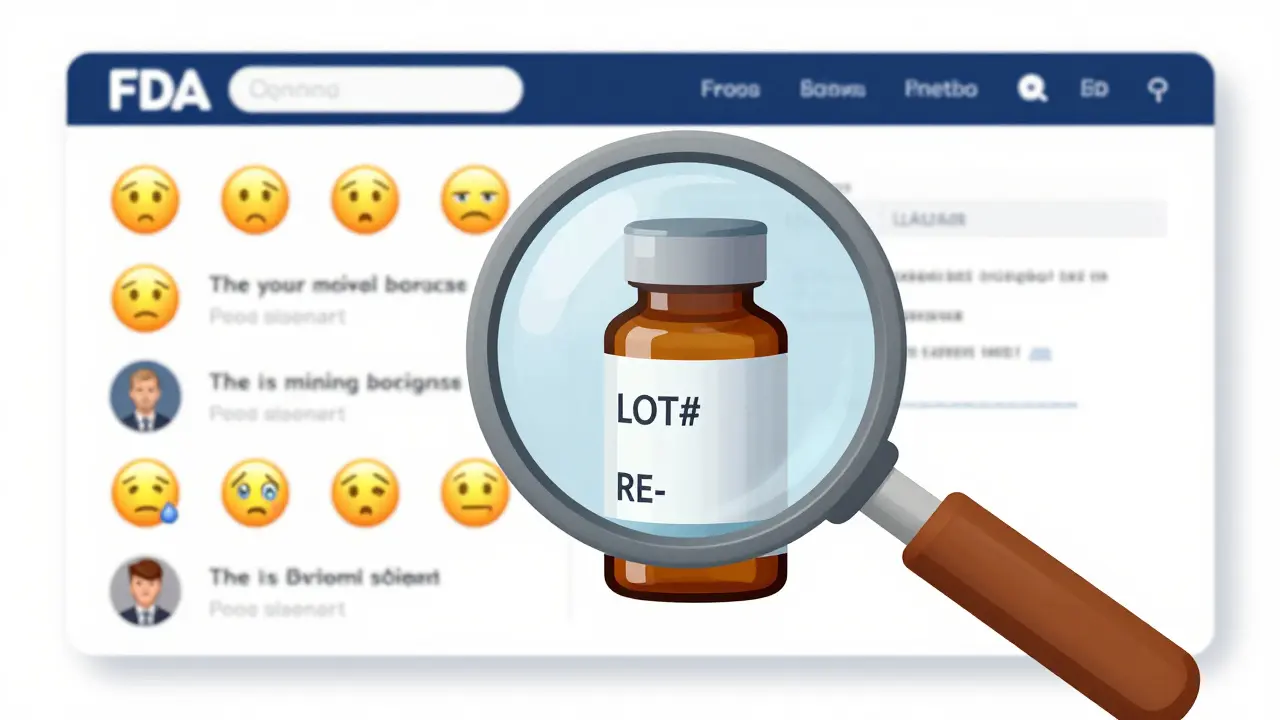
- No Lot Number: Legitimate recalls never say "all of this drug is recalled." They specify 10-15 character alphanumeric sequences (like LOT# ABC1234567).
- No Recall Event Number: Official notices always have a unique ID starting with "RE-" followed by a specific number format (e.g., RE-XXXX-XXXX-XXXXXX).
- Vague Classification: Real alerts state if it is a Class I, II, or III recall. If it doesn't categorize the risk level, be skeptical.
The Golden Standard: Using the FDA Portal
When you hear a rumor, your first stop should always be FDA.gov is the official portal of the U.S. Food and Drug Administration, the primary authority for drug safety and recall notifications in the United States. While third-party health apps are convenient, they often lag behind. A study by the Johns Hopkins Center for Drug Safety found that the official FDA site contains 100% of verified Class I recalls within 24 hours, while commercial databases only hit about 72% coverage in the same window.
If you want a broader view, you can use Recalls.gov, which aggregates data from six federal agencies. However, keep in mind that this site can have a delay of 12 to 36 hours compared to the agency-specific portals. If the situation is urgent, go straight to the source.
How to Verify Your Medication in 5 Steps
Verification doesn't require a medical degree, but it does require a strict process. Follow these steps to confirm if your specific bottle of medicine is affected:
- Find your lot number. Look at the bottom edge of the label or the back of the blister pack. It's usually a short string of letters and numbers.
- Search the FDA Recall Index. Go to fda.gov/recalls. Enter the brand name and the lot number. Pro tip: include the manufacturer's name to get more accurate results.
- Cross-reference with the manufacturer. Find the company's official contact info via the FDA announcement, not a random Google search. This prevents you from landing on a phishing site.
- Check the Weekly Enforcement Report. Every Friday at 2:00 PM ET, the FDA updates this report. Look for the standard format: "CLASS I - [Product] - [Manufacturer] - [RE Number] - [Reason]."
- Call the experts. If you're still unsure, contact the FDA's Division of Drug Information at 1-855-543-3784. Give them your Recall Event Number, and they can usually confirm the status within a few business hours.
| Source | Accuracy | Speed | Best For |
|---|---|---|---|
| FDA.gov | 100% (Verified) | Immediate | Definitive confirmation |
| Recalls.gov | High | 12-36hr Delay | Cross-agency search |
| Social Media | Low/Variable | Instant | Initial awareness only |
| Third-Party Apps | ~89% | Hours Delay | Quick lot scanning |
Common Pitfalls: Recalls vs. Market Withdrawals
One of the biggest sources of confusion is the difference between a "recall" and a "market withdrawal." About 31% of verification errors happen because people mix these two up. A Market Withdrawal is a voluntary action by a manufacturer to remove a product from the market when there is no actual violation of the law or a serious safety risk.
If a company pulls a drug because the pills are chipped or the packaging is ugly, it's a withdrawal. If they pull it because of NDMA (a known contaminant) or other dangerous impurities, it's a recall. Always check the "Reason for Recall" section of the notice to see if there is a genuine health threat.
The Future of Verification: QR Codes and AI
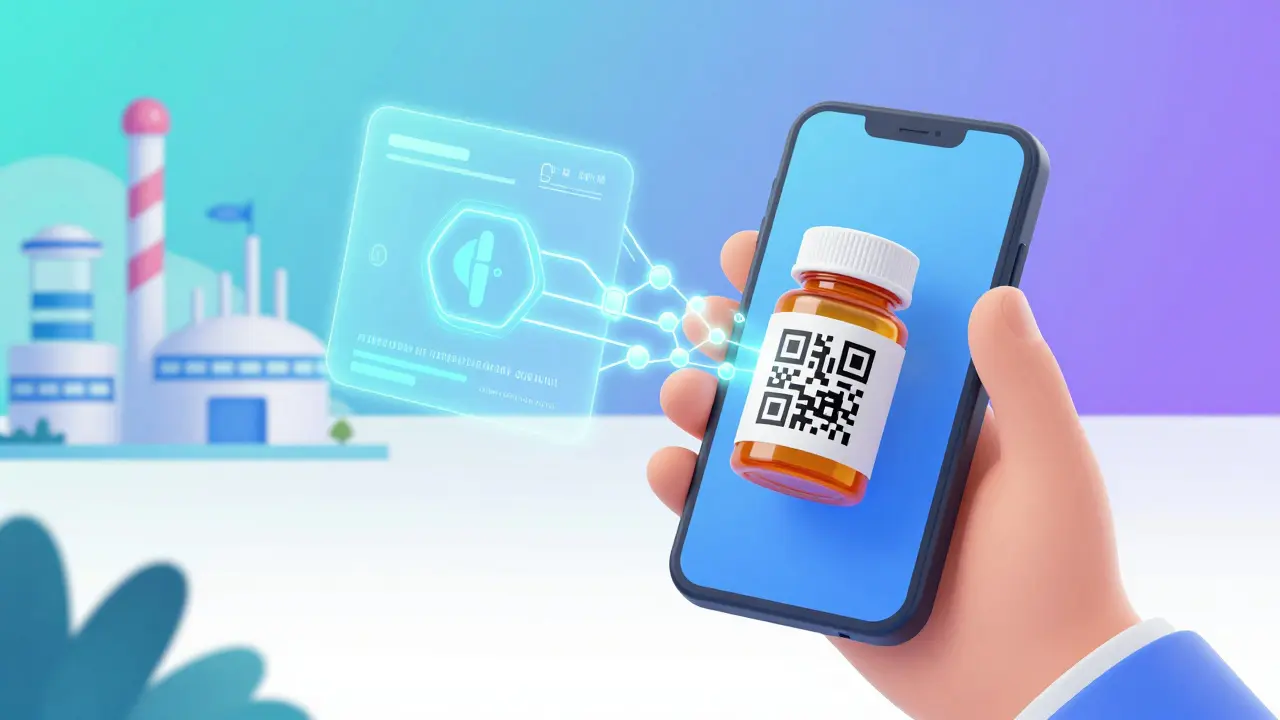
Verifying meds is getting easier. The Recall Modernization Act of 2024 is pushing for QR codes on all prescription labels by the end of 2026. Instead of digging through websites, you'll just scan your bottle with a smartphone to see if that specific batch is safe. In California, pilot programs for this are already seeing nearly 90% adoption.
We're also seeing the rise of Blockchain, which creates an unchangeable record of a drug's journey from the factory to your pharmacy. This makes it nearly impossible for scammers to fake a recall notice because the data is locked into a secure, shared ledger.
What is a Class I Recall?
A Class I recall is the most serious level. It means there is a reasonable probability that using the product will cause serious adverse health consequences or death. These are the alerts that require immediate action.
Should I stop taking my medicine if I see a recall online?
No. First, verify the lot number and Recall Event Number on FDA.gov. If it is a legitimate recall, contact your doctor or pharmacist before stopping. Suddenly stopping some medications can cause dangerous withdrawal symptoms or a relapse of your condition.
Where do I find the lot number on my medicine?
The lot number is typically a 10-15 character alphanumeric code found on the bottom or side of the prescription label, or printed directly on the blister pack or the rim of the bottle.
Can I trust a recall notice from a pharmacy app?
Apps like GoodRx are generally helpful and have high accuracy (around 89%), but they can be slow. They are great for a first check, but you should always confirm the details on an official government site like FDA.gov for 100% certainty.
What is an FNDC code?
The Firm Notification Distribution Code (FNDC) is a unique identifier used in official recall notices. It always starts with the letter 'F' followed by eight alphanumeric characters. If a notice lacks this or the 'RE-' prefix, it's a major red flag.