
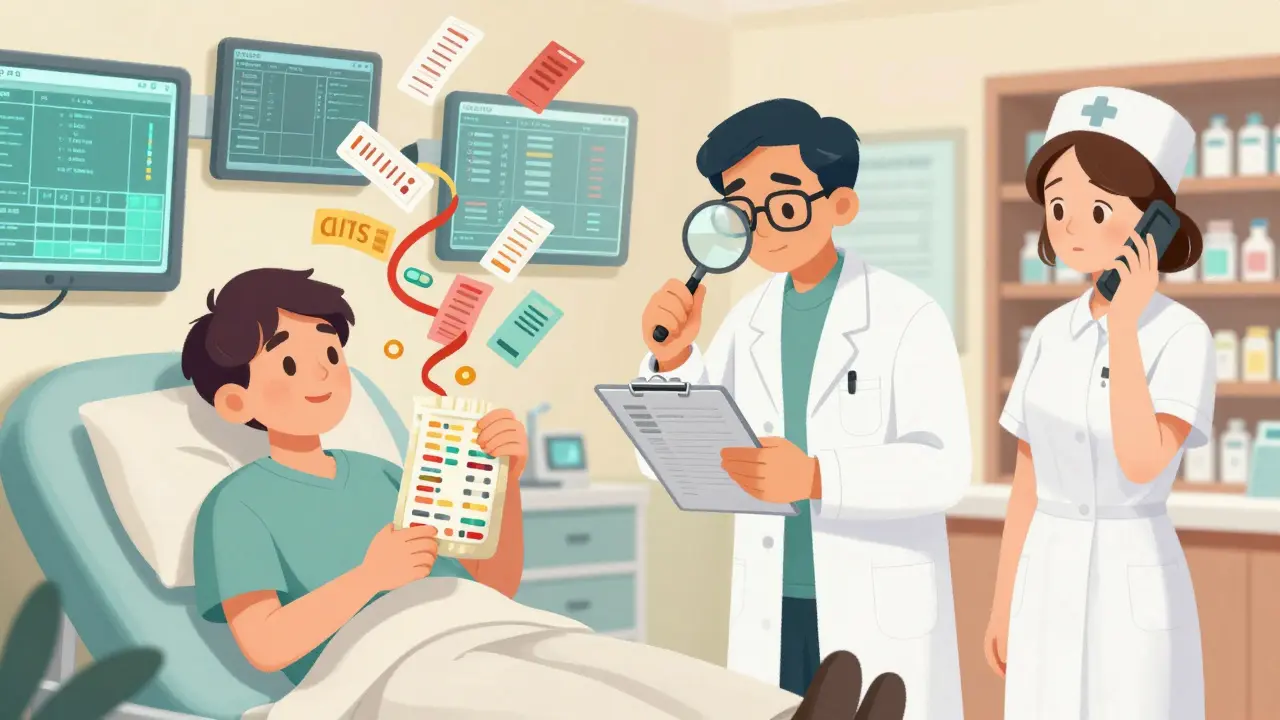
Medication errors don’t happen in a vacuum-they happen when patients move between places, people, and systems.
Every year, hundreds of thousands of people in the U.S. are harmed because their medication list got lost, mixed up, or ignored during a hospital discharge or transfer to a nursing home. It’s not a rare mistake. Medication reconciliation-the process of comparing what a patient is actually taking with what’s written in their chart-is the single most effective way to stop these errors. Yet, even though it’s been a national safety goal since 2005, only about 42% of hospitals do it well.
Here’s the hard truth: if you don’t get the medication list right when someone leaves the hospital, you’re setting them up for a trip back. One wrong dose of warfarin, a missed blood pressure pill, or an uncaught duplicate antidepressant can send someone to the ER-or worse. And it’s not just about the drugs. It’s about who’s responsible, what tools they’re using, and whether the patient even understands what they’re supposed to take.
What exactly is medication reconciliation-and why does it matter?
Medication reconciliation isn’t just copying a list from one form to another. It’s a four-step process:
- Get the most accurate list possible of what the patient is really taking at home-including over-the-counter meds, vitamins, and herbal supplements.
- Write down what medications should be prescribed during this hospital stay or transition.
- Compare the two lists side by side.
- Make clinical decisions: What gets stopped? What gets changed? What gets restarted?
This isn’t optional. The Joint Commission requires it at admission, transfer, and discharge. Medicare and Medicaid penalize hospitals that don’t comply. But compliance doesn’t equal correctness. A 2021 study in JAMA Internal Medicine found that even when hospitals used electronic health records (EHRs) to do reconciliation, they ended up with 18% more medication discrepancies than before they installed the system. Why? Because the software didn’t fix the human problems.
The biggest causes of errors during transitions
Most errors happen because of communication gaps. A 2023 Senate testimony by Dr. Tejal Gandhi showed that 78% of medication errors during transitions come from information not being passed between providers. That means:
- A patient gets discharged with a new prescription, but the community pharmacist never gets the update.
- A nurse assumes the doctor ordered a drug because it’s on the old list, but the doctor actually stopped it.
- A family member says the patient takes aspirin daily, but the patient forgot they stopped it six months ago.
Patients themselves are often left out of the loop. A 2024 Kaiser Family Foundation survey found that 72% of people didn’t understand why their medication list mattered during discharge. That’s not their fault. No one explained it to them.
And then there’s the tech problem. Only 37% of U.S. hospitals can electronically share medication data with community pharmacies. That means pharmacists are still calling hospitals, leaving voicemails, and hoping someone picks up. One pharmacist on Reddit said they spend 20% of their day just trying to get accurate home med lists.
What actually works to prevent errors
Not all solutions are created equal. Here’s what the data says works:
- Pharmacist-led reconciliation: Facilities that assign pharmacists to manage transitions see 57% fewer post-discharge medication errors and 38% fewer 30-day readmissions. Pharmacists are trained to spot duplicates, interactions, and omissions. They’re also the ones who actually talk to patients about what they’re taking.
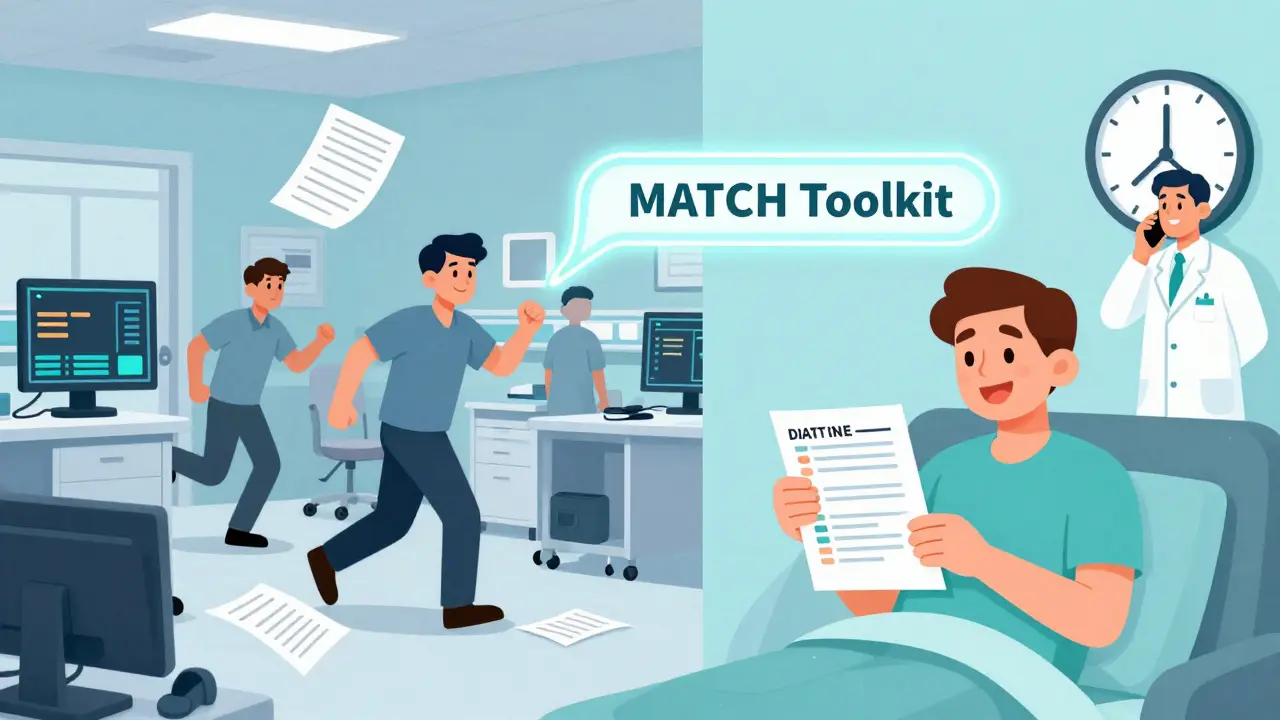
- The MATCH toolkit: Developed by the Agency for Healthcare Research and Quality (AHRQ), this isn’t just software. It’s a full workflow guide with 159 steps for how to do reconciliation right-from who asks the questions, to how to document them, to how to hand off to the next provider. Hospitals that use the full toolkit reduce errors by 63%. Those relying only on EHRs? Just 41%.
- Dedicated discharge staff: Having one person-usually a pharmacist or nurse-whose only job is to reconcile meds at discharge cuts errors by 34%. That person doesn’t do anything else. They focus on the list, the patient, and the follow-up.
- AI tools like MedWise Transition: FDA-cleared in 2024, this tool scans a patient’s full medication history, flags potential conflicts, and suggests corrections. In a 12-hospital pilot, it cut discrepancies by 41%.
But here’s the catch: none of this works if you don’t give people time. The ideal reconciliation takes 15-20 minutes per patient. In reality, most staff have 8-10 minutes. That’s not enough to ask about supplements, confirm dosages, or check if the patient can afford the meds. So they skip steps. Or worse-they copy-paste from the last admission.
Why technology alone fails
EHRs were supposed to fix this. But they often make it worse.
When a new system rolls out, staff are overwhelmed. They don’t know how to use it. The interface is clunky. The data doesn’t flow between departments. A 2022 study in BMJ Quality & Safety found that in the first six months after EHR implementation, harmful medication discrepancies increased by 22%. Why? Because the system didn’t train people. It didn’t change workflows. It just added another screen to click through.
Even worse, some hospitals let any staff member-nurses, aides, even clerks-collect medication histories. But without proper training or role clarity, they miss key details. The MARQUIS study found that when staff were trained without clear responsibilities, harmful discrepancies went up by 15%.
Technology is a tool, not a solution. You need trained people, clear roles, and time to use it right.
What patients need to know-and how to help them
Patients aren’t passive in this process. They’re the only ones who know what they’re really taking at home.
But most don’t know how to help. They forget pills. They don’t know brand vs. generic names. They think vitamins don’t count. They’re scared to ask questions.
Here’s what works in practice:
- Give patients a printed, plain-language list of their meds before discharge-with dosages, times, and why they’re taking them.
- Ask them to bring a bag of all their medications to the hospital or clinic. No exceptions.
- Use teach-back: “Can you tell me how you’ll take this new pill?” If they can’t, you haven’t explained it well enough.
- Connect them with a pharmacist for a follow-up call within 72 hours of discharge. One study showed this reduced readmissions by 29%.
Patients who participate in reconciliation feel more confident. In that same Kaiser survey, 85% of those who were involved said they understood their meds better. That’s the goal-not just accuracy, but empowerment.
What hospitals and clinics must do next
If you’re running a healthcare facility, here’s your action plan:
- Assign a dedicated role-usually a pharmacist-for medication reconciliation at every transition point.
- Use the AHRQ MATCH toolkit, not just your EHR. Follow the workflow steps, not the software buttons.
- Train everyone involved: nurses, doctors, clerks. Define who asks the questions, who documents, who verifies.
- Build time into the schedule. If reconciliation takes 15 minutes, schedule 15 minutes. Don’t try to squeeze it into a 10-minute discharge.
- Connect with community pharmacies. Push for electronic exchange. If that’s not possible, have a standardized phone script for calling them.
- Start involving patients early. Give them a med list before they even get to the hospital. Make it part of the intake process.
And don’t wait for a new system. Start with what you have. A simple checklist, a trained pharmacist, and a conversation with the patient can cut errors in half.
What’s changing in 2025 and beyond
The rules are getting stricter. The 2025 National Patient Safety Goals, released in December 2024, now require verification of high-risk medications using at least two independent sources. That means you can’t rely on just the patient’s word or the EHR. You need a pharmacy record, a family member, or a home medication list.
The WHO’s second phase of Medication Without Harm targets transitions specifically, with a goal of reducing harm by 30% in high-risk cases by 2027. In Australia, the Safety and Quality Health Care Commission already requires reconciliation at every handoff. Europe’s iPRI framework is doing the same.
The market is responding too. The global medication safety tech market hit $3.27 billion in 2023 and is growing at 14.3% a year. But the real win isn’t the software. It’s the culture shift-from seeing reconciliation as paperwork to seeing it as patient care.
Final thought: It’s not about the list. It’s about the person.
Medication errors during transitions aren’t caused by bad people. They’re caused by broken systems, rushed workflows, and poor communication.
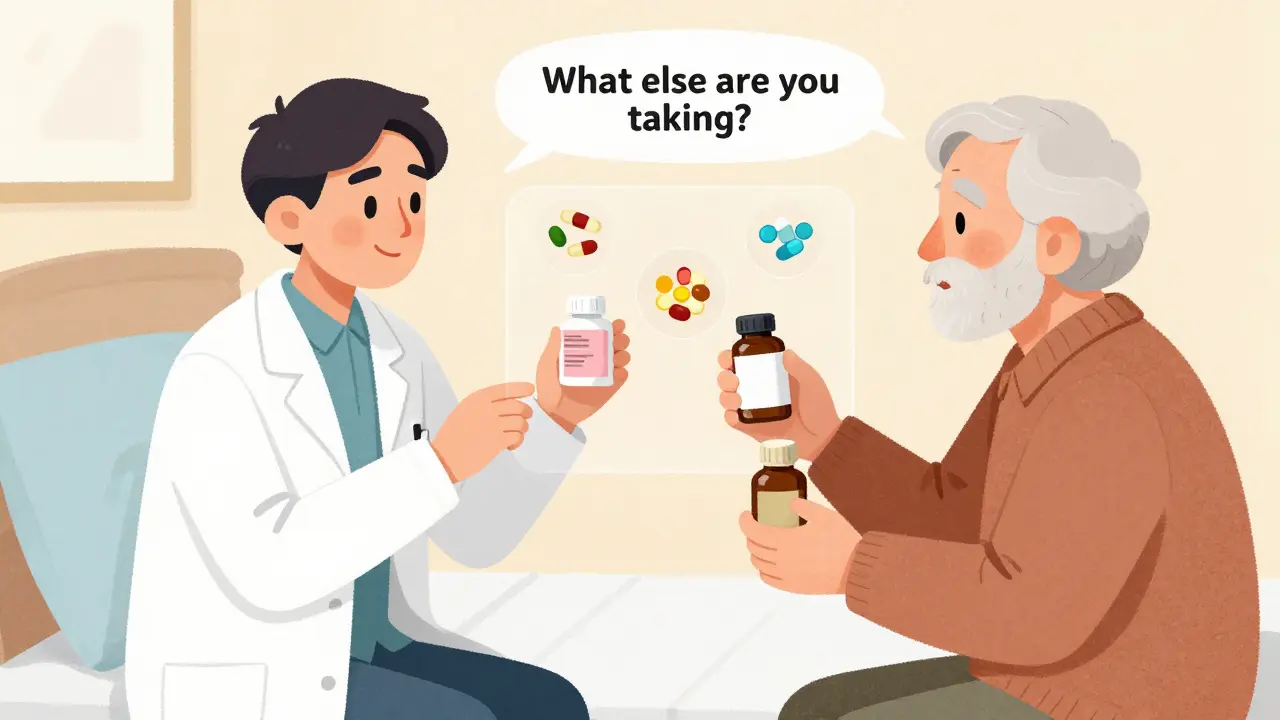
The fix isn’t fancy AI or expensive software. It’s a pharmacist who takes the time to ask, “What else are you taking?” It’s a nurse who calls the pharmacy. It’s a doctor who writes down why a drug was stopped. It’s a patient who walks out with a clear list and knows how to use it.
That’s what prevents harm. Not technology. Not policy. People doing their job, with the right support, and enough time to care.
What is the most common cause of medication errors during discharge?
The most common cause is a breakdown in communication between providers. About 78% of errors happen because the new care team doesn’t have an accurate, updated list of what the patient was taking before admission. This includes missing over-the-counter drugs, supplements, or medications stopped during hospitalization.
Does using an electronic health record (EHR) prevent medication errors?
EHRs can reduce errors by 32% when used properly, but they often increase discrepancies during initial rollout. Many systems are poorly integrated, lack interoperability with pharmacies, and don’t guide staff through the reconciliation process. Without trained staff and clear workflows, EHRs become a source of error, not a solution.
Why are pharmacists so important in medication reconciliation?
Pharmacists are trained to detect drug interactions, duplicates, incorrect dosages, and omissions. Facilities with dedicated transition pharmacists see 57% fewer post-discharge errors and 38% fewer 30-day readmissions. They also spend more time talking to patients, ensuring they understand their meds-which is critical for safety.
How long should medication reconciliation take per patient?
Experts recommend 15-20 minutes per patient for a thorough reconciliation. This allows time to gather information from the patient, family, and outside providers, compare lists, and explain changes. In practice, most staff have only 8-10 minutes, which leads to shortcuts and errors.
Can patients help prevent medication errors?
Yes. Patients who bring a complete list of all their medications-including vitamins and supplements-to the hospital reduce errors significantly. Those who are asked to explain their meds using the teach-back method (repeating instructions in their own words) are more likely to take them correctly after discharge. About 85% of patients who participate feel more confident about their medication plan.
What’s the biggest mistake hospitals make during discharge?
The biggest mistake is assuming the medication list is accurate because it’s in the EHR. Many hospitals copy-paste from previous admissions or rely on patient memory without verifying with a pharmacy or family member. Without checking at least two independent sources-especially for high-risk drugs like blood thinners or insulin-the list is likely wrong.


January 30, 2026 AT 03:14 AM
I've seen this play out in my mom's care. They discharged her with a new pill she didn't need and forgot to tell her pharmacy. She ended up in the ER. No one apologized. Just paperwork.
January 30, 2026 AT 05:23 AM
The real win here isn't the tech-it's giving pharmacists time to talk to patients. I work in a clinic where the med reconciliation person has 10 minutes per patient. They're drowning. Give them 15. It's not expensive. It's just human.
January 31, 2026 AT 17:48 PM
I'm a pharmacist in a rural hospital. We don't have AI tools or fancy EHRs. We have a printed checklist, a whiteboard, and a phone. We call every pharmacy. We ask patients to bring their meds in a bag. It takes time. But we've cut our readmissions by half in 18 months. It's not glamorous. But it works.
January 31, 2026 AT 20:44 PM
I’ve been on both sides-patient and nurse. When I was hospitalized, no one asked me about my fish oil or turmeric. I didn’t think it mattered. Turns out, it was interacting with my blood thinner. Now I bring a list everywhere. I even label my pill organizer with sticky notes. It’s dumb, but it saved me. If you’re a provider, just ask. Don’t assume. And don’t just copy-paste from last time. That’s how people die.
February 2, 2026 AT 15:34 PM
This is why healthcare in the U.S. is broken. We optimize for speed, not safety. We treat people like data points. In India, where I’m from, we don’t have EHRs. We have families. We have neighbors. We have nurses who remember your name. You don’t need AI to see that someone’s taking aspirin daily-you need to look them in the eye and ask. Technology should support that, not replace it.
February 4, 2026 AT 08:10 AM
lol so the solution is... more people? wow. didn't see that coming. next you'll say 'maybe we should stop making nurses do 12 hour shifts' or 'what if we paid them more?' radical ideas. meanwhile my EHR auto-populates med lists so i can click 'approve' and go to lunch. problem solved.
February 5, 2026 AT 04:51 AM
Okay but what if the real problem is that doctors are lazy? I mean, why are we even having this conversation? If you're not going to sit down with a patient for 20 minutes, why are you in medicine? Why not just hand out prescriptions like candy? And don't even get me started on the fact that 70% of patients can't read the labels anyway. Maybe we should just make all meds chewable and come in gummy form. Or better yet-let AI decide. Who needs humans when you've got an algorithm that can't even spell 'warfarin' correctly?
February 6, 2026 AT 22:16 PM
I read somewhere that the whole medication reconciliation thing is a Big Pharma scam to make people buy more pills. They want you to think you need 17 meds a day so you keep coming back. The real cause of errors? The government forcing hospitals to do paperwork instead of letting doctors do medicine. Also, I heard the WHO is funded by Pfizer. Just saying.
February 8, 2026 AT 05:47 AM
The data presented here lacks methodological rigor. The 57% reduction figure from pharmacist-led reconciliation is drawn from non-randomized observational studies with uncontrolled confounders. Additionally, the AHRQ MATCH toolkit has not been subjected to independent replication across diverse healthcare settings. Until peer-reviewed, longitudinal studies with control groups are published, these claims remain anecdotal.
February 9, 2026 AT 21:11 PM
One cannot help but observe that the fundamental ontological crisis in contemporary healthcare delivery lies in its epistemological dislocation: the conflation of procedural compliance with therapeutic efficacy. Medication reconciliation, as presently institutionalized, functions not as a heuristic of care, but as a performative ritual-a bureaucratic liturgy wherein the patient is rendered an object of documentation rather than a subject of healing.
February 9, 2026 AT 22:32 PM
I work with a team that started doing this the simple way-printed lists, a 15-minute check-in, and a follow-up call. We didn’t wait for funding or tech upgrades. We just started. And guess what? Patients started thanking us. Not because we did something fancy. Because we did something human. You don’t need a billion-dollar system. You need someone who cares enough to ask, ‘What else are you taking?’ And then listen. Seriously. Just listen.