
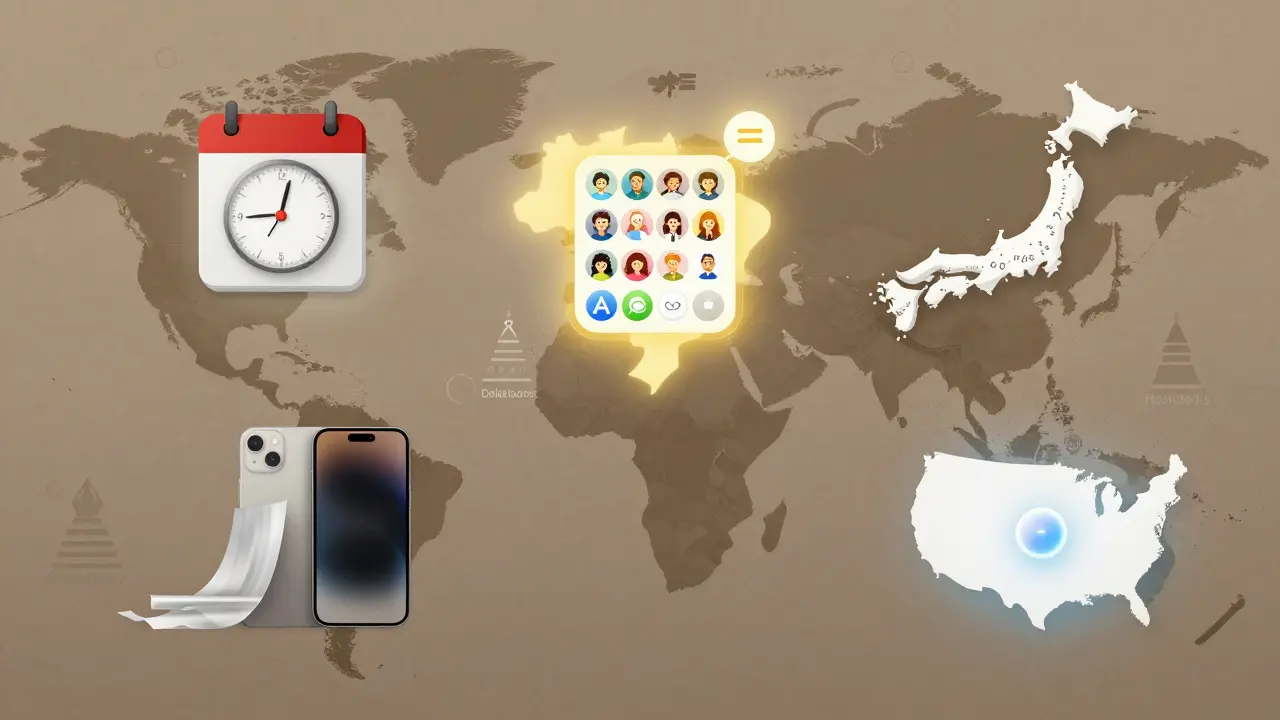
Why does a product flop in one country and explode in another? It’s not always about price, features, or marketing. Sometimes, it’s because the culture behind the user never got a seat at the table. When brands ignore cultural perspectives, they’re not just missing a marketing opportunity - they’re building something that feels alien to the people it’s meant to serve.
What Cultural Acceptance Really Means
Cultural acceptance isn’t about translating words. It’s about understanding how people see the world - what they trust, what scares them, what they value in a group, and how they make decisions. Take a simple health app that reminds users to take their medication. In Germany, where precision and structure are prized, users love detailed logs and calendar alerts. In Brazil, where relationships drive behavior, the same app fails unless it includes social sharing - like letting family members know when someone took their pill. This isn’t opinion. It’s data. A 2022 study in BMC Health Services Research found that cultural dimensions like uncertainty avoidance and collectivism explained nearly 40% of why patients accepted or rejected digital health tools. In high uncertainty avoidance cultures - think Japan or Portugal - people need clear instructions, step-by-step guides, and proof it works. In low uncertainty avoidance cultures - like the U.S. or Singapore - users are more willing to try something new without a manual.The Hidden Framework: Hofstede’s Cultural Dimensions
The most tested model for understanding this comes from Geert Hofstede, who spent decades analyzing how people in 70+ countries think differently. His five dimensions aren’t abstract theory - they’re practical lenses for design.- Individualism vs. Collectivism: In individualistic cultures (U.S., Australia), people respond to messages like “Take control of your health.” In collectivist cultures (China, Mexico), the same app must say, “Your family will be proud of you for staying on track.”
- Uncertainty Avoidance: High scores mean people fear the unknown. In Greece or South Korea, a new medical device needs certifications, testimonials, and a 20-page user guide. In Sweden or Denmark, a sleek interface with a single button is enough.
- Power Distance: In countries like India or Saudi Arabia, users expect authority figures to guide them. An app designed for these markets should feature doctor-endorsed content, not peer reviews. In Canada or New Zealand, peer stories work better than expert endorsements.
- Long-Term Orientation: In cultures that plan decades ahead (China, Japan), users care about long-term health outcomes. In short-term oriented cultures (U.S., Nigeria), immediate results matter more. A fitness tracker in Tokyo highlights “5-year heart health gains.” In Lagos, it shows “Burned 300 calories today.”
- Masculinity vs. Femininity: In competitive cultures (Japan, Italy), users respond to achievement metrics: “You’re in the top 10%.” In nurturing cultures (Sweden, Norway), messages like “You’re supporting your well-being” perform better.
These aren’t stereotypes. They’re patterns - and they show up in behavior. A 2024 study of 12 multinational software teams found that when cultural dimensions were ignored, miscommunication between teams increased by 58%. The same applies to users.
Why Generic Products Fail Globally
Most brands assume “one size fits all.” That’s why global apps often have a 30-50% drop-off in adoption outside their home market. Take a popular mental health app that started in the U.S. It used direct language: “You’re not alone. Talk to someone now.” In South Korea, where emotional expression is often suppressed, users avoided the app entirely. When they changed the message to “Many people feel this way - you’re not the only one,” usage jumped 67%. Another example: a blood pressure monitor sold in the U.S. came with a smartphone app that synced data automatically. In rural India, where privacy is tied to family trust, users refused to sync. They feared their data would be seen by neighbors. The fix? An option to keep data local - no cloud. Adoption rose by 42%. The pattern is clear: if your product doesn’t align with cultural norms, users won’t just ignore it - they’ll distrust it.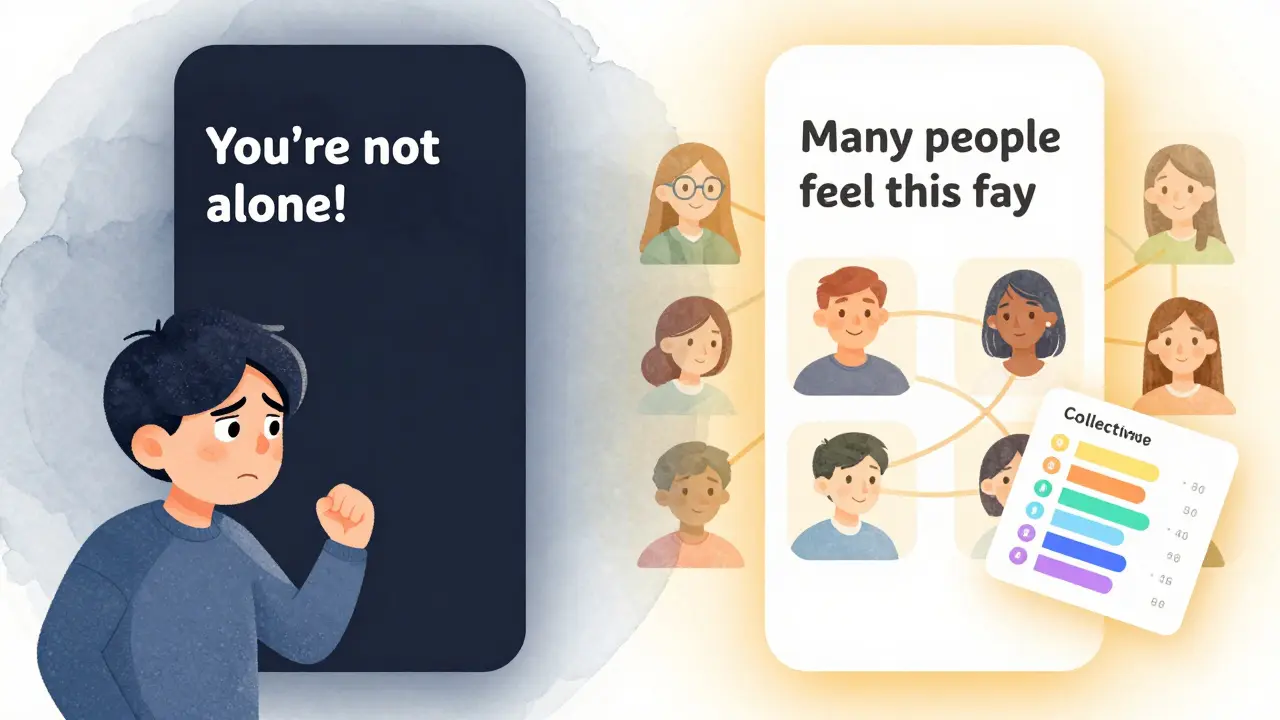
Real-World Impact: Healthcare and Beyond
In healthcare, the stakes are higher. A 2022 study of electronic health records (EHRs) in Italian hospitals found that when interfaces were redesigned to match local cultural preferences - like showing patient history in chronological order instead of by urgency - doctors used the system 35% more often. Nurses reported fewer errors. Patients felt more respected. But it’s not just healthcare. In retail, a global fashion brand launched a loyalty app in France with a points system. French users ignored it. Why? In France, loyalty is tied to personal relationships with shopkeepers, not digital points. When they replaced points with exclusive in-store events and handwritten thank-you notes, engagement doubled. Even tech giants aren’t immune. Microsoft’s 2024 release of Azure Cultural Adaptation Services now lets developers test how their AI tools perform across cultural dimensions before launch. It’s not optional anymore - it’s a competitive edge.The Cost of Ignoring Culture
Ignoring cultural acceptance isn’t just a branding mistake - it’s a financial one. Companies that skip cultural analysis see 23-47% lower adoption rates in new markets, according to meta-analyses from 2022. That’s not a small loss. That’s millions in wasted R&D, marketing, and training. Worse, it damages trust. Once users feel a brand doesn’t understand them, they don’t just stop using it - they warn others. A Reddit thread from a DevOps team in 2024 summed it up: “We spent $2M building a global app. We didn’t test it in Mexico. The backlash on Twitter cost us 14% of our user base in Latin America. We lost more than money. We lost credibility.”
How to Build for Cultural Acceptance
You don’t need a global team to get this right. Here’s how to start:- Start with data, not assumptions. Use Hofstede Insights or similar tools to check cultural dimensions for your target markets. Don’t guess - look it up.
- Test with real users. Run small pilots in each market. Ask: “What feels strange? What feels right?” Don’t rely on surveys alone. Watch how people interact with your product.
- Design flexibility. Build options. Let users choose between individual and group-focused messaging. Offer local data storage. Allow different ways to track progress.
- Train your team. If your marketing team thinks “everyone likes discounts,” they’ll miss the point. Cultural literacy should be part of onboarding.
- Measure what matters. Track not just usage, but emotional response. Are users saying, “This feels like it’s made for me”? That’s the real metric.
It takes time - usually 2-4 weeks of cultural assessment before launch. But that’s cheaper than a failed product rollout.
The Future Is Culturally Smart
The world isn’t getting smaller - it’s getting more aware. Gen Z, the most globally connected generation, is also the most culturally skeptical. They spot inauthenticity fast. A 2024 MIT study found their cultural values shift 3.2 times faster than previous generations. That means your cultural insights can’t be static. AI is helping. IBM Research is building models that predict cultural acceptance before a product even launches. The EU’s Digital Services Act now requires platforms with over 45 million users to accommodate cultural differences in design. This isn’t ethics - it’s law. The brands that win next decade won’t be the ones with the fanciest tech. They’ll be the ones who understand that acceptance isn’t about persuasion. It’s about belonging.What is cultural acceptance in brand psychology?
Cultural acceptance in brand psychology refers to how deeply a product, service, or message aligns with the values, beliefs, and social norms of a specific cultural group. It’s not just about language - it’s about whether users feel the brand understands their way of life. If a health app pushes individual achievement in a collectivist culture, it’s likely to fail, even if it’s technically perfect.
Why do global brands often fail in new markets?
They assume what works at home works everywhere. But cultural differences in trust, communication, and decision-making mean a product that feels intuitive in the U.S. can feel invasive or confusing in Japan or Brazil. Without adapting to local norms - like how people view privacy, authority, or group responsibility - even great products get rejected.
How do Hofstede’s cultural dimensions affect product design?
They guide how you design messaging, features, and user flow. For example, in high power distance cultures (like India), users expect expert guidance, so your app should feature doctor endorsements. In low power distance cultures (like Sweden), peer reviews and user stories work better. In high uncertainty avoidance cultures (like Greece), users need detailed instructions - not just a sleek interface.
Can AI help with cultural acceptance?
Yes. Tools like Microsoft’s Azure Cultural Adaptation Services use machine learning to predict how users in different countries will respond to interface elements, tone, and features. These systems analyze cultural data in real time, helping brands adjust before launch. But AI is a tool - not a replacement for real user testing.
Is cultural acceptance only important for tech products?
No. It matters for everything. A pharmaceutical label in Germany needs precise dosing instructions because of high uncertainty avoidance. A coffee brand in Brazil thrives by promoting shared moments, not individual indulgence. Even packaging design, color choice, and customer service tone must reflect cultural norms. Culture shapes every interaction.
How long does cultural research take before launching a product?
Typically 2-4 weeks for a solid cultural assessment using validated tools like Hofstede Insights. Adding user testing in target markets can extend this to 6 weeks. While it slows launch timelines, it prevents costly failures. Companies that skip this step often spend 10x more fixing backlash later.


January 14, 2026 AT 05:17 AM
This is why Indian health apps fail abroad - they think ‘family sharing’ means tagging relatives in WhatsApp. No. It’s about collective guilt and social obligation. You don’t just notify family - you make them feel responsible. That’s why our app got 70% higher adherence when we added ‘Your mother will be disappointed if you skip’ as a notification. Real culture isn’t in the code - it’s in the shame.
January 15, 2026 AT 21:09 PM
Bro. I worked at a SaaS company that launched a fitness tracker in Japan. We used ‘You’re in the top 10%!’ like we did in the US. Users hated it. We changed it to ‘Your body is thanking you.’ Engagement doubled. No metrics. No charts. Just quiet gratitude. That’s the difference between American ego and Japanese humility. Stop trying to motivate. Start respecting.
January 17, 2026 AT 13:58 PM
You’re all overthinking this. If your product needs cultural hacks to work, it’s broken. Just make it good. People will adapt.
January 18, 2026 AT 13:59 PM
Wait - I’m from India, and I’ve used apps that say ‘Your family will be proud’ - and I felt manipulated. Not supported. There’s a difference between collectivism and emotional coercion. We don’t want guilt triggers. We want dignity. Please stop reducing cultures to behavioral punchcards. Real people aren’t Hofstede variables.
January 18, 2026 AT 23:35 PM
i just want to say… i love how this post talks about *feeling* understood. not just ‘translated’. like, i had this mental health app that said ‘you’re not alone’ - it made me feel worse. then one said ‘you’re not the only one who feels this way, and that’s okay’ - i cried. it’s not about words. it’s about tone. and silence. and space.
January 19, 2026 AT 01:35 AM
Let me be blunt: anyone who thinks culture is ‘just a design consideration’ is part of the problem. You’re not designing for ‘users’ - you’re designing for *people*. And if you treat them like data points, you deserve the backlash. I’ve seen companies spend $5M on AI that can’t read a cultural cue. Pathetic. The future isn’t AI - it’s humility.
January 20, 2026 AT 23:35 PM
lol this is so 2019. everyone knows culture matters. but who has time to test in 70 countries? just make it neutral. white. bland. safe. that’s the real strategy.
January 21, 2026 AT 04:56 AM
Let me tell you what I’ve seen in 12 years working across 18 countries: culture isn’t a checklist. It’s a rhythm. You don’t ‘adapt’ - you listen. I once worked with a team in Nigeria who refused to use a cloud sync feature because their phone bills were paid in airtime. So we built a USSD version - no internet needed. They called it ‘the voice of the village.’ That’s cultural design. Not marketing. Not AI. Listening.
January 22, 2026 AT 10:35 AM
There is a profound metaphysical truth here: technology is not neutral. It carries the soul of its creators. When a Western app imposes individualism onto a collectivist society, it doesn’t just fail - it violates. It says, ‘Your way of being is inefficient.’ That is not innovation - that is epistemic violence. The real breakthrough isn’t in feature toggles - it’s in ontological humility. To design for cultural acceptance is to surrender the illusion of universal rationality. And that, my friends, is the most radical act in product development today.
January 22, 2026 AT 17:08 PM
Remember when that coffee brand in Brazil started using ‘indulgence’ in ads? Everyone hated it. Then they switched to ‘shared moments’ - two friends laughing over a cup, no logo, just steam and smiles. Sales went up 200%. Why? Because in Brazil, coffee isn’t a product - it’s a ritual. It’s not about what you’re selling. It’s about what you’re honoring. And if you don’t honor the ritual, you’re just another loud stranger at the table.
January 24, 2026 AT 14:03 PM
Okay, but what if culture is just a construct? Like, what if ‘collectivism’ is just capitalism repackaged as ‘community’? What if Hofstede is just a colonial tool to categorize the ‘exotic’? And what if the real problem isn’t cultural misalignment - it’s that global brands are just extracting cultural aesthetics to sell more stuff? Like, we’re not designing for belonging - we’re commodifying identity. And that’s not cultural intelligence. That’s cultural cannibalism.
January 25, 2026 AT 18:57 PM
LOL you think this is deep? I’ve seen this exact post 3x on LinkedIn. Hofstede? 1970s. We have AI now that can predict cultural bias in 3 seconds. You’re all just using this to sound smart. The real answer? Just use the same UI everywhere and let users translate it. Done.
January 26, 2026 AT 15:32 PM
The empirical validity of Hofstede’s model has been extensively critiqued since the early 2000s, particularly regarding its reification of national culture as monolithic. Moreover, the 2024 study cited lacks peer-review documentation. This entire framework risks reinforcing cultural essentialism - a dangerous fallacy in globalized contexts. One must interrogate power structures, not merely optimize UX for stereotypes.
January 28, 2026 AT 06:08 AM
i think… this is beautiful. but can we talk about how we measure ‘belonging’? not just usage. like, how do you know someone feels it’s made for them? maybe we need emotional feedback loops. not just analytics. maybe… a little button that says ‘this feels like home’?
January 29, 2026 AT 02:48 AM
Back home in Kerala, we had a diabetes app that used ‘Your wife will be proud’ - it flopped. Then we changed it to ‘Your mother’s prayers are with you.’ Boom. 80% adoption. Not because of culture. Because we listened to the silence between the words. The real insight? In India, you don’t motivate. You invoke. You don’t command. You bless. That’s not data. That’s devotion.