Imagine spending hours drinking a salty, unpleasant solution and skipping your favorite meals, only to arrive at the clinic and be told your colon isn't clean enough for the doctor to see anything. The procedure gets canceled, and you have to do the whole thing over again. It happens more often than you'd think-around 20-25% of colonoscopies suffer from suboptimal cleansing. When the view is blurry or blocked by leftover waste, doctors can miss up to 47% of adenomas, which are the precancerous polyps that need to be removed to prevent cancer.
The goal of Colonoscopy Preparation is the process of completely clearing the colon of all solid matter to allow a physician to clearly visualize the lining of the large intestine during an examination. Getting a "clear exam" isn't just about following a list of rules; it's about ensuring your doctor can spot every single polyp, no matter how small. If you do it right, you significantly boost the colonoscopy prep tips success rate and protect your long-term health.
The Low-Fiber Lead-Up
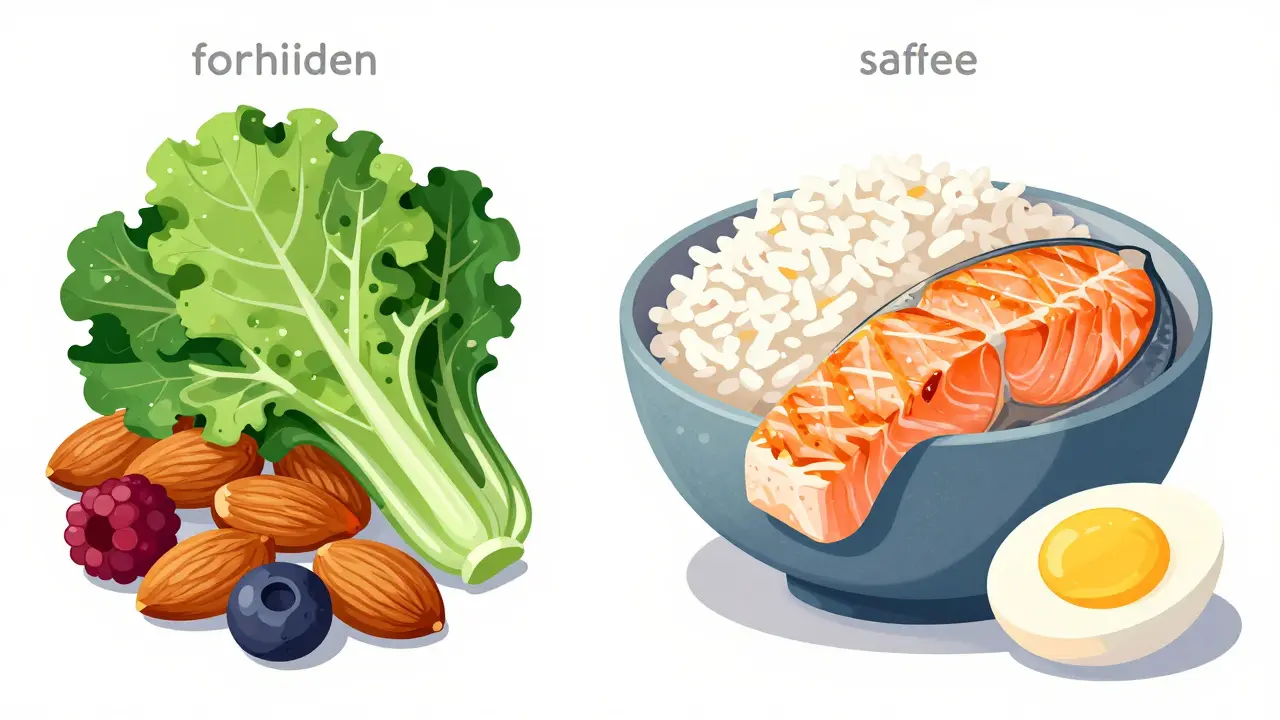
You don't start prepping the night before; the real work begins 48 to 72 hours in advance. If you eat a giant bowl of kale or a handful of almonds the day before your prep, those fibers act like tiny scrubbers that stick to the colon walls, making the cleansing process much harder.
Two to three days before your appointment, shift to a low-fiber diet. This means ditching raw fruits, raw vegetables, seeds, nuts, and dairy. Instead, stick to "white" or "plain" foods. Think white rice, pasta, white bread, eggs, and lean proteins like grilled chicken or salmon. This reduces the amount of solid bulk in your system, making the final flush much more efficient.
Mastering the Clear Liquid Diet
The day before your procedure is the most challenging part. Usually, by noon, you must stop all solid foods and switch entirely to a clear liquid diet. If you eat a "small snack" or a piece of toast, you risk having the procedure canceled on the spot.
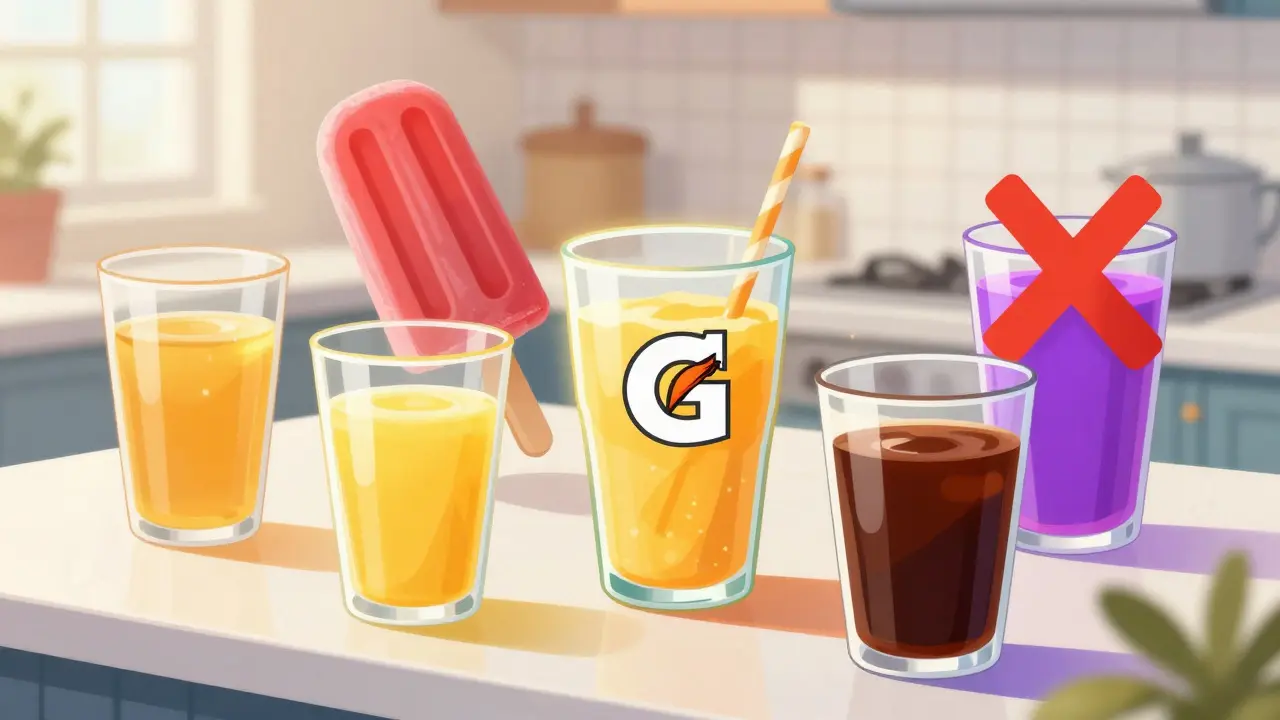
Not all liquids are created equal. You want things you can see through. Great options include apple juice, white grape juice, ginger ale, and black coffee or tea (no cream!). However, there is one golden rule: Avoid Red and Purple Dyes . Whether it's a red Gatorade or a purple popsicle, these colors can mimic the appearance of blood or obscure polyps, leading to a false diagnosis or a missed growth. Stick to yellow, green, or clear options.
| Allowed (Safe) | Forbidden (Avoid) | Why it Matters |
|---|---|---|
| Apple/Grape juice, Water, Black coffee, Yellow Gatorade | Orange juice with pulp, Milk, Red/Purple drinks, Smoothies | Dyes mimic blood; pulp/solids block the camera's view |
Handling the Bowel Prep Solution
The actual cleansing usually involves a high-volume laxative. Many clinics now use a split-dose regimen, where you drink half the solution the night before and the other half 4-6 hours before the exam. This method is far more effective than a single-dose approach, with cleansing success rates jumping from roughly 70% to nearly 90%.
Let's be honest: the solution often tastes terrible. To get through it, try chilling the liquid in the fridge-cold liquids are generally easier to swallow. Using a straw to bypass some of your taste buds can also help. If you're using a product like MiraLAX , remember to drink the required amount of water alongside it to prevent dehydration.
Expect the "storm" to hit about 2-3 hours after your first dose. You'll be making frequent trips to the bathroom-sometimes 3 to 6 times per hour. You'll know you're officially "clear" when your stool looks like a clear yellow liquid, similar to apple juice. If it's still cloudy or brown, you aren't ready yet.
Avoiding Common Pitfalls
Many people accidentally sabotage their own prep. One of the biggest mistakes is ignoring hydration. Dehydration can cause dizziness, headaches, and even confusion. Aim for 8 ounces of water every hour you're awake during the prep phase, totaling around 64 to 96 ounces a day.
Another hidden trap is medication. Iron supplements and certain pain medications can cause constipation or darken the stool, making it impossible for the doctor to see the lining. Stop taking iron and fiber supplements at least three days before your appointment unless your doctor tells you otherwise.
Lastly, timing is everything. If you take your final dose too late (less than 4 hours before the procedure), the colon may not be fully empty, which lowers the Adenoma Detection Rate (ADR). A higher ADR means the doctor found more polyps, which directly reduces your risk of developing interval cancer.
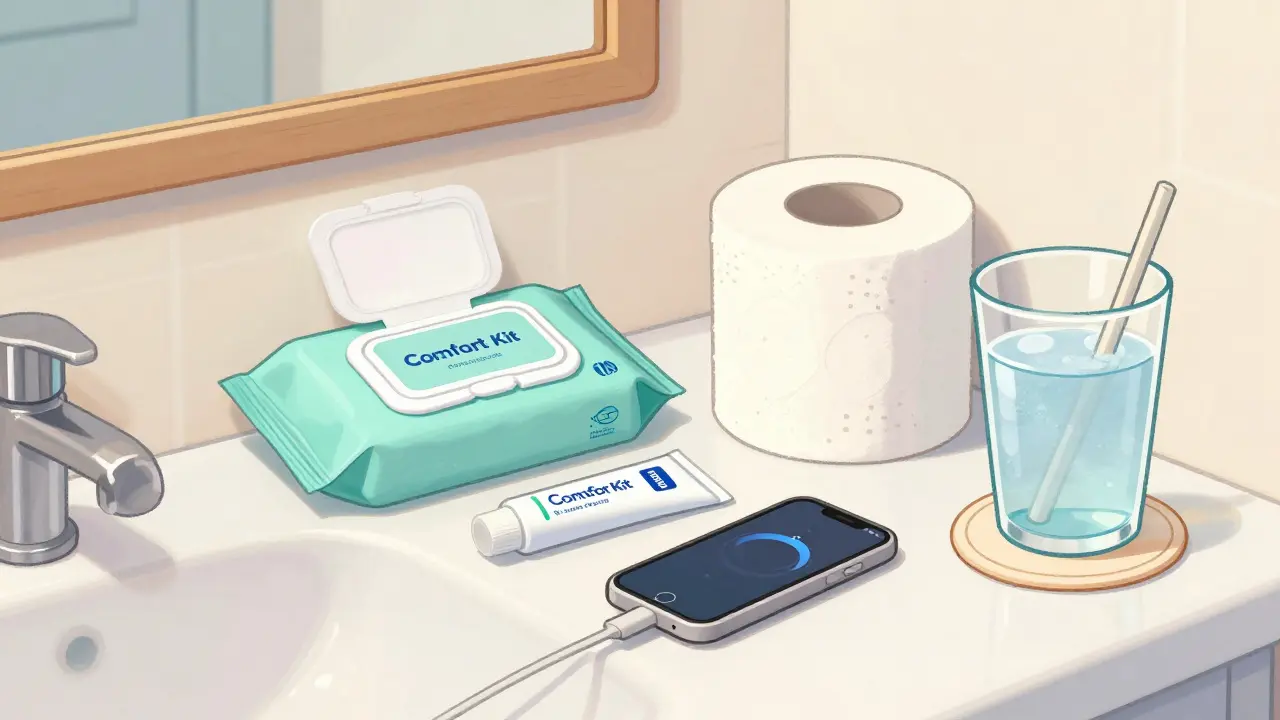
The "Comfort Kit" for Your Bathroom
Since you'll be spending a significant amount of time in the bathroom, a few simple items can prevent a lot of misery. Standard toilet paper can be irritating after a dozen visits in a few hours. Instead, stock up on:
- Unscented wet wipes (to be gentle on the skin)
- Zinc oxide cream or a hemorrhoid ointment to prevent skin breakdown
- A portable charger or a book to keep you entertained while you wait
- Soft, high-quality toilet paper
Plan your schedule so you are home and near a restroom for at least 6 to 8 hours after you start the laxatives. Trying to "time' the prep while you're out in public is a recipe for disaster.
Final Countdown and Procedure Day
The final window is the most critical. You must stop all food and liquid intake exactly 3 hours before your scheduled procedure. Drinking water or sipping juice during this window can lead to immediate cancellation because of the risks associated with sedation.
Because you'll be sedated, you cannot drive yourself home. Arrange for a responsible adult to accompany you. The sedation affects your coordination and judgment for a full 24 hours, even if you feel completely awake when you leave the clinic.
What if my stool isn't clear yellow by the morning?
If your output is still dark or contains solid matter, contact your clinic immediately. Depending on the time, they may advise you to drink extra water or a small amount of additional prep. If the colon isn't clear, the doctor may not be able to see small polyps, which could mean you have to repeat the entire process on another day.
Can I drink Gatorade during the clear liquid phase?
Yes, Gatorade is actually recommended to help maintain electrolytes and prevent cramping. However, you must choose the yellow or clear flavors. Absolutely avoid red, purple, or orange varieties, as these dyes can stain the colon wall and look like blood during the exam.
Why is a split-dose prep better than a single dose?
Split-dose regimens (half the night before, half the morning of) are more effective because they clear the "right side" of the colon more thoroughly. Research shows this method increases the rate of adequate cleansing to 85-90%, compared to only 70-75% for single-dose methods.
Is it okay to drink black coffee?
Yes, black coffee is allowed as a clear liquid. However, you must omit all milk, cream, or non-dairy creamers. If you can't drink it black, stick to water or apple juice to be safe.
What happens if I accidentally eat something solid the day before?
If it was a very small amount of low-fiber food, you might be okay, but you should notify your medical team. If you ate a full meal or high-fiber foods, the prep may not be able to clear the colon in time, and the doctor may reschedule the procedure to ensure they don't miss any critical polyps.