
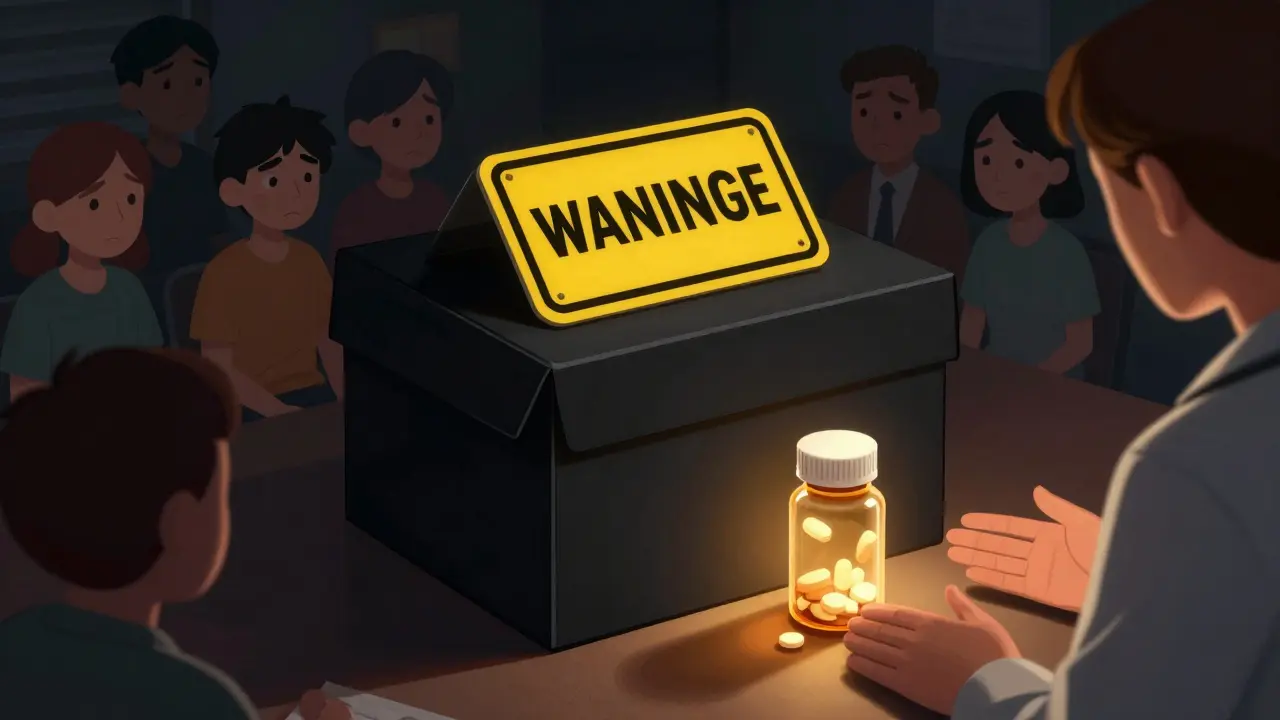
The black box warning on antidepressants for children and teens is one of the most controversial safety alerts in modern medicine. Introduced by the U.S. Food and Drug Administration (FDA) in 2005, it was meant to protect young people from harm. But over the last two decades, evidence has mounted that the warning may have done more harm than good.
What the Black Box Warning Actually Says
The FDA’s black box warning is the strongest safety alert the agency can issue. It appears at the top of every antidepressant’s prescribing information, framed in a black border and bold type. The exact language states: "Antidepressants increase the risk of suicidal thinking and behavior (suicidality) in children and adolescents with major depressive disorder (MDD) and other psychiatric disorders."
This warning was based on a review of 24 short-term clinical trials involving over 4,400 young patients. In those studies, about 4% of kids and teens taking antidepressants showed signs of suicidal thoughts or behaviors - compared to 2% in the placebo group. That sounds alarming, but here’s the catch: not a single suicide occurred in any of those trials. The warning didn’t say antidepressants cause suicide. It said they might increase the chance of suicidal thinking - especially in the first few weeks of treatment.
The FDA later expanded the warning in 2007 to include young adults up to age 24. Today, every prescription antidepressant - whether it’s fluoxetine (Prozac), sertraline (Zoloft), or escitalopram (Lexapro) - carries this same label.
What Happened After the Warning Went Into Effect
Doctors, parents, and pharmacists took the warning seriously. Prescriptions for antidepressants in kids and teens dropped sharply. IQVIA data shows prescriptions for 10- to 19-year-olds fell by 31% in the two years after the 2005 warning. That meant about 1 million fewer prescriptions per year. Meanwhile, diagnoses of depression in teens were actually rising.
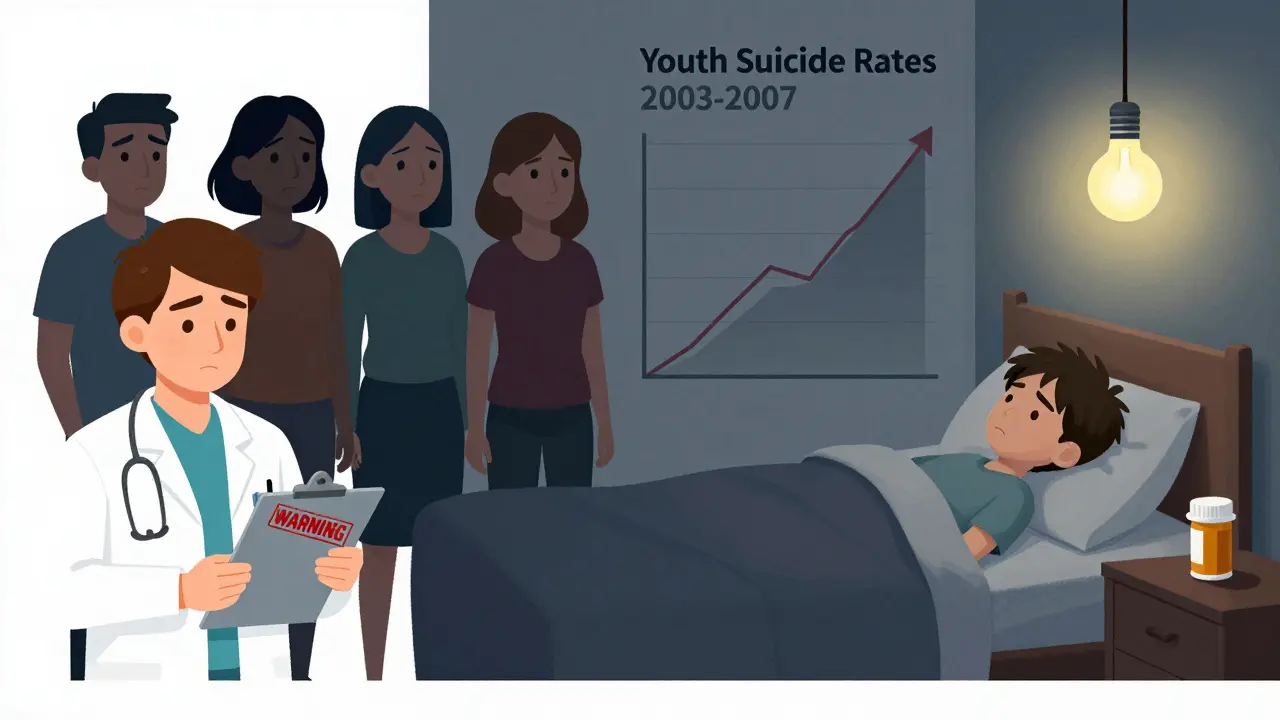
But something unexpected happened: suicide rates went up. According to CDC data, the suicide rate among 10- to 19-year-olds jumped from 2.0 per 100,000 in 2003 to 3.5 per 100,000 in 2007 - a 75% increase. Similar spikes were seen in young adults after the 2007 expansion.
A major 2023 study in Health Affairs looked at over 2.5 million young people across 11 U.S. health plans. Researchers found that after the warning, there was a 21.7% spike in psychotropic drug poisonings (a common measure of suicide attempts) among teens. Among young adults aged 20-24, the increase was even higher: 33.7%. These weren’t random fluctuations. The same pattern showed up again and again across different datasets.
Why Did This Happen?
The answer isn’t simple. It’s likely a mix of fear, misunderstanding, and broken access.
Many parents became terrified of antidepressants. A 2021 survey by the National Alliance on Mental Illness found that 74% of caregivers delayed or refused antidepressant treatment because of the black box warning. One parent on a mental health forum said, "I didn’t want to risk making my son’s suicidal thoughts worse." But untreated depression is deadly. Studies consistently show that people who stop antidepressants abruptly are at higher risk of suicide than those who stay on them under medical supervision.
Doctors also struggled. A 2019 survey of 1,200 child psychiatrists found that 87% said the warning made prescribing harder. Parents demanded more time, more paperwork, more reassurance. The average consultation time to explain the warning jumped from 8 minutes to over 22 minutes. And even then, only 37% of patients got the recommended weekly monitoring during the first month - a requirement that’s nearly impossible to meet in busy clinics, especially in rural areas where only 22% of teens received proper follow-up.
The Evidence Against the Warning
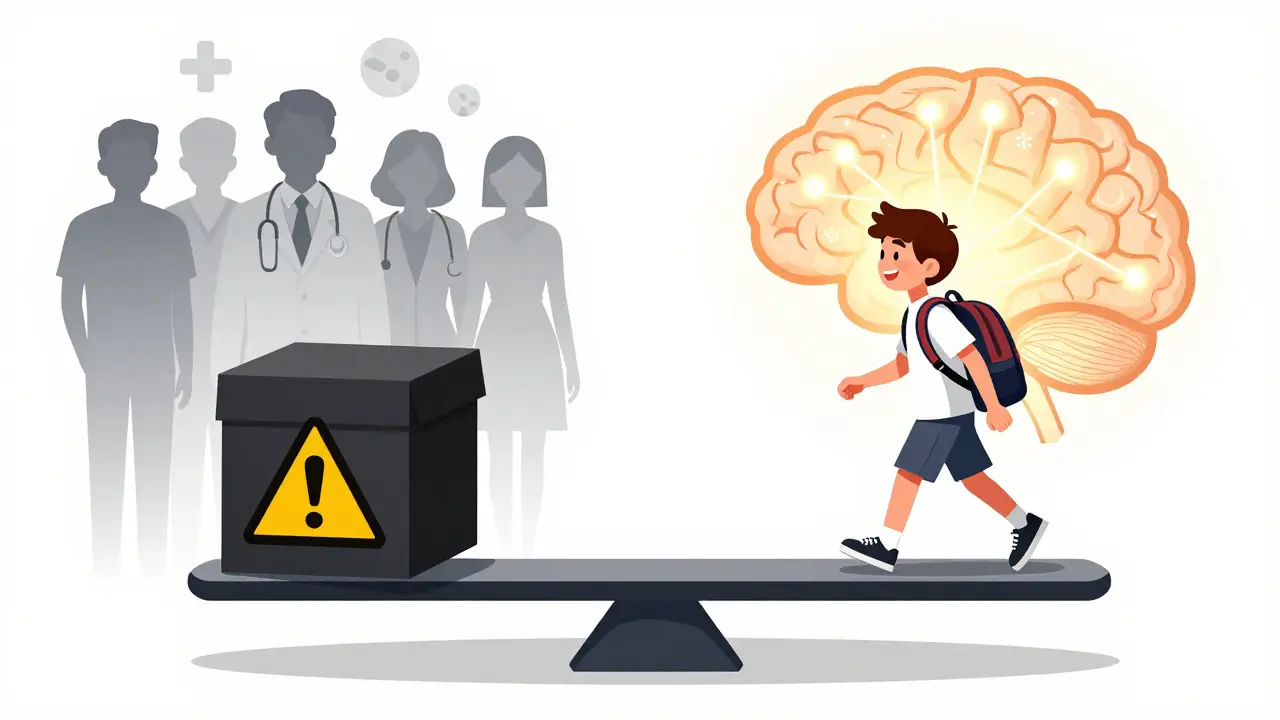
Experts are now questioning whether the warning’s risks outweigh its benefits.
Dr. Stephen Soumerai from Harvard Pilgrim Health Care Institute led the 2023 review. He says: "The sudden, simultaneous, and sweeping effects of these warnings - the reduction in depression treatment and increase in suicide - are documented across 14 years of strong research. The consistency in observed harms and absence of observed benefits indicate this is not a coincidence."
Researchers in Sweden analyzed 845 suicides among teens between 1992 and 2010. They found suicide rates rose after the warning, even as antidepressant use fell. Their conclusion? "The warning, contrary to its intention, may have increased young suicides by leaving a number of suicidal young persons without treatment."
Meanwhile, European countries like Germany and the Netherlands - which never issued a similar warning - didn’t see the same spike in youth suicide rates. In fact, their suicide rates continued to decline or stay flat during the same period.
What About the People Who Benefit?
It’s easy to forget that antidepressants save lives. A 2021 NAMI survey of families who did use antidepressants despite the warning found that 67% saw clear improvement. One mother wrote: "My daughter went from not leaving her room to finishing high school. The warning made us check in every day - and that helped."
For many teens with severe depression, anxiety, or OCD, antidepressants are the only thing that brings relief. Stopping them doesn’t make them safer - it makes them more vulnerable.
The Warning Today: Still in Place, Under Scrutiny
As of 2026, the FDA has not changed the warning. But pressure is mounting. In June 2022, the American College of Neuropsychopharmacology called for a reassessment. In September 2023, the FDA held a public meeting to review new data. Pharmaceutical companies like Eli Lilly and Pfizer have asked the FDA to update the language to reflect the full picture - not just risk, but also benefit.
The National Institute of Mental Health is working on new tools to predict which young people are most at risk for side effects - and which are most likely to benefit. Early results are expected in 2024. The goal? Replace the blanket warning with something smarter: personalized risk assessment, not fear-based avoidance.
What Parents and Teens Should Do Now
If you’re considering antidepressants for a young person:
- Don’t refuse treatment out of fear. Untreated depression is more dangerous than medication.
- Ask for a full risk-benefit discussion. Ask your doctor: "What’s the chance this helps? What’s the chance it makes things worse?"
- Expect close monitoring. The first 4-8 weeks are critical. Watch for agitation, sleeplessness, withdrawal, or talk of self-harm. Call your doctor if anything changes.
- Don’t stop suddenly. Stopping antidepressants without medical guidance can trigger withdrawal or worsen depression.
- Know the signs. Suicidal thoughts don’t always look like crying or saying "I want to die." Sometimes it’s silence, anger, dropping grades, or quitting activities they used to love.
The black box warning was meant to protect. But sometimes, protection becomes a barrier. The best way to honor its intent isn’t to ignore it - it’s to understand it, question it, and use it as a tool for better care, not worse.


February 9, 2026 AT 04:44 AM
Let’s be real - the black box warning was a well-intentioned train wreck. The FDA looked at a 2% vs 4% spike in suicidal ideation in controlled trials and went full panic mode. But here’s the kicker: none of those kids died. Meanwhile, actual suicide rates climbed because doctors got scared to prescribe, parents got scared to fill prescriptions, and teens got left in the dark. The data’s clear: untreated depression kills. The warning didn’t reduce harm - it just moved the harm from pharmacology to mortality.
February 9, 2026 AT 15:46 PM
I’ve worked with teens in rural clinics for over a decade. The warning didn’t just scare parents - it broke the system. We had kids showing up with suicidal ideation, and we couldn’t get them on meds because the mom heard ‘black box’ and thought ‘death sentence.’ We spent hours explaining that the 4% included things like ‘I had a bad day and thought about not waking up’ - not suicide attempts. But by then, the window for intervention was gone. The real tragedy? The warning was meant to save lives. It ended up silencing them.
February 11, 2026 AT 06:14 AM
Man, I just want to say… thank you for writing this. I’m a dad, and my 16-year-old daughter was on Zoloft for 18 months after a brutal anxiety spiral. We almost didn’t do it because of the warning. I remember reading that FDA thing and crying. But we did it anyway - with weekly check-ins, therapy, and a lot of late-night talks. She’s in college now. No more panic attacks. No more skipping school. And yeah, she had a rough week at the start - mood swings, insomnia - but we didn’t quit. The warning made us hyper-vigilant. And that? That was the real treatment.
Doctors need to stop seeing the warning as a liability. It’s a conversation starter. If we use it right - not to scare, but to educate - it could actually help.
February 12, 2026 AT 18:40 PM
You know, it’s wild how a single regulatory decision can ripple across an entire generation. I mean, think about it - we’ve got a whole cohort of kids who grew up with the narrative that antidepressants = danger. And now we’ve got a generation of parents who think SSRIs are like opioids for the brain. But the data doesn’t lie. Countries without the warning didn’t see the same spike. Sweden, Germany, the Netherlands - their suicide rates kept falling. Meanwhile, here? We went from 2.0 to 3.5 per 100k. That’s not coincidence. That’s systemic failure. And the irony? The warning was supposed to be the shield. Instead, it became the sword.
And don’t even get me started on how the pharmaceutical companies are now quietly lobbying to change it. Because now they’ve got the data. Now they’ve got the research. Now they know it was never about safety. It was about liability. And kids paid the price.
February 14, 2026 AT 12:27 PM
I’m from Australia - we never got the black box warning here. Our guidelines are more nuanced: risk assessment, monitoring, education. And guess what? Our youth suicide rates have been trending down since 2010. Not because we stopped prescribing - because we started prescribing smarter. We don’t scare people into compliance. We empower them with context. The FDA’s approach was like slapping a ‘DANGER: DO NOT TOUCH’ sticker on a fire extinguisher. People didn’t know how to use it. So they just ignored it. And then the building burned down.
It’s not that antidepressants are risk-free. But neither is untreated depression. The problem isn’t the meds. It’s the messaging.
February 16, 2026 AT 10:09 AM
Okay so like… I’ve been on antidepressants since I was 17 and I’m 28 now and I’m alive and I’ve got a job and I’ve even traveled abroad and I’m not dead so like… the warning was kinda ridiculous? I mean, I had a weird week when I started - felt jittery, couldn’t sleep - but my therapist was on it, we adjusted the dose, and boom. Life changed. My mom was terrified because of that black box thing. She thought I’d turn into a zombie or something. But we talked. We read the actual studies. We didn’t just listen to headlines. And now? She’s the one who tells other parents to not panic. So… yeah. The warning scared people. But knowledge? Knowledge helps.
February 17, 2026 AT 15:25 PM
Oh wow, so now we’re pretending the FDA is the villain? Let me guess - next you’ll say Big Pharma paid off the regulators. Because obviously, a 75% spike in youth suicide is just a coincidence. Let’s not forget: the warning came after dozens of lawsuits and public outcry. And guess what? It worked - for a while. It made doctors think twice. It made parents ask questions. Maybe the data now shows unintended consequences. But that doesn’t mean the warning was wrong. It means we need better monitoring, not less caution.
And don’t act like every kid who got on antidepressants was saved. Some got worse. Some had mania. Some had withdrawal. You think we should just hand out SSRIs like candy? No. We need structure. Not a free-for-all.
February 19, 2026 AT 14:25 PM
Here’s the real story nobody’s telling you: the black box warning was never about safety. It was about liability. The pharmaceutical companies were getting sued left and right after kids on SSRIs died - even if the drugs weren’t the cause. So the FDA, under political pressure, slapped on the warning as a shield. And now, 20 years later, we’re seeing the collateral damage. But here’s the twist: the same agencies that issued the warning are now quietly funding studies to overturn it. Coincidence? Or is this just another example of institutional self-preservation? The data is real. The harm is real. But the motive? That’s the real black box.
February 20, 2026 AT 18:51 PM
As a clinical psychologist, I’ve seen this firsthand. The black box warning created a paradox: the more we warned, the fewer kids got treatment. And the fewer kids got treatment, the more crises we saw in ERs. We’re not talking about mild cases - we’re talking about teens who stopped eating, stopped sleeping, stopped talking. And when you can’t prescribe because of fear? You’re left with therapy waitlists that are 6 months long. That’s not care. That’s neglect. The warning needs to be rewritten - not removed. It needs to say: ‘Antidepressants carry a small risk of increased suicidal ideation in the first 4–8 weeks - but untreated depression carries a far greater risk of death.’ That’s not scary. That’s science.