
When patients understand their condition, treatment, and self-care steps, they recover faster, make fewer mistakes, and feel more in control. But too often, people leave the doctor’s office with a stack of papers they don’t read, or instructions they forget by the time they get home. That’s where digital tools for patient education come in-not as fancy gadgets, but as real solutions that help people actually learn and remember what matters.
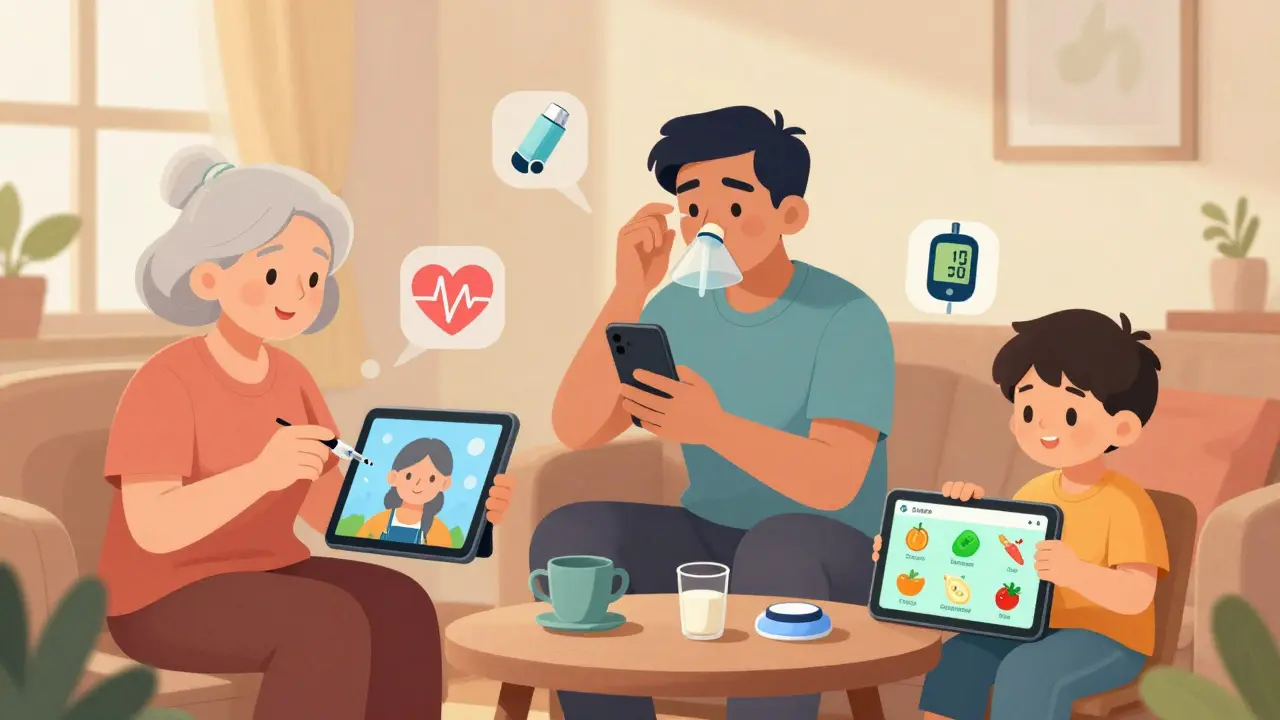
Today’s patient education apps and e-learning platforms aren’t just PDFs on a screen. They’re interactive, personalized, and built for real lives. A diabetic patient in rural Australia can now watch a 3-minute video in their language about insulin injection techniques. A cancer patient recovering at home can track symptoms daily through an app that adjusts advice based on their input. A parent managing a child’s asthma can get voice-guided breathing exercises delivered right to their phone. These aren’t futuristic ideas-they’re happening now, and they’re working.
What Works Best for Patients? Real Tools, Real Results
Not all digital tools are made equal. Some feel like homework. Others feel like help. The best ones cut through the noise. According to a 2025 study by the Australian Institute of Health Innovation, patients who used interactive e-learning tools had 44% better adherence to medication schedules and 38% fewer emergency visits compared to those who only received printed materials.
Here are the tools making the biggest difference right now:
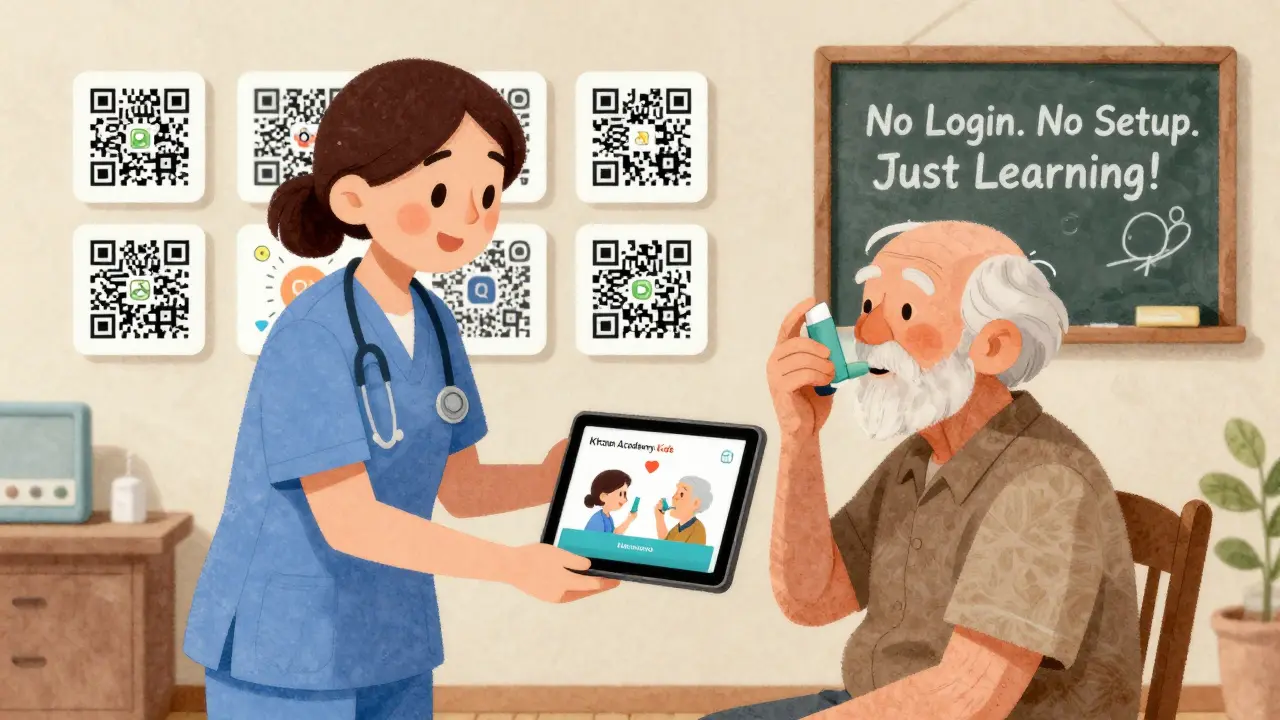
- Khan Academy Kids isn’t just for children. Its simple, visual style is being adapted by clinics for patients with cognitive challenges or low literacy. One Sydney-based community health center uses modified versions to teach elderly patients how to use inhalers through animated, step-by-step stories.
- Snorkl is an AI tool that listens to patients explain their symptoms in their own words-then gives feedback. A patient with chronic pain might say, “My leg feels heavy and tingly after walking.” Snorkl doesn’t just say “report to your doctor.” It might respond, “That sounds like nerve pressure. Try sitting with your leg elevated for 10 minutes and note if it changes. Would you like a video on proper leg positioning?” It’s not perfect-it sometimes misreads accents or non-native speakers-but in pilot programs, patients said they felt heard for the first time.
- Deck.Toys lets clinicians build interactive lessons with drag-and-drop quizzes, matching games, and simple animations. A diabetes educator in Melbourne built a 5-minute game where patients match foods to their sugar impact. After using it, 76% of patients could correctly identify high-sugar foods they’d previously misunderstood.
- Epic! has over 40,000 books, including many on health topics. For patients with dyslexia or vision issues, the read-aloud feature is a game-changer. A 2025 Vanderbilt University study found that patients using Epic! for reading discharge instructions improved comprehension by 31%.
- Google Classroom might seem like a school tool, but it’s quietly becoming the backbone of hospital patient education programs. Clinics use it to send video modules, quizzes, and follow-up checklists. It’s free, simple, and doesn’t require patients to download anything. One Queensland hospital reported a 52% drop in missed follow-ups after switching to a Google Classroom-based education flow.
Why Some Tools Fail-And How to Avoid Them
Not every app helps. Some make things worse.
Take Prodigy Math. It’s brilliant for kids learning fractions. But when a hospital tried using its game-style design for teaching medication schedules, patients got distracted by the fantasy battles and forgot to take their pills. The reward system worked too well-patients wanted to earn points, not learn.
Then there’s Kahoot!. It’s fun for group learning, but when used for patient education, it turns serious topics into speed contests. “Who can name the most side effects in 10 seconds?” isn’t helpful when someone’s just been diagnosed with heart failure.
The biggest problem? Tools that assume patients are tech-savvy. A 68-year-old with arthritis might struggle to tap a tiny button on a screen. A non-English speaker might see instructions in a language they don’t understand. The best tools fix this by offering:
- Voice-based navigation
- Simple icons instead of text
- Offline access
- Translation in 10+ languages
Tools like Snorkl and Deck.Toys support 50+ languages. Khan Academy Kids works offline after one download. These aren’t nice-to-haves-they’re essential.
What Patients Really Want: Simplicity, Not Sophistication
Patients don’t care about AI, machine learning, or cloud storage. They care about one thing: “Can I do this without feeling confused or overwhelmed?”
A 2025 survey of 2,000 patients across Australia found that the top three features they valued were:
- Clear, short videos (under 5 minutes)
- Step-by-step instructions with pictures
- The ability to replay content as many times as needed
One patient, Maria, 71, from Adelaide, said: “I had to learn how to give myself injections after my diagnosis. The hospital gave me a 20-page booklet. I cried. Then my nurse sent me a 3-minute video on my phone. I watched it five times. I did it on the sixth try. That’s all I needed.”
That’s the pattern. People don’t need more information. They need better ways to absorb what’s already there.
How Clinics Are Actually Using These Tools
It’s not about buying the fanciest app. It’s about matching the tool to the patient’s needs.
At the Royal Melbourne Hospital, nurses use Deck.Toys to build custom lessons for patients with newly diagnosed diabetes. Each lesson ends with a simple quiz: “What should you do if your blood sugar drops below 4?” If they get it wrong, the system gently replays the video section. No pressure. No grading. Just support.
In rural New South Wales, community health workers hand out tablets loaded with Khan Academy Kids adaptations for elderly patients with dementia. The videos play automatically when the tablet is picked up. No login. No setup. Just learning.
And in Sydney’s public clinics, Google Classroom is used to send weekly check-ins: “Watch this 2-minute video on managing your blood pressure. Then answer one question. We’ll see your reply.” Response rates jumped from 28% to 79% in six months.
The Hidden Cost: Privacy and Access
There’s a catch. Not everyone can use these tools.
One in four Australians still lack reliable home internet. Older adults, low-income families, and people in remote areas often can’t access cloud-based platforms. Tools that require high-speed connections or latest smartphones leave them behind.
And privacy? A 2025 report by the Australian Privacy Foundation found that 63% of patient education apps don’t clearly explain how data is stored or shared. Some even sell usage patterns to third parties.
That’s why the best clinics stick to trusted platforms:
- Google Classroom and Microsoft Teams are compliant with Australian health privacy laws.
- Khan Academy Kids is ad-free and doesn’t collect personal data.
- Epic! is used through institutional licenses, so patient data stays inside the health system.
Always ask: Does this tool require a login? Does it track me? Can I delete my data? If the answer is unclear, don’t use it.
What’s Next? AI, But With Care
AI is changing patient education-but not in the way you think.
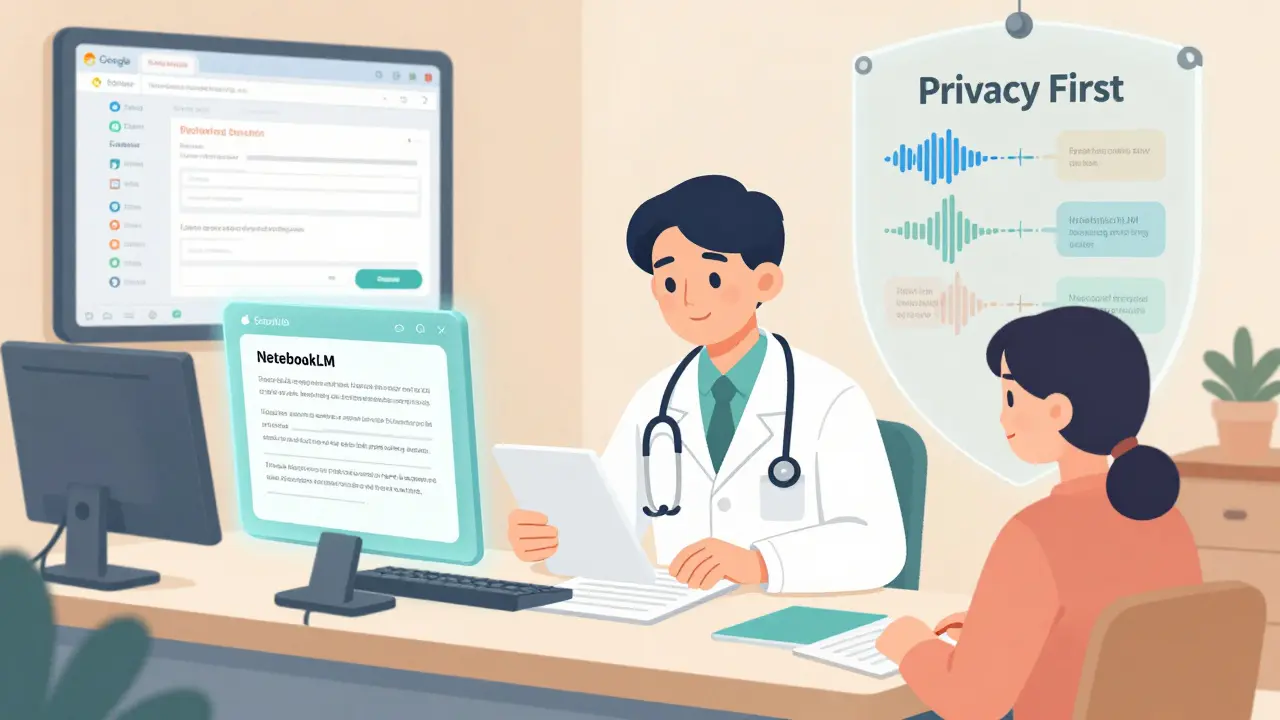
It’s not about robots replacing nurses. It’s about AI helping nurses do more. Tools like NotebookLM (from Google) let clinicians upload a patient’s discharge summary and generate a plain-language summary in minutes. No more typing from scratch.
And Snorkl is helping clinicians understand what patients really mean. One nurse said: “I used to think my patient wasn’t following advice. Then Snorkl showed me they were describing symptoms differently than I expected. I adjusted their plan. They improved.”
But AI isn’t perfect. Studies show it makes mistakes 12-27% more often with non-native speakers or people from minority backgrounds. That’s why the best clinics use AI as a helper-not a final decision-maker.
How to Start Using Digital Tools for Patient Education
If you’re a clinician, caregiver, or health administrator, here’s how to begin:
- Start small. Pick one common education need-like insulin use, post-surgery care, or asthma triggers.
- Choose one tool. Try Deck.Toys or Google Classroom. They’re free and easy.
- Test with 5 patients. Ask: Was this clear? Did you understand? Would you use it again?
- Adjust and repeat. If they loved it, roll it out to more people. If not, try something else.
Don’t wait for the perfect system. Use what works now. The goal isn’t to be high-tech. It’s to be human.
Are patient education apps safe for my data?
It depends on the app. Stick to tools used by hospitals or health systems, like Google Classroom, Khan Academy Kids, or Epic!-these follow strict privacy rules. Avoid apps that ask for your email, phone number, or health data without clearly explaining how it’s protected. Always check if the app is approved by your local health authority.
Can older adults use these apps?
Yes, but they need the right design. Apps that use large buttons, voice instructions, and simple visuals work best. Tools like Khan Academy Kids adaptations and Epic! with read-aloud features are designed for this. Avoid apps with complex menus or tiny text. Many clinics now provide tablets with pre-loaded lessons so patients don’t have to download anything.
Do I need a smartphone to use these tools?
Not always. Many tools like Google Classroom work on any web browser, even on library computers. Some apps, like Khan Academy Kids, can be downloaded once and used offline. For patients without smartphones, clinics are increasingly handing out tablets or printing QR codes that link to video lessons on any device.
What if I don’t speak English well?
Look for tools that support your language. Snorkl and Deck.Toys work in over 50 languages. Epic! has books in many languages, including Mandarin, Arabic, and Vietnamese. If a tool only offers English, ask your clinic if they have a translated version or can provide a video with subtitles. Language should never be a barrier to understanding your health.
Are these tools free?
Many are. Khan Academy Kids, Google Classroom, and Epic! (through public health partnerships) are free for patients. Some advanced tools like WeVideo or NotebookLM are paid-but they’re usually used by clinics, not patients. You should never pay to learn about your own health. If someone asks for money, ask if there’s a free alternative through your doctor or hospital.

December 26, 2025 AT 11:52 AM
Just saw a grandma in my clinic use Khan Academy Kids to learn insulin shots. No confusion. No panic. Just watch, repeat, do. That’s all she needed.
December 28, 2025 AT 08:14 AM
There’s something quietly revolutionary about letting people learn at their own pace, in their own voice, without being graded or judged. These tools don’t just educate-they restore dignity. When a patient can replay a video five times because they’re scared, confused, or tired, that’s not tech-that’s compassion made digital. And it’s working, not because it’s flashy, but because it’s patient. Truly.
December 30, 2025 AT 00:40 AM
Used Deck.Toys with my uncle in Delhi-he’s diabetic, doesn’t read much. The game with food matching? He played it twice a day for a week. Now he picks the right snacks. No lectures. Just fun. That’s the magic right there.
December 30, 2025 AT 22:35 PM
Ummmm soooooo… you think Google Classroom is the answer??? LOL. My cousin’s hospital used it and half the patients thought it was a spam link and deleted it. And what about people who don’t have email?? You just hand them a phone and say ‘here learn your life’?? This is so naive. Also Snorkl misreads my aunt’s accent and tells her to ‘eat more kale’ when she said her leg hurts. This whole thing is a joke.
January 1, 2026 AT 15:05 PM
India and Australia are leading here, but the U.S. healthcare system still treats digital tools like optional add-ons. Meanwhile, in rural Uganda, clinics are using SMS-based voice lessons because smartphones are rare but basic phones are everywhere. We’re overcomplicating it. Simplicity isn’t a feature-it’s the baseline.
January 3, 2026 AT 13:38 PM
Kahoot! for patient ed? That’s not education thats performance art. And Prodigy Math? You let kids fight dragons to learn pills? What next a Tinder swipe for insulin dosing?
January 3, 2026 AT 13:49 PM
This is the kind of stuff that gives me hope. Real people. Real tools. Real results. No jargon. No sales pitch. Just helping someone feel less alone with a diagnosis. If your clinic isn’t doing this yet, you’re not just behind-you’re failing them.
January 3, 2026 AT 22:04 PM
Snorkl’s great… until it tells your diabetic patient to ‘drink more soda’ because it heard ‘soda’ instead of ‘sugar.’ AI’s a helper, not a hero. And no, I don’t trust any app that doesn’t let me delete my data. Period.
January 5, 2026 AT 07:11 AM
Can I just say how amazing it is that someone actually thought about offline access? And translation? And voice navigation? These aren’t ‘nice features’-they’re moral imperatives. If your tool requires Wi-Fi, a smartphone, and a college degree to use, you’re not helping-you’re excluding. Thank you for highlighting the ones that actually care.
January 5, 2026 AT 20:40 PM
The real win here isn’t the tech-it’s the humility. The clinicians who said, ‘Let’s try this with five people first.’ The ones who listened when Maria cried over the 20-page booklet. That’s the secret sauce: stop assuming. Start observing. The tools are just the delivery system. The real innovation is treating patients like humans, not data points.